
eSIM for ASEAN Travel: Singapore, Vietnam & South Korea
With the right digital travel SIM, you can use one plan across Singapore, Vietnam and South Korea and stay online for maps, rides and content without worrying about surprise roaming charges. Instead of swapping plastic SIMs in every airport, you can install a virtual profile such as a guide on what is an eSIM card and keep your number, apps and data flowing wherever you land. For digital nomads, creators and frequent flyers doing business travel Asia, an asia esim or asean travel sim lets you manage everything from one dashboard that travels with you. Keep reading and you’ll learn exactly how to choose, set up and use your plan so Singapore, Vietnam and South Korea all feel as simple as your home network.
Why an eSIM Is Perfect for ASEAN Travel
If you move between countries on the same trip, traditional roaming gets expensive fast, especially when roaming in vietnam, bouncing to Singapore and then up to South Korea. An asia esim or regional asean travel sim gives you data in multiple countries with one purchase, so you don’t waste time hunting for physical cards or memorizing new phone numbers.
Here’s why this matters when you’re planning business travel Asia, a creator tour or a long backpacking loop:
- You stay reachable on your primary number while your travel plan handles data.
- You avoid high-fee hotel Wi-Fi and unreliable café connections.
- You can switch networks in seconds if coverage feels weak.
- You keep all your content tools, cloud backups and maps working the moment you land.
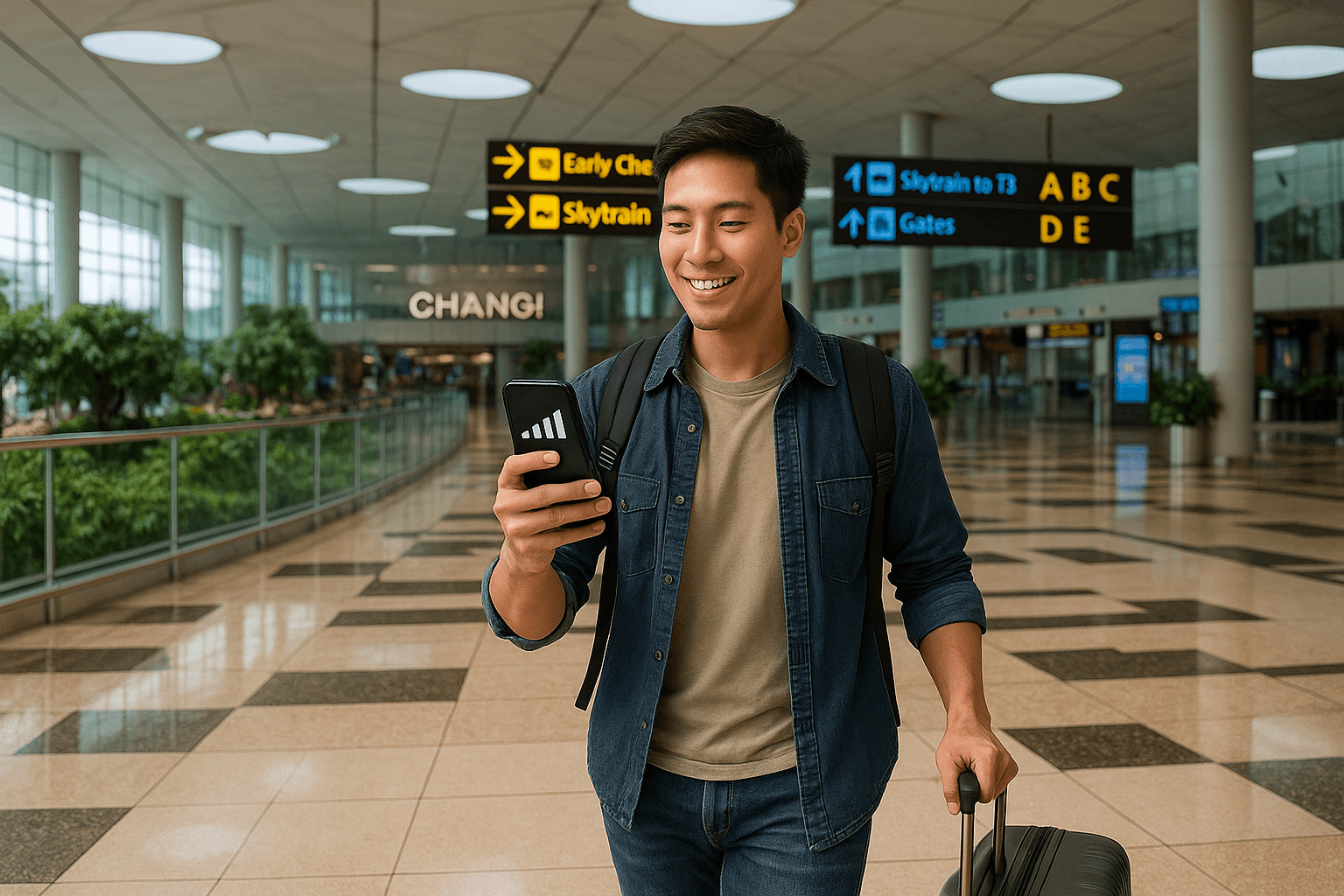
An esim for singapore works especially well if you’re arriving into Changi, jumping on public transit and heading straight to meetings or content shoots. You scan a QR code on arrival or even before departure, and your phone connects to local partner networks without visiting a kiosk. The same asia esim or asean travel sim can then continue into Ho Chi Minh City or Da Nang, so your esim for vietnam becomes just another stop on the same regional plan.
For creators who live on uploads and live stories, having a plan that handles roaming in vietnam and then carries on to Seoul means you don’t lose momentum. For business travel Asia, you can move between client offices and co-working spaces without switching SIMs or negotiating new data packages in each country.
If you like to nerd out on the technology itself, you can also check industry resources like the GSMA’s overview of eSIM technology to see how carriers around the world support digital SIM profiles.
Singapore, Vietnam & South Korea: How Coverage and Use Cases Compare
Even with one asia esim, each destination feels a little different in how you actually use your data day to day. Understanding that helps you choose the right data amount and validity for your trip.
Singapore: Ultra-Connected City Hub
Singapore offers some of the fastest and most consistent mobile networks in the region. An esim for singapore is perfect if you:
- Rely on ride-hailing all day.
- Jump between meetings and need hotspot for your laptop.
- Post high-res video from Marina Bay, Chinatown or Sentosa.
Because coverage is so strong, you can safely lean on your asean travel sim as your main connection. Data usage can run high in Singapore, especially for business travel Asia where you join video calls and tether your laptop from cafés and co-working spaces.
Vietnam: Flexible Data for City and Coast
Vietnam combines big, busy cities with laid-back beach towns and mountain regions. An esim for vietnam keeps your apps and maps live across Hanoi, Da Nang, Nha Trang and Ho Chi Minh City without worrying about roaming in vietnam charges on your home carrier.
With a regional asia esim or asean travel sim, you can:
- Use ride apps and translation tools in crowded city centers.
- Navigate rural or coastal areas where Wi-Fi is weak.
- Keep backup connectivity if hotel Wi-Fi underperforms.
Data speeds in major Vietnamese cities are usually solid, but you will appreciate having extra gigabytes if you plan to upload 4K drone footage or run constant cloud backups.
South Korea: Speed for Power Users
South Korea is known for strong 4G and 5G networks, which is ideal if you produce video content or need reliable bandwidth for remote work. When your asia esim reaches Seoul or Busan:
- Expect fast downloads for large files.
- Use real-time translation and navigation easily.
- Keep high-quality video calls smooth for work and family.
If your itinerary includes Singapore, Vietnam and Korea, then treating your asia esim as your main data line and your home SIM as backup for calls usually makes the most sense.
For deeper details on how data speeds and partner networks behave on Yoho Mobile, you can also look at independent roundups like this overview of Asia-focused eSIM providers, which compare coverage, plans and user feedback.
How to Set Up Your eSIM for ASEAN Travel (Step-by-Step)
Getting your asean travel sim working is faster than checking in a suitcase. Follow these steps before you fly or while you wait at the gate.
-
Check your phone’s compatibility
Confirm eSIM support
- Go to your phone’s settings and look for “eSIM” or “Add mobile plan.”
- Most recent iPhone, Google Pixel, Samsung and other flagship Android models support eSIM.
- If you’re unsure, cross-check your exact model on your manufacturer’s website or a resource like Apple’s eSIM support page.
-
Decide how many countries you need
Map your route
- List every country on your itinerary: Singapore, Vietnam, South Korea and any layovers where you might need data.
- If it’s a simple Singapore-only trip, a focused esim for singapore might be enough.
- If you’re hitting several spots on one trip, a broader asia esim or asean travel sim usually saves more money and effort.
-
Estimate your data needs
Match gigabytes to your travel style
- Light users (messages, maps, email): 1–3 GB per week.
- Moderate users (social media, some hotspot, music): 3–7 GB per week.
- Heavy users (video uploads, frequent hotspot, streaming): 7–15 GB per week or more.
- Consider higher data if you rely on hotspot during business travel Asia or if your work involves large media files.
-
Purchase and receive your QR code
Buy from a trusted provider
- Choose a provider that clearly lists all supported countries and networks.
- After purchase, you’ll receive a QR code and/or activation code by email.
- Save screenshots of the QR code in case you lose signal temporarily.
-
Install your eSIM profile
Add the plan to your phone
- On iPhone: Settings → Mobile Data / Cellular → Add eSIM or Add Cellular Plan → Scan QR code or enter details manually.
- On Android (varies by brand): Settings → Network & Internet → SIMs or eSIM → Add eSIM → Scan QR or “Enter activation code.”
- Label your line clearly, for example “Yoho Asia” or “ASEAN data,” so you can distinguish it from your primary SIM.
-
Set default lines and data options
Avoid surprise roaming fees
- Set your asia esim as the default for mobile data.
- Keep your physical SIM active for calls and SMS, but turn off data roaming on it to prevent accidental charges, especially when roaming in vietnam.
- Enable or disable hotspot depending on your plan’s rules and your battery needs.
-
Test before you need it
Run a quick health check
- Open a browser and load a website.
- Use a maps app to check directions from the airport to your first stop.
- If something looks off, toggle airplane mode on and off or restart your phone to refresh the connection.
If you want to skip local SIM shops entirely, you can pre-order a customizable Yoho Mobile Asia eSIM that covers multiple destinations, so your esim for singapore, your esim for vietnam and your time in Seoul all run on one flexible plan you control from your phone.

Practical Tips for Using Your eSIM in Singapore, Vietnam & South Korea
Once your asean travel sim is live, a few smart habits will help you get maximum value from it.
- Download offline maps and key apps before flying. This reduces pressure if Wi-Fi is spotty when you land.
- Use Wi-Fi strategically, not by default. In Singapore and South Korea, your asia esim will often outperform public networks, but Wi-Fi is still handy for large backups.
- Watch hotspot use. Tethering your laptop is powerful during business travel Asia, but it burns data quickly. Limit 4K streaming or big downloads when you hotspot.
- Check data usage per country. If your plan tracks each destination separately, monitor how much you spend while roaming in vietnam versus Singapore or Korea.
- Keep your home SIM for verification codes only. Most travelers can turn off data on their home SIM and use it just for SMS codes from banks and apps.
An esim for vietnam may behave slightly differently in rural areas than in cities, so if speeds drop, try manually selecting another partner network in your phone’s carrier settings. Similarly, if your esim for singapore struggles inside a specific building or mall, toggling airplane mode or switching networks generally fixes the problem in seconds.
Real Scenarios: How Different Travelers Use an Asia eSIM
To make this more concrete, here’s how three types of travelers often use the same asia esim or asean travel sim across Singapore, Vietnam and South Korea.
-
The short-trip business traveler
You fly into Singapore for a conference, then connect to Ho Chi Minh City for client visits. Your esim for singapore activates as soon as you land at Changi, giving you hotspot in taxis and in the conference venue. When you continue on to Vietnam, the same asean travel sim keeps your email, Slack and CRM tools online, so business travel Asia feels no more complex than commuting across town. You never worry about roaming in vietnam fees on your home carrier. -
The digital nomad on a 6-week loop
You spend two weeks in Singapore, three in Vietnam and one in Seoul. With a single asia esim, you keep all your freelance projects synced: Git repositories, design files, video content, client calls. Your esim for vietnam handles café hopping in Da Nang, while your time in South Korea becomes solid upload time for new content. You track data weekly and top up only when your usage truly demands it. -
The content creator or vlogger
Your goal is to film street food, city skylines and coastal life. You need an esim for singapore that can push 4K clips to the cloud quickly, and an esim for vietnam that can upload consistently from markets, motorbike tours and coffee shops. With a flexible asia esim, you schedule heavy uploads during strong network windows, use Wi-Fi selectively, and keep your audience updated in real time from all three countries.
In each case, the same basic strategy works: one asean travel sim, clear data monitoring, and smart toggling between your home SIM and travel line.
FAQs
Is an eSIM better than a physical SIM for ASEAN trips?
For most travelers, yes. A digital asia esim lets you switch countries without hunting for kiosks, keeps your phone slot free for your home SIM, and reduces the risk of accidental roaming in vietnam or other destinations on your primary carrier.
Can I keep my regular number while using an asean travel sim?
Yes. You usually keep your physical SIM active for calls and SMS, while your asia esim or asean travel sim handles data. Just turn off data roaming on your home SIM so that your esim for vietnam, Singapore or Korea is always the one using mobile data.
How much data do I need for business travel Asia?
If you join frequent video calls, share hotspot and upload large files, aim for at least 7–15 GB for a 1–2 week trip that covers Singapore, Vietnam and South Korea. Heavy creators who upload daily may need even more, especially if they film in 4K.
Will my apps still work when I move between countries?
Yes. Your apps don’t change; only your underlying network does. As long as your asia esim plan includes the country you enter, your esim for singapore can hand off to an esim for vietnam or Korean networks without you reinstalling apps or reconfiguring log-ins.
Is it safe to use mobile data instead of public Wi-Fi?
In many cases, yes, it’s safer. A trusted provider’s network is usually more secure than open Wi-Fi, particularly for banking or work tools. Still, using a VPN remains a good idea when you handle sensitive information during business travel Asia.
Conclusion
Choosing a flexible asia esim that covers Singapore, Vietnam and South Korea lets you avoid physical SIM swaps, take control of costs and stay focused on your work or adventures instead of your signal bar. When you’re ready to lock in your data for the trip, you can choose your destinations and data size on the Yoho Mobile Buy eSIM page and land in Asia already connected.