
Traveler Safety: Staying Connected Across Borders in Asia
Stay safer and more confident on every trip by treating connectivity as part of your travel safety plan, not an afterthought. When you understand how to manage cross border data, pick secure mobile options and avoid risky networks, you protect both yourself and your information as you move between countries. If you want your next singapore malaysia travel or wider Asia trip to feel smoother and safer, you can start planning your setup now so you land ready to move instead of hunting for a SIM at the airport.
Stay connected abroad with smart data choices and security-first habits on every trip across Asia.
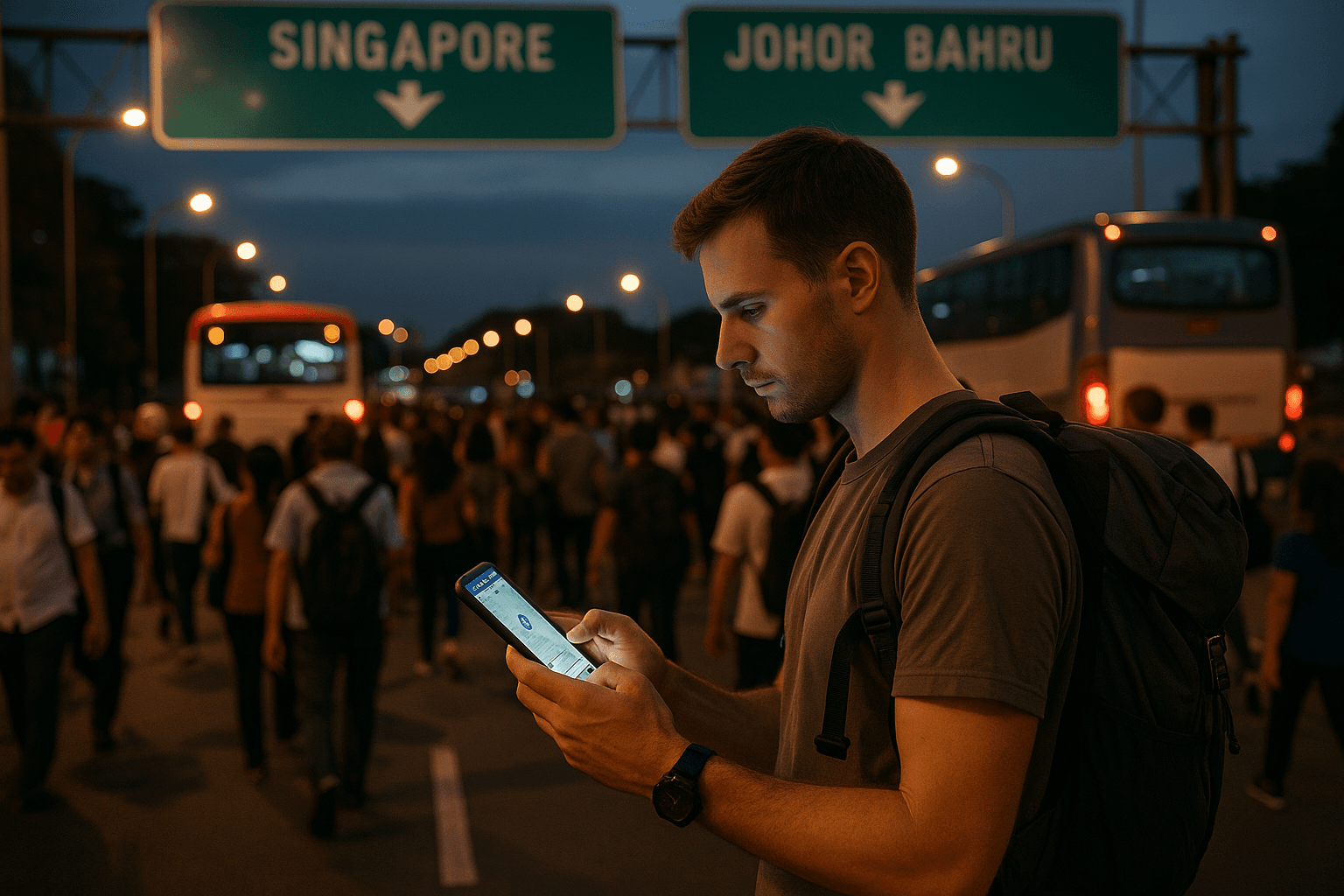
Why Connectivity Belongs in Your Travel Safety Tips
You already know the basics: keep copies of your passport, watch your belongings, share your itinerary. But some of the most important travel safety tips today are digital, especially when you cross land borders in Asia like Singapore–Johor, Thailand–Malaysia or Hong Kong–Shenzhen.
Understanding what is an eSIM card gives you a foundation for safer connectivity, because a digital SIM lets you download plans securely instead of buying mystery cards at random kiosks. That simple change can lower your risk of data mishandling, unexpected charges and malicious configuration.
Here’s why connectivity is now a core part of travel safety tips:
- You rely on your phone to call for help, use maps and translate in high-stress moments.
- Strong authentication apps, banking and email all depend on working mobile data.
- Secure cross border data helps you avoid sketchy public Wi-Fi hotspots.
- A stable line makes it easier for friends and family to track your location or reach you in an emergency.
When you stay connected abroad with a plan you control, you avoid last-minute decisions that expose you to roaming bill shock, unsafe networks or scams targeting tourists who only discover problems once they are back home.
How eSIMs Improve Safety on Singapore–Malaysia Travel and Beyond
Traditional SIMs still work, but they often work against your safety goals. You may buy a cheap local SIM at a border market, hand over your passport, and trust that everything has been registered correctly. With an eSIM, you can choose your provider in advance, verify terms and install everything before you leave home.
For example, if you often move between Singapore and Johor Bahru, choosing a secure esim for johor gives you stable coverage from checkpoint to city center. Instead of swapping cards on the bus, you can set your cross border data line as the default for roaming so your phone just connects while you queue, book a ride or message your host. The same logic applies across Asia: a digital profile that’s ready before you land always beats a rushed purchase when you’re tired and jet-lagged.
Some safety advantages you get with an eSIM-focused setup:
- Less physical swapping. You reduce the chance of losing your main SIM or exposing it while you’re distracted in a crowded terminal.
- Pre-verified plans. You can read reviews and compare providers online instead of trusting the nearest sales booth.
- Better control over roaming. You can disable roaming on your home SIM and route all cross border data through a travel line you trust.
- Cleaner separation. You can keep personal calls and SMS on your primary number while your travel line handles data and local apps.
If you want a deeper dive into how multi-country setups work, you can explore how Yoho Mobile works to see how one account can hold several regional plans you switch between as you stay connected abroad.
Independent bodies like the GSMA explain how eSIM technology lets you securely download and manage multiple profiles, and security teams such as the US Cybersecurity & Infrastructure Security Agency regularly recommend using mobile data over open Wi-Fi whenever possible. Together, those ideas form the backbone of modern, digital-first travel safety tips.
Step-by-Step: Safe Mobile Setup for Singapore–Malaysia Travel
Let’s walk through a practical setup you can copy for singapore malaysia travel and then adapt for other borders in Asia.
-
Check your device and update everything
Confirm eSIM support and security
- In Settings, look for “Add eSIM” or “Add mobile plan.”
- Update your operating system and apps to the latest versions.
- Turn on screen lock, biometric login and “Find My Device” features.
This gives you a solid base before you add an esim for johor or any other travel profile.
-
Plan your routes and risk points
Identify where you can’t afford to be offline
- List the crossings you will use, like Woodlands–JB or Tuas–Second Link.
- Mark times when you’ll be alone, arriving late or carrying valuables.
- Note where you need strong cross border data: ride-hailing, hotel check-in, QR tickets.
These are the moments when staying connected abroad matters most, so you tailor your data plan to them.
-
Choose a trusted travel provider
Compare options before you leave home
- Look for transparent pricing, clear coverage maps and real reviews.
- Check whether the plan covers both Singapore and Malaysia for seamless singapore malaysia travel.
- Confirm hotspot support, which is useful if you work from your laptop on the go.
A well-structured esim for johor often forms part of a wider regional plan, not a one-off card, so you can extend your trip into other parts of Asia without starting from scratch.
-
Buy and install your eSIM before departure
Activate on your own terms
- Purchase online from a reputable provider.
- Scan the QR code in your phone’s settings to add the eSIM profile.
- Label it clearly, for example “SG–MY travel data.”
After installation, set this line as your primary source of cross border data so you avoid accidental roaming on your home SIM.
-
Lock down roaming and Wi-Fi settings
Protect yourself from hidden costs and unsafe networks
- Turn off data roaming on your home SIM to focus on avoiding roaming scams.
- Keep Wi-Fi disabled in unfamiliar places unless you absolutely need it.
- When you must use public Wi-Fi, avoid banking or sensitive logins, and consider a trusted VPN.
This combination drastically lowers your risk of nasty bills and data theft during singapore malaysia travel or any other border crossing.
-
Share your plan and key contacts
Make it easy for people to reach you
- Give your trusted contacts your travel number and main messaging apps.
- Enable location sharing with someone you trust while you move between borders.
- Store local emergency numbers and your hotel details in offline notes.
These small steps, combined with the right travel safety tips, make it easier to stay connected abroad in both physical and digital ways.
If you prefer a solution you can reuse for multiple trips, you can compare cross-border options on the Yoho Mobile Buy eSIM page and select a regional plan that keeps your cross border data predictable from your first Singapore checkpoint to your final night in Johor.

Avoiding Roaming Scams and Other Mobile Traps
Scammers know that travelers often feel rushed and confused. That’s why avoiding roaming scams has become one of the most practical travel safety tips for anyone using a smartphone in Asia.
Watch out for these common traps:
-
Shock roaming from your home carrier.
If you leave roaming on by accident, your phone might use your home SIM for cross border data, leading to huge bills. Always double-check your roaming settings before you cross any border. -
Too-good-to-be-true SIM deals.
Kiosks that offer extremely cheap “unlimited” plans for singapore malaysia travel may hide restrictions or collect more personal data than necessary. Using an eSIM from a known provider helps you sidestep this. -
Fake Wi-Fi networks.
Attackers sometimes create hotspots with names like “Free Airport Wi-Fi” to intercept traffic. Instead, rely on your travel data plan where possible so you can stay connected abroad without gambling on unknown networks. -
Misleading top-up messages.
Be wary of random SMS or messaging app prompts asking you to click links to “extend” or “fix” your plan. Access your account only through known apps or bookmarked sites.
To keep avoiding roaming scams across Asia, build a simple rule for yourself: if a network, SMS or web page ask for too much information or feels rushed, step back and use your own data connection or official app instead of following unknown prompts.
Practical Travel Safety Tips for Everyday Situations
Once your technical setup is solid, you can combine it with everyday travel safety tips that fit real scenarios on the road.
-
At border checkpoints.
Keep your phone in a front pocket or secure bag when you present documents. Use your esim for johor or other travel plan to load QR tickets and booking confirmations before you reach the window. -
In ride-hailing and taxis.
Use your own cross border data instead of the driver’s hotspot. Share your trip status with a friend and keep the app open so you can follow the route during singapore malaysia travel or any city hop. -
In cafes and co-working spaces.
Prefer mobile data for banking and work logins. If you must use Wi-Fi, ask staff for the official network name and password instead of guessing from open lists. -
For creators and digital nomads.
When you stay connected abroad for work, schedule heavy uploads at accommodations or trusted spaces, and keep a backup hotspot plan ready in case local Wi-Fi fails. -
For solo travelers.
Use your phone’s check-in or emergency SOS features. A good travel plan and a few digital habits often do more for your safety than carrying extra gadgets you rarely use.
These practices don’t remove every risk, but they turn your phone into a core safety tool rather than just a camera and social media device.
Quick Summary: Safety-First Mobile Checklist
To pull everything together, you can keep this checklist handy before your next cross-border trip:
- Update your phone, enable locks and “Find My Device.”
- Understand how eSIM works and choose a provider before departure.
- Install a dedicated travel profile, such as an esim for johor if you cross between Singapore and JB often.
- Turn off roaming on your home SIM and route cross border data through your travel line.
- Use mobile data instead of unknown public Wi-Fi where possible.
- Focus on avoiding roaming scams by ignoring suspicious messages and networks.
- Share your itinerary and key contacts so you can stay connected abroad in an emergency.
FAQs
Is an eSIM really safer than a physical SIM?
An eSIM can be safer because you install it digitally from a trusted source instead of buying a random card at a kiosk. You have more control over cross border data providers, which helps with avoiding roaming scams and unexpected charges.
Do I still need a local SIM if I use an eSIM for singapore malaysia travel?
Often, no. A well-designed travel plan or esim for johor that covers both sides of the border can replace separate local SIMs. You can keep your physical SIM for calls and SMS on your main number while your travel profile handles data.
How much data do I need to stay connected abroad safely?
If you mostly use messaging, maps and basic browsing, 3–5 GB per week may be enough. If you work remotely, upload content or use hotspot during singapore malaysia travel, aim for 7–15 GB or more, depending on how long you stay.
What should I do if my phone is lost or stolen abroad?
Use another device to sign into your account, lock or erase your phone via “Find My Device,” and contact your provider to suspend your plan. Having your eSIM account details and emergency contacts stored securely in the cloud makes this process faster.
Can I share my travel data with others?
Yes, but limit hotspot use to people you trust, especially in crowded areas. Heavy hotspot usage can drain your data and battery, which you need to stay connected abroad safely.
Conclusion
When you treat connectivity as part of your safety plan, you travel with more confidence and fewer surprises, whether you are crossing between Singapore and Johor or exploring new cities across Asia. When you are ready to upgrade your setup, you can choose a secure travel plan on the Yoho Mobile Buy eSIM page and turn your phone into a reliable safety tool every time you step across a border.