
Best Places to Visit in Malacca
Planning a first visit to Malacca can leave you unsure which sights deserve your limited time and how they fit together. Without a clear plan, you may spend more of the day retracing busy streets and have less time for local food and the riverfront. In this guide, we cover the best places to visit in Malacca, one- and two-day itineraries, and practical planning for food, weather, and transport.

Which Malacca places should first-time visitors see?
Malacca’s most useful first-visit route stays close to the historic center, where colonial buildings, religious sites, the river, and Jonker Street sit within walking distance. Start early, cross the river only when your route requires it, and leave room for food rather than treating the city as a checklist.
Malacca and Melaka refer to the same Malaysian city. Melaka is the official Malay spelling, while Malacca remains common in English travel planning. You’ll see both names on maps, booking sites, bus schedules, and storefronts, so don’t mistake them for separate destinations.
The city’s appeal comes from layers rather than one headline monument. Malay, Chinese, Indian, Portuguese, Dutch, and British influences meet within a relatively concentrated center. A church may stand near a Chinese clan building, while Peranakan cooking appears a few streets from colonial civic architecture. That density makes Malacca rewarding on foot.
The strongest plan starts at Dutch Square, climbs St. Paul’s Hill, descends toward A Famosa, then returns toward the river and Jonker Street. This keeps the major Malacca attractions in a logical sequence. It also prevents repeated walks through the busiest intersections during the hottest part of the day.
Don’t judge the city only by its busiest commercial strip. Jonker Street is lively and convenient, but the quieter lanes, religious buildings, riverside walls, and traditional shopfronts give the historic district its texture. The best things to do in Malacca often happen between the named stops.
Dutch Square and St. Paul’s Hill form one easy route
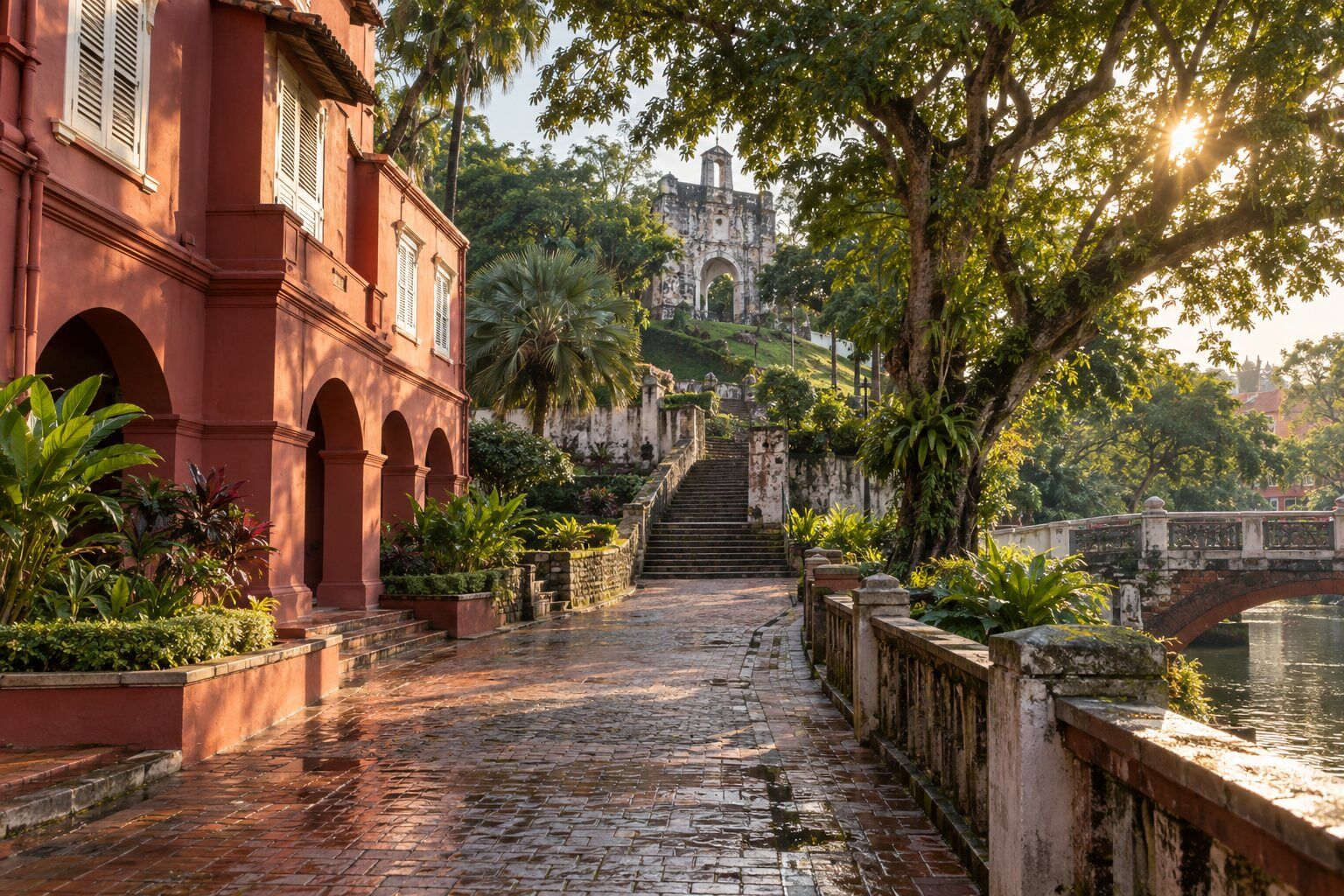
Dutch Square, St. Paul’s Hill, and A Famosa belong in the same walking block. Visit the square before crowds and midday heat build, climb the hill while you still have energy, then descend toward the surviving gate before returning to the river for shade, lunch, or a museum.
Dutch Square is the visual center of historic Malacca. Its red buildings make orientation easy, while nearby bridges connect the colonial core with Jonker Street and the riverside lanes. You don’t need to schedule each façade separately; treat the area as one continuous outdoor stop.
- Dutch Square (Dataran Belanda): Best visited during daylight, with early morning offering a calmer walk. The outdoor square is free. It’s reachable on foot from Jonker Street by crossing the bridge over the Malacca River.
- Christ Church Melaka (Gereja Christ Melaka): Interior access can depend on worship and visitor arrangements, so check the posted notice before entering. Viewing the exterior is free. The church faces Dutch Square.
- The Stadthuys (Bangunan Stadthuys): Museum access is ticketed and operating hours can change. Confirm the current schedule at the entrance. The building stands directly beside Dutch Square.
- St. Paul’s Church (Gereja St. Paul): The hilltop ruins are generally approached on foot, and the outdoor site is free to view. Use the stair route rising behind the Stadthuys area.
- A Famosa and Porta de Santiago (Kota A Famosa): The surviving gate can be viewed from the public outdoor area without an admission ticket. Walk downhill from St. Paul’s Church toward the gate.
Wear shoes with grip because stone steps can feel slick after rain. The climb isn’t a reason to rush, and the hill is more enjoyable when you pause for the city views. If mobility is limited, focus on Dutch Square and the lower approaches rather than forcing the full hill circuit.
Jonker Street and the river reveal modern Melaka
Jonker Street is most useful as a food, shopping, and neighborhood stop rather than a single attraction. Pair it with the Malacca River and nearby side streets, visiting shops during the day and returning after sunset if evening stalls or illuminated riverfront buildings fit your schedule.
Jonker Street follows Jalan Hang Jebat through the historic quarter. The main road contains cafés, snack shops, antiques, souvenirs, and restored shophouses. It can become crowded, so use parallel streets when you want a quieter look at the neighborhood’s architecture.
- Jonker Street (Jalan Hang Jebat): Shops follow their own schedules, while evening activity varies by day. Walking the street is free. Cross the bridge from Dutch Square and continue straight into the heritage district.
- Malacca River (Sungai Melaka): The riverside path is free, while cruises require a ticket. Boarding arrangements and schedules should be checked locally. Access points sit near Dutch Square and along the central riverfront.
- Cheng Hoon Teng Temple: Visitor access should respect worship times and posted dress rules. Entry arrangements can change. It’s within walking distance of Jonker Street through the old commercial quarter.
- Kampung Kling Mosque (Masjid Kampung Kling): Visit outside prayer periods and follow clothing guidance at the entrance. It stands near other historic religious buildings north of Jonker Street.
A river cruise can be useful when your feet need a break, but it shouldn’t replace the riverside walk. From the boat, you see painted walls and bridges. On foot, you can stop for details, take side streets, and choose a café when rain arrives.
Night changes the area’s mood. Reflections appear along the water, traffic feels less dominant on some lanes, and dinner becomes part of the sightseeing. If you’re taking an evening bus out, allow enough time to collect your bag and reach the terminal without cutting dinner short.
What should you eat in Malacca?
Start with chicken rice balls, Nyonya dishes, cendol, and a locally made snack rather than ordering every famous item at one meal. Choose busy kitchens with clear menus, check whether payment is cash-only, and spread food stops across the day so lunch doesn’t become another rushed attraction.
Malacca’s food reflects the same cultural overlap found in its streets. Peranakan, or Nyonya, cooking combines Chinese techniques with regional ingredients and Malay influences. Menus vary, but you may encounter rich spice pastes, coconut milk, tamarind, seafood, and carefully prepared vegetable dishes.
Chicken rice balls are among the city’s recognizable specialties. The rice is shaped into compact balls and served with chicken, sauce, and condiments. Popular dining rooms can develop queues, so an early lunch often fits a one-day itinerary better than waiting during the busiest period.
Cendol makes sense after a warm walk. The dessert commonly combines shaved ice, coconut milk, palm sugar, and green jelly strands. Versions differ in sweetness and toppings. Share one first if you’re also planning pastries, pineapple tarts, or another dessert along Jonker Street.
For a more relaxed dinner, move one or two streets away from the busiest section. You may lose the immediate market atmosphere, but you gain quieter seating and more time to read the menu. Ask about spice levels if needed, and mention allergies clearly rather than assuming a familiar dish uses familiar ingredients.
What is the best Malacca one-day itinerary?
A Malacca one-day itinerary can cover the central heritage route, one substantial meal, Jonker Street, and a riverfront walk. Prioritize the historic core and add only one optional activity; trying to include every museum, a long cruise, distant neighborhoods, and an unhurried dinner will make the day feel rushed.
Plan the day around the city’s geography instead of jumping between isolated recommendations:
- Morning: Begin at Dutch Square, see Christ Church and the Stadthuys exterior, then climb St. Paul’s Hill.
- Late morning: Descend toward A Famosa and decide whether one nearby museum deserves your time.
- Lunch: Walk toward Jonker Street for chicken rice balls, Nyonya cooking, or another local specialty.
- Afternoon: Explore Jalan Hang Jebat, Cheng Hoon Teng Temple, nearby lanes, and the Malacca River.
- Evening: Choose dinner, a river cruise, or a longer waterfront walk before returning to your hotel or bus.
The optional activity is the part most visitors overfill. If you select a museum, don’t also assume there’s time for a slow cruise and multiple cafés. If food is your priority, shorten the museum block and keep dinner open. A good day should still have room for shade, rain, and an unexpected queue.
Day-tripping from another Malaysian city can work, but the return schedule controls your evening. Keep screenshots of booking details and know where your bus departs. Malacca’s historic center and its main long-distance bus terminal aren’t the same place.
How should you plan two days of Malacca attractions?
Use the first day for Dutch Square, St. Paul’s Hill, A Famosa, and Jonker Street. Reserve the second day for a museum, religious sites, a river cruise, quieter lanes, and a slower meal. Staying overnight also lets you experience the riverfront after day-trippers leave.
A two-day visit separates Malacca’s main attractions into manageable groups. On the first morning, follow the colonial hill route before moving to Jonker Street and the river. On the second morning, revisit the heritage center at a quieter hour, enter a museum, or spend more time around Cheng Hoon Teng Temple and Kampung Kling Mosque while respecting access and prayer arrangements.
Where to stay in Malacca depends more on atmosphere than distance alone. The historic center is compact, but crossing busy roads or arranging repeated rides can still consume time.
| Area | Works well for | Main consideration |
|---|---|---|
| Jonker Street and Jalan Hang Jebat | Food, heritage atmosphere, evening walks | Noise and crowds may increase during busy evenings |
| Dutch Square and riverfront | Walking access to major sights and river views | Some rooms may face active pedestrian areas |
| Quieter heritage side streets | Guesthouses, slower mornings, local character | Vehicle access may be less direct |
| Modern districts outside the old center | Larger hotels, parking, broader facilities | You’ll depend more on rides for sightseeing |
Ask accommodation staff about stairs, lifts, street access, and bag storage before booking. Heritage buildings can have character without the layout of a modern hotel. If you’re arriving before check-in or leaving after checkout, luggage storage can preserve several useful sightseeing hours.
A second day also gives you room to choose both a river cruise and a riverside walk instead of treating them as alternatives. You can linger over breakfast, stop during afternoon rain, and enjoy dinner without watching the departure clock.
How can you visit Malacca’s outdoor sights in hot or rainy weather?
Visit Dutch Square, St. Paul’s Hill, and A Famosa early, then use lunch, museums, shops, or cafés during the warmest or wettest part of the day. Pack breathable clothing, comfortable walking shoes, water, sun protection, and a compact umbrella. Carry a modest layer or scarf for religious sites.
Malacca’s central sightseeing route includes exposed squares, shaded lanes, staircases, and air-conditioned interiors. You’ll feel those changes more when walking quickly. Plan the hill and other outdoor landmarks earlier, then leave flexible indoor activities for the afternoon.
A compact umbrella serves for both sun and rain, though you should close it in dense crowds. A reusable bottle is useful if you can refill it safely. Keep a little cash available because smaller stalls may not support your preferred payment method.
Religious buildings deserve more than a quick clothing adjustment at the door. Cover shoulders and knees where requested, speak quietly, and avoid entering active prayer areas without permission. Shoes may need to be removed, so socks and footwear that are easy to manage can make the visit smoother.
Don’t carry your full travel bag through the heritage district if storage is available. St. Paul’s Hill and uneven pavements are much less comfortable with luggage. A compact daypack with water, rain protection, medication, and a power bank is enough for most central sightseeing.
How do you get between Malacca attractions?
Walk between attractions in the heritage core and use a taxi or app-based ride for Melaka Sentral, outer neighborhoods, or travel with luggage. Dutch Square, St. Paul’s Hill, A Famosa, Jonker Street, and the central riverfront form a practical walking circuit.
Most places to visit in Melaka’s old center fit a walking route. Connecting the central sights on foot avoids arranging a ride between every stop and gives you access to narrow lanes where stopping by car is inconvenient. Traffic and indirect road routes can make a short map distance slower by vehicle than expected.
Melaka Sentral is the city’s principal long-distance bus terminal, not a heritage attraction in the old center. When arriving, use your accommodation address or a named central landmark as the destination. Before leaving, confirm whether your ticket requires boarding at Melaka Sentral or another specified pickup point.
Allow extra time around weekends and busy evening periods. A vehicle may move slowly even when the distance appears short. If you have a fixed departure, return for stored luggage before your final meal rather than leaving every task until the last hour.
Decorated trishaws are visible around the historic area and can be part of the experience. Agree on the route and price before departure, and clarify whether the quoted amount is per passenger or for the ride. For practical point-to-point transport, compare that offer with a regular taxi or app-based ride.
Staying connected between buses and backstreets
Arrange mobile data before travel if you’ll rely on ride bookings, accommodation messages, digital tickets, or maps between Melaka Sentral and the historic center. Save key details offline as backup, and check that your phone supports the connection method you plan to use before purchasing anything.
If you want service without replacing your physical SIM, start with a guide to eSIM card technology and confirm that your phone is compatible. Some devices don’t support eSIMs, while carrier-locked phones may restrict activation even when the device model normally supports the feature.
Network conditions vary by location, device, congestion, and operator. The Malaysian Communications and Multimedia Commission provides the national regulatory context: MCMC is the regulator for the converging communications and multimedia industry in Malaysia. That role is different from promising identical reception on every street or inside every heritage building.
For broader performance context, Ookla publishes the Malaysia Speedtest Connectivity Report. It recorded a Speedtest Connectivity Score of 80.35 and a Speedtest 5G Connectivity Score of 79.43. Those national measures are useful context, but they aren’t a guarantee for a particular hotel room, bus route, or riverside lane.
If your Malacca trip depends on live maps and ride bookings, choose service around the actual length of your Malaysia stay. For that trip-specific need, Yoho Mobile lets you select Malaysia, your preferred data allowance, and the number of usage days independently instead of requiring a fixed bundle. Review the available Malaysia eSIM plans and choose an allowance and validity period suited to a day trip, weekend, or longer route.
After choosing a plan, you can manage it through the Yoho Mobile app for iOS or the Yoho Mobile app for Android. Activate it according to the supplied instructions, and keep your accommodation address and return transport details available offline.
If you want to check eSIM setup on your phone before relying on it in Malacca, use the free eSIM trial as a starting point. If an eligible Yoho Mobile plan later runs out unexpectedly while you need maps or transport details, Yoho Care can provide emergency data service; review the eligibility details before departure.
Keep battery use in mind during long walking days. Navigation, photography, and ride-booking apps can drain a phone faster than occasional messaging. Carry a charged power bank, lower screen brightness when practical, and save the hotel address in both English and Malay-facing map formats.
Which Malacca attractions belong on a first-timer’s shortlist?
Prioritize Dutch Square, St. Paul’s Hill, A Famosa, Jonker Street, local food, and the Malacca River. One day suits these central highlights; an overnight stay is better if you also want museum time, a river cruise, evening atmosphere, and slower meals.
Use the historic core as your anchor. Start early, follow the hill route in one direction, eat before queues dominate the afternoon, and save the river for a slower stretch. That pattern captures the city’s architecture and daily rhythm without turning the visit into constant clock-checking.
If you have extra time, spend it on one meaningful addition rather than five hurried stops. Choose a museum if history is your priority, a cruise if you want to rest, or another meal if food brought you to Melaka. Each choice changes the day, and none needs to be treated as mandatory.
Malacca rewards attention to small distances: a shaded courtyard, a temple entrance, a painted riverside wall, or a café inside an old shophouse. Keep your route practical, leave room for weather, and the city will feel layered rather than crowded.