
Singapore-Vietnam Trade Booms: Stay Connected with a Business eSIM
A business eSIM helps you operate smoothly amid rising Singapore–Vietnam trade because it keeps calls, data, and messaging alive across borders without roaming delays. As ASEAN connectivity deepens, executives, remote staff, and founders travel more often between these hubs, making seamless connection a strategic advantage. If you want to stay productive in transit or land ready for meetings, installing your eSIM before departure gives you the head start you need.
Learn why a business eSIM matters for Singapore–Vietnam trade travel, how to activate it, and how it improves work efficiency across Hanoi, Ho Chi Minh City, and beyond.
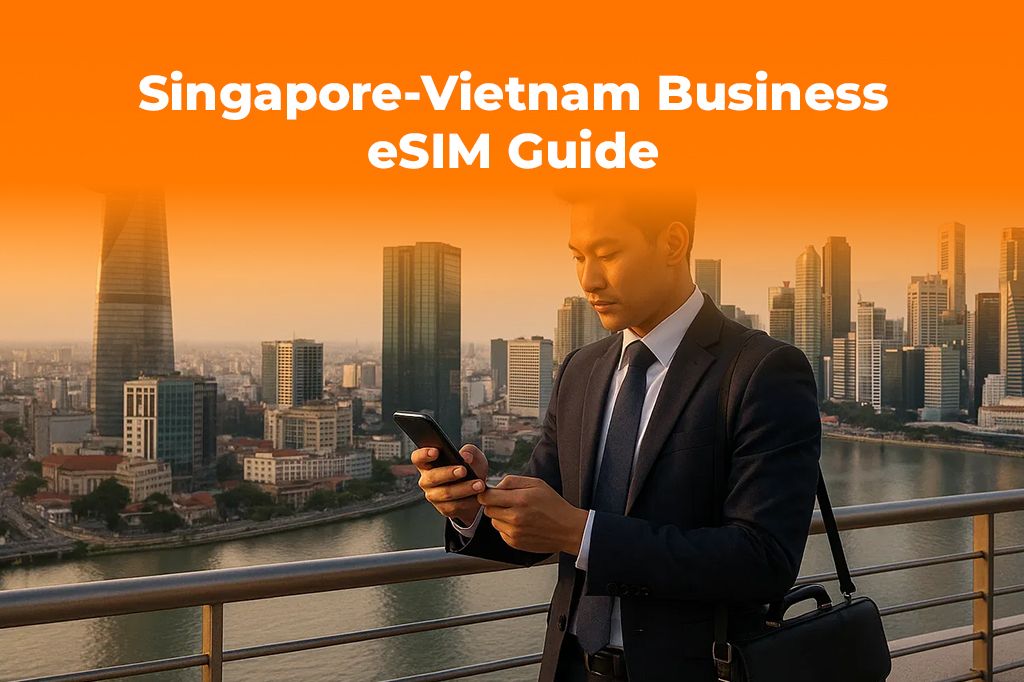
Why Singapore–Vietnam trade growth changes how you travel
Economic ties between Singapore and Vietnam continue to deepen. From green investment to manufacturing and tech partnerships, cross-border meetings increase. If you do Singapore Vietnam business travel frequently, you likely fly between hubs such as Singapore Changi Airport, Ho Chi Minh City and Hanoi.
That movement demands reliable business travel Asia connectivity. Instead of waiting at airport kiosks or relying on patchy roaming in Vietnam, an eSIM for Vietnam helps you stay online across borders.
If you’re new to digital SIM solutions, start by understanding what is an eSIM card. It is a built-in digital profile that replaces physical SIM cards. You install plans directly on your phone, switch networks instantly, and never remove trays or hunt for stores. For traders, consultants, and remote workers, this means less friction from gate to meeting room.
What you gain:
- Backup connectivity
- Faster network onboarding in Vietnam
- No unpredictable roaming fees
- Secure access to cloud tools, maps, and translation apps
With Vietnam positioning itself as a manufacturing and innovation hub while Singapore remains ASEAN’s finance hub, you need flexible connectivity across both.
Why the regional boom makes eSIMs more valuable
Cross-border trade thrives when communication is smooth. Whether you’re sourcing partners in Ho Chi Minh City, visiting industrial parks in northern Vietnam, or pitching investors in Singapore, you want roaming in Vietnam that works on arrival.
Traditional SIM cards stall your momentum:
- Queueing for local registration
- Staff requiring passport scans
- Delays in activation
- Offline gaps between airports and taxis
A Hanoi eSIM or Vietnam eSIM eliminates this. You activate before boarding in Singapore, and your data starts in minutes the moment wheels touch down at Noi Bai International Airport.
As Singapore Vietnam business relationships expand, agility matters more than ever—your tools, calls, and cloud files must be ready immediately, not after setup headaches.
What business travelers expect from modern connectivity
You likely need:
- Real-time translation
- Access to cloud documents
- Team calls across zones
- Payment apps
- Navigation around industrial districts
Vietnam’s fast-moving cities—from Ho Chi Minh’s District 1 to Hanoi’s business corridors—are digital-forward, but only if your internet works.
That’s where the right eSIM for Vietnam becomes a competitive enabler, not just a convenience.
Step-by-step: setting up your business eSIM for Vietnam
Here’s a simple way to prepare before your next ASEAN trade trip.
-
Choose your regional coverage
Decide whether you want only Vietnam or broader ASEAN coverage. If you travel frequently to Thailand, Malaysia, or Cambodia, a wider plan pays off.
-
Buy online before your flight
Once purchased, you receive an activation QR code.
-
Install during downtime
Add the profile on trusted Wi-Fi at home or office. Keep it inactive until landing.
-
Activate in Vietnam
After landing, enable roaming on the new line and let it connect to local networks.
-
Switch back when in Singapore
If your regional plan supports both countries, you don’t even need to switch—your device handles transitions.
Quick reminder
If you want a smooth preview of setup steps, explore the walkthrough at how Yoho Mobile works. It explains activation flow so you travel with confidence.
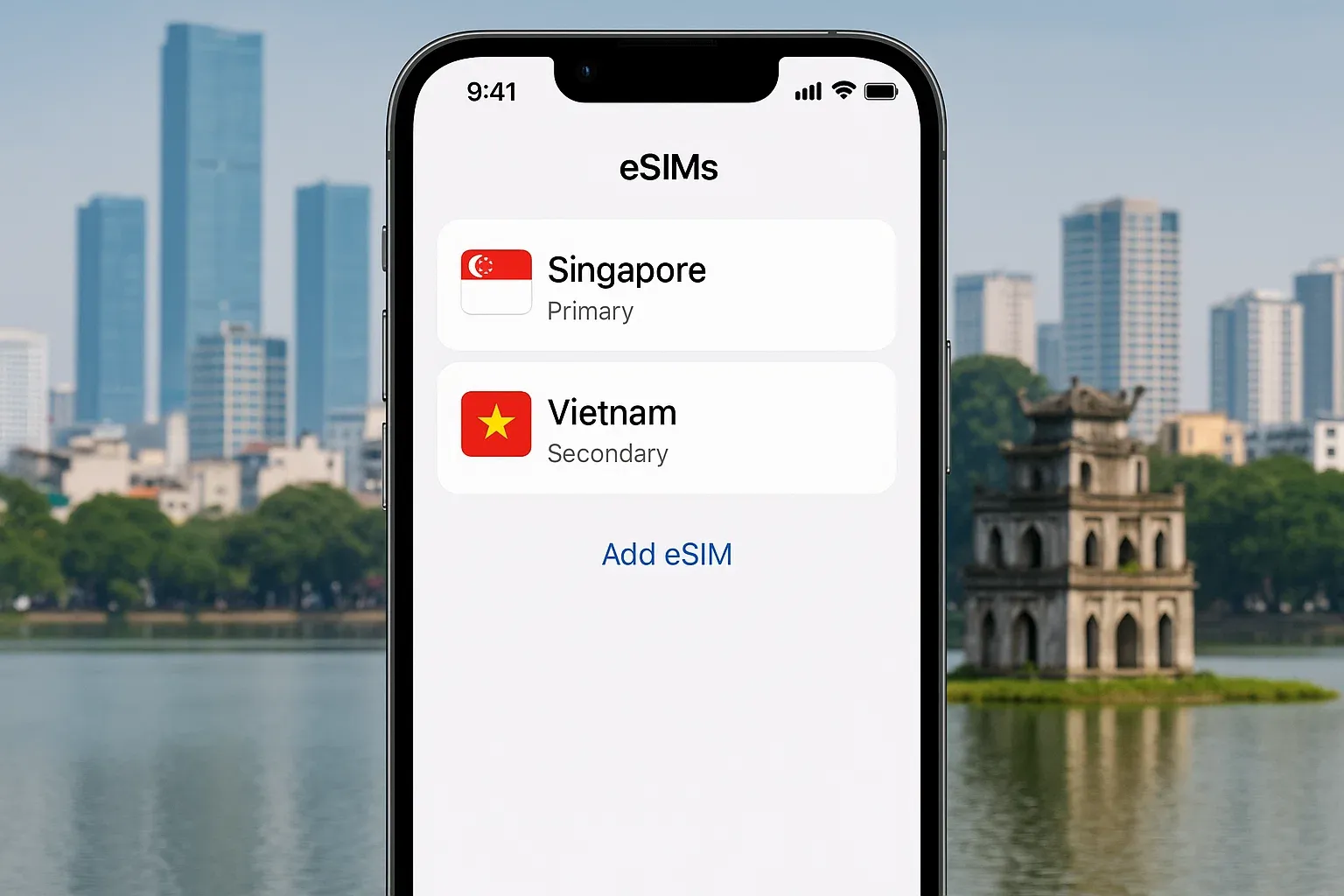
Real-world use cases: why Singapore–Vietnam business needs eSIM flexibility
Consider three typical scenarios:
You fly for factory tours in Hanoi
Your taxi driver needs map guidance, and meeting time shifts. With your eSIM active, translation and navigation apps work instantly.
You attend a pitch in Ho Chi Minh City
Presentations sync from the cloud moments before stepping into a boardroom as your data uploads seamlessly.
You run a remote team
Messaging apps remain responsive, even when local hotel Wi-Fi falters.
Business travel Asia has evolved. Trade talks are hybrid, distributed, and fast-paced. With Singapore–Vietnam trade rising, your edge lies in uninterrupted communication.
If you want the practicality of landing connected, you could pick an eSIM plan from Yoho that lets your device join Vietnam networks right away, cutting waiting time dramatically.
Why roaming in Vietnam with your home carrier is not ideal
Home network roaming often equals:
- Costly data
- Slower speeds
- Delayed registration
- Limited real-time support
Vietnam’s telecom operators provide excellent urban coverage when you access them locally. Using a Vietnam eSIM unlocks this performance without tying you to unpredictable roaming.
Meanwhile, Singapore–Vietnam business travel often includes visits to industrial zones around Hanoi and Ho Chi Minh City. These outskirts sometimes challenge roaming connections, but eSIMs that anchor to domestic carriers deliver steadier data.
The cultural advantage: operating with precision
ASEAN connectivity reflects not just tech but business etiquette. Stakeholders appreciate responsiveness. Whether confirming meetings or paying via QR at Ho Chi Minh City cafés, professionalism shows when your communication tools work instantly.
A Hanoi eSIM or regional ASEAN eSIM ensures your calls don’t drop mid-negotiation. That kind of reliability supports trust and efficiency.
Tips for optimising your business eSIM usage in Vietnam
- Keep both your Singapore and Vietnam profiles installed
- Use the Vietnam profile for local data
- Download offline maps for backup
- Track spending through your provider dashboard
- Keep a portable battery—you’ll use your phone more than usual
As cross-border trade grows, your phone becomes both your logistics controller and interpreter.
Industry trend: why ASEAN connectivity is accelerating
Singapore remains a gateway for finance, logistics, and innovation. Vietnam advances manufacturing, agriculture, and technology outsourcing. These complement each other, strengthening cross-border trade.
The more movement between both markets, the more valuable digital flexibility becomes. Analysts see continued trade momentum, making reliable eSIM roaming in Vietnam a professional advantage rather than a travel perk.
Mobile standards and authentication also improve, following interoperability principles like GSMA eSIM standards. This ensures secure profile provisioning—a reassuring detail for business travellers working with sensitive documents.
Key takeaways
- Singapore–Vietnam business expansion increases cross-border mobility needs.
- An eSIM for Vietnam prepares you for meetings from airport arrival.
- Roaming in Vietnam with home networks can be costly and slower.
- Business travel Asia thrives when your cloud and communication tools connect reliably.
- Yoho eSIMs offer fast activation and smart pricing across ASEAN routes.
FAQs
Do eSIMs work well in Hanoi and Ho Chi Minh City?
Yes, coverage is strong in urban centres and business zones.
Can I use one eSIM for multiple ASEAN countries?
Many providers offer multi-country options that suit repeated regional travel.
Will my Singapore SIM still work?
Yes—keep it for calls or SMS while the Vietnam eSIM handles data.
Are eSIMs secure for business use?
Yes. They follow encrypted standards like GSMA eSIM standards.
Do I need technical knowledge?
No—installation is quick via QR code.
Conclusion
The rise in Singapore–Vietnam trade calls for smoother travel experiences. If you want to focus on deals instead of data problems, you can activate a Yoho Vietnam eSIM ahead of your trip and step into meetings already connected.
PIÙ CONSIGLI DI VIAGGIO CURATI
ASEAN Travel: Best eSIM for Singapore, Malaysia & Vietnam
Leggi di piùDestination GuidesBest Singapore eSIM for Marina Bay Sands | Yoho Mobile
Leggi di piùTravel GuidesBatam to Singapore Travel: Stay Connected with a Cross-Border eSIM
Leggi di piùTravel GuidesBusiness Travel to Singapore & China: eSIMs for Seamless Work
Leggi di piùTravel GuidesCanada-Singapore Travel: Your Guide to eSIM Connectivity
Leggi di più