
Best Things to Do in Traverse City
Traverse City looks compact on a map, but fitting its waterfront, food, vineyards, and nearby scenery into one short visit gets complicated fast. A missed sailing or an overpacked peninsula day can erase the afternoon you meant to spend beside Lake Michigan. Skip the all-in-one regional loop, anchor each day around one dependable priority, and you can choose the right beaches, wineries, family stops, season, and neighborhood without spending the trip in transit.

What are the best things to do in Traverse City?
The best things to do in Traverse City include walking Front Street, swimming at Clinch Park or West End Beach, visiting wineries on Old Mission or Leelanau Peninsula, exploring family-friendly museums, and taking a day trip to Sleeping Bear Dunes. For a comfortable first visit, combine one city activity with one beach, peninsula, or countryside outing each day.
The city sits at the base of Grand Traverse Bay, so water shapes almost every good day here. You can browse downtown shops in the morning, eat locally made food at lunch, and reach a beach without treating it as a separate expedition. That convenience is a major reason the destination works for couples, families, and mixed-age groups.
The surrounding peninsulas add vineyards, farm stands, shoreline views, and scenic roads. Old Mission Peninsula feels like a direct extension of the city and includes Mission Point Lighthouse at its northern end. Leelanau Peninsula is broader and better treated as its own outing, especially if you want to combine wineries with small communities and a longer drive.
The practical approach is to avoid measuring your visit by the number of pins you clear from a map. Traverse City rewards time at each stop. Leave room for an unplanned swim, a second coffee, or a longer meal when the weather cooperates.
Explore Front Street, Clinch Park, and the Boardman River
The best downtown outing combines Front Street, the Boardman River area, and Clinch Park in one continuous route. You will not need to move the car between every attraction, and the route leaves enough flexibility for shopping, lunch, a movie, or an evening walk beside Grand Traverse Bay.
Start around Front Street, where independent shops, restaurants, coffee counters, and the State Theatre create the city's most concentrated pedestrian area. The blocks are manageable, but they deserve more than a quick pass. Browse first, then choose food based on what sounds good rather than locking the entire afternoon to a reservation.
From downtown, continue toward Clinch Park and the shoreline. It is one of the easiest places to add swimming or a waterfront pause to a city day because you remain close to restaurants and central streets. If your group wants a longer walk, connect the waterfront with the Boardman River area instead of driving to another district.
Useful downtown anchors
- Front Street: Check individual business hours, expect prices to vary by venue, and arrive on foot from central hotels when possible.
- State Theatre: Confirm the current screening schedule and ticket price before building an evening around a film.
- Clinch Park: Review seasonal waterfront services before visiting; walking from Front Street is the simplest approach.
- Boardman River area: Use it as a quieter extension of downtown rather than a separate driving stop.
Food is part of the attraction here, not just a pause between sights. Look for menus using cherries, apples, local vegetables, freshwater fish, and regional drinks. A market, bakery, or casual counter often fits a beach day better than a long formal lunch.
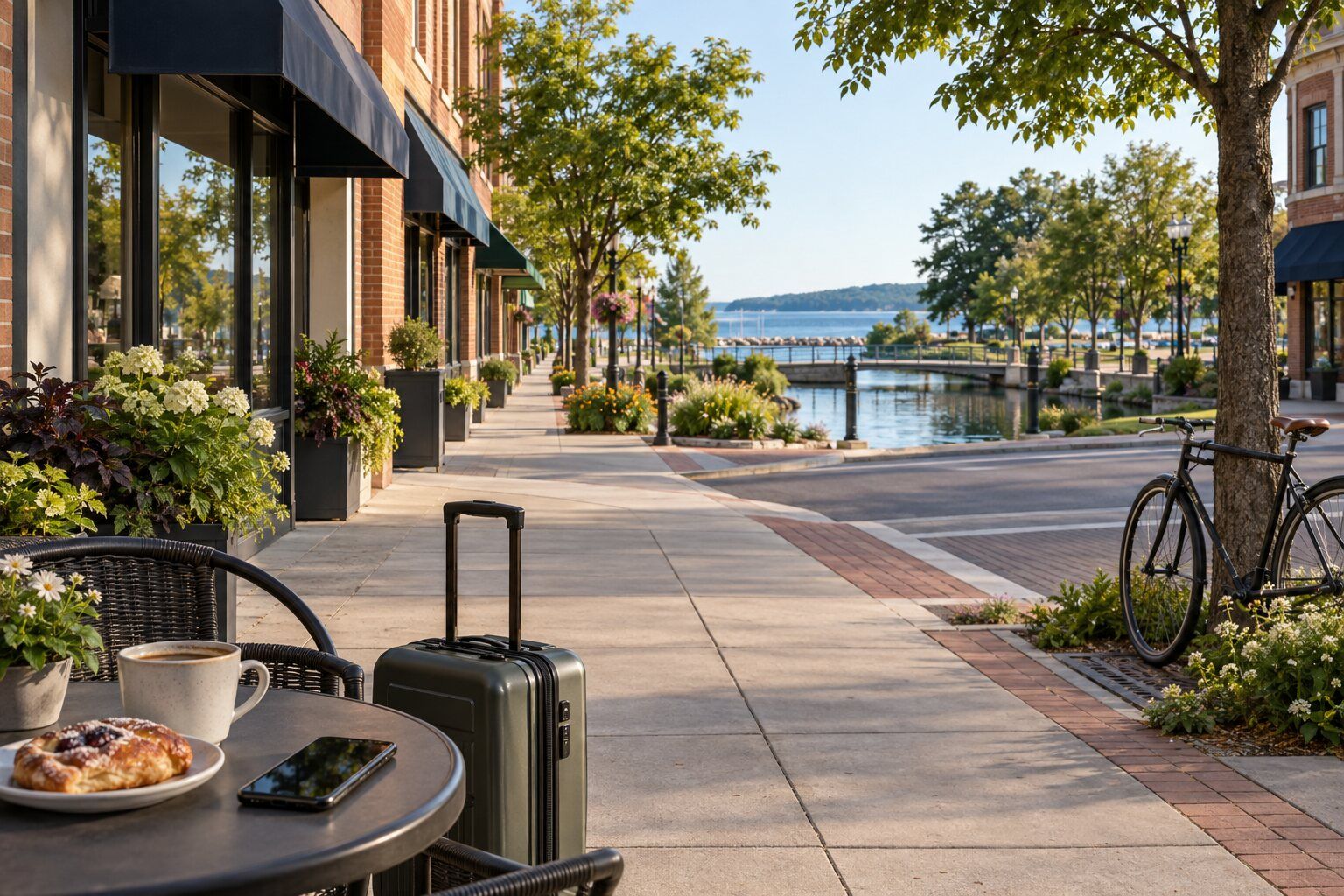
Which Traverse City beach fits your day?
Choose Clinch Park for convenience, West End Beach for a broader shoreline break near town, and Bryant Park for a neighborhood feel. For a more landscape-focused day, leave the city and pair Sleeping Bear Dunes National Lakeshore with nearby communities instead of squeezing it between downtown reservations.
Traverse City beaches are not interchangeable. Your best choice depends on whether you want a quick swim, a long pause, or a full scenic outing. Water conditions and beach services can change with the season, so check local notices before leaving your accommodation.
| Beach or shoreline area | Best use | Access approach | Planning note |
|---|---|---|---|
| Clinch Park | A swim or waterfront pause during a downtown day | Walk from central Traverse City | Confirm seasonal facilities and current conditions |
| West End Beach | A less compressed shoreline break near the city center | Walk, cycle, or drive depending on your base | Bring sun protection and a light layer |
| Bryant Park | A relaxed neighborhood beach visit | Drive or cycle from downtown | Keep the visit flexible around weather |
| Sleeping Bear Dunes area | A dedicated landscape and hiking day | Drive west from Traverse City | Treat it as a day trip, not a brief detour |
Sleeping Bear Dunes is the standout day trip when scenery matters more than city time. The key is restraint. Pick a limited part of the lakeshore, allow time for overlooks or trails, and avoid promising yourself a full Traverse City evening afterward. Sand, wind, parking, and scenic pauses make outdoor days run longer than map estimates suggest.
Families should also separate beach time from a more complex outdoor outing. A central beach can be easy and spontaneous. A dunes excursion needs suitable footwear, water, snacks, weather awareness, and enough energy for the return drive. Those are different days, even if both involve Lake Michigan.
Tour Traverse City wineries on one peninsula
Choose Old Mission Peninsula for an easy half-day wine route close to Traverse City. Pick Leelanau Peninsula when you want a full countryside outing with wineries, small communities, meals, and scenic stops spread across a wider area.
Traverse City wineries are a major draw, but tasting rooms should not become a race. Select a small cluster and leave space between stops. The landscape, conversation, and food pairings are part of the experience, and a rushed schedule defeats the reason to visit.
Old Mission Peninsula for a compact route
Old Mission works well when you have half a day or want to combine vineyards with Mission Point Lighthouse. The route is narrow enough to understand quickly, yet you still need to check tasting policies, current hours, reservation requirements, and food availability directly with each venue.
Build the outing around one side of the peninsula, then cross only when it serves a clear purpose. Constantly switching roads may look efficient on a map, but it creates more driving and fewer uninterrupted bay views.
Leelanau Peninsula for an unhurried day
Leelanau is the stronger choice when wine is the day's main event. Its greater spread makes room for villages, farm products, shoreline scenery, and a proper meal. It also makes spontaneous route changes more expensive in time, so group nearby stops before departure.
Use a designated driver, book organized transport, or arrange another safe option if anyone will drink. Non-drinkers are not an afterthought here: many venues emphasize views, local produce, and relaxed outdoor settings. Still, verify what each tasting room offers before promising a full experience to every member of your group.
Cherry season beyond the tasting room
Wine is not the only seasonal flavor. Cherries appear in baked goods, preserves, drinks, and roadside products across the region. Farm markets and casual food stops can give you a broader taste of northern Michigan without committing another afternoon to formal tastings.
Visit family attractions and keep a rainy-day backup
Families can balance beach time with the Great Lakes Children’s Museum, the Dennos Museum Center, the Village at Grand Traverse Commons, and easy sections of local trails. Keep one indoor option available because wind or rain can quickly change a waterfront day, even when the morning looks promising.
The Great Lakes Children’s Museum is the clearest choice for younger children who need hands-on indoor time. Check the current session structure, opening schedule, and admission details before leaving, since family attractions can operate differently across seasons and school calendars.
The Dennos Museum Center suits older children and adults who want art and cultural exhibits without giving up an entire day. It works well between lunch and dinner or as a weather backup. Current exhibitions, admission terms, and opening hours should guide how long you reserve.
The Village at Grand Traverse Commons offers a different kind of outing. Its historic setting now contains shops, food venues, and walking areas, making it useful for groups that do not all want the same activity. One person can browse while another sits with coffee, and everyone can regroup for a meal.
Low-pressure options for mixed ages
- Great Lakes Children’s Museum: Confirm hours and entry price; drive from central Traverse City and allow indoor play time.
- Dennos Museum Center: Check exhibition access and admission before arrival; driving is usually the practical choice.
- Village at Grand Traverse Commons: Review business hours individually and allow time for both indoor browsing and outdoor walking.
- Boardman Lake Trail: Choose a manageable segment instead of committing every traveler to a full circuit.
A rainy day does not need to become a shopping marathon. Pair one museum or indoor attraction with a good meal, then reassess the weather. Short showers may clear, giving you enough time for the waterfront without rebuilding the whole schedule.
Plan summer beaches, fall color, and winter food stops
Visit in summer for swimming and the fullest activity schedule, autumn for colorful drives and harvest stops, spring for quiet walks and a less crowded downtown, or winter for restaurants and a slower indoor escape. Your best season depends on whether beaches, wineries, trails, or lower crowd pressure matters most.
Summer offers the easiest version of a classic Traverse City trip. Beaches, waterfront walks, patios, and peninsula drives fit naturally together. It is also the period when reservations and parking require the most attention. Book key meals and accommodation early, then leave ordinary daytime blocks flexible.
Autumn shifts the focus toward scenic roads, orchards, vineyard landscapes, and layered clothing. It is a strong choice for couples and food-minded travelers who do not need a swimming holiday. Daylight and temperatures feel less forgiving than in midsummer, so begin peninsula outings earlier.
Spring is transitional. You may find a calmer downtown and easier movement, but outdoor conditions can be inconsistent. Check seasonal operations carefully because a place appearing on a map does not guarantee that every service is running.
Winter works best when you accept its limits. Build the trip around restaurants, warm indoor stops, and weather-dependent outdoor time. Do not schedule a distant drive as if roads and visibility will behave like summer.
Give seasonal events room in the schedule
Festival dates can transform accommodation demand, restaurant availability, and downtown movement. If a named event is your reason for coming, organize the trip around that event rather than placing it inside an already crowded sightseeing list. The event is the anchor; beaches, wineries, and shopping become optional additions.
Stay near the Traverse City attractions you value most
Stay downtown for easy walks to Front Street, restaurants, and the waterfront. Choose a bayfront property when views and beach access come first, or stay outside the center if parking and road access matter more. Peninsula accommodation suits a rural retreat but is less convenient for repeated downtown outings.
Downtown is the easiest first-time base. You can walk to Front Street, reach the central waterfront, and avoid driving after dinner. The trade-off is that central rooms may feel busier and parking arrangements vary, so check exactly what your booking includes.
Bayfront accommodation works for travelers who want water visible from the property or quick shoreline access. Read the location carefully: “Traverse City area” does not always mean you can walk downtown. A beautiful view may come with repeated short drives.
Staying south or farther from the center can offer simpler road access and may suit families with a vehicle. It is less useful if your ideal evening involves walking between dinner, shops, and the waterfront. Compare your expected travel patterns, not just the room itself.
A peninsula stay is a lifestyle choice. It can be peaceful and atmospheric, especially when wineries and rural scenery are your priorities. It also means that downtown meals, museums, and weather backup plans require more travel. For a first weekend, the city usually makes the more forgiving base.
Follow a balanced Traverse City weekend itinerary
A good Traverse City weekend gives downtown and the bay one day, then reserves the next for either Old Mission Peninsula or Sleeping Bear Dunes. Do not combine both major excursions into the same day. One focused route creates more time for meals, scenery, and unplanned stops.
Arrival evening near Front Street
Check in, leave the car where you are staying, and walk through downtown. Choose dinner near Front Street, see the waterfront if daylight and weather cooperate, and avoid adding a distant attraction. The aim is to understand the compact city core before the longer outing.
City morning and peninsula afternoon
Begin with coffee and a relaxed downtown walk. Continue to Clinch Park or another nearby shoreline area, then have lunch before driving onto Old Mission Peninsula. Choose a small group of wineries or replace tastings with farm stops and Mission Point Lighthouse.
Return with enough time for dinner rather than adding another remote stop. This is where many Traverse City weekend itinerary plans become too ambitious. A comfortable meal and evening stroll will usually feel better than reaching one extra place just before closing.
Choose one final-day direction
If you want a major natural landscape, devote the last day to Sleeping Bear Dunes and accept that it may use most of your remaining time. If you prefer a gentler finish, visit the Village at Grand Traverse Commons, the Dennos Museum Center, or a beach before departure.
Traveling with children changes the balance. Keep the first full day close to town, where food, toilets, shade, and indoor alternatives are easier to reach. Save the longer drive for a morning when everyone has energy and the forecast supports it.
Prepare for local transport, weather, and connectivity
Pack for quick weather changes, drive for peninsula and dunes outings, and walk when exploring central Traverse City. International visitors should arrange mobile data before departure so maps, reservations, and weather updates remain available, while still saving offline directions for rural stretches and unexpected signal gaps.
Bring shoes that handle pavement, sand, and easy trails. A light outer layer belongs in your day bag even when the forecast looks warm because shoreline wind can change how the air feels. Add sun protection, a reusable water bottle, and swimwear if the beach is even a possible stop. The daypack packing checklist is useful if you tend to carry too much on mixed city-and-outdoor days.
A car gives you the most freedom beyond downtown. Old Mission Peninsula, Leelanau Peninsula, and Sleeping Bear Dunes are driving outings, not casual extensions of a Front Street walk. Check parking arrangements at your accommodation, group stops by area, and save offline maps before rural drives.
If your trip depends on map directions, booking messages, and weather checks, arrange mobile access before you start driving. For international visitors, an eSIM can provide mobile data without replacing a physical SIM, provided the phone supports eSIM and is not locked to another carrier. Devices without eSIM support still need another connection method.
Compatibility varies by device and market. Apple travelers can check the current requirements in Apple's eSIM support guidance, while Pixel users can consult Google's Pixel eSIM guidance. Confirm support before buying a plan rather than assuming every model works the same way.
Network rankings can offer broad context, but they cannot promise reception on every rural road. Use the Speedtest Global Index as a general network-performance reference, not a guarantee of coverage at a particular winery, beach, or trailhead. Save the address of each stop and your accommodation before leaving town.
Verify current beach facilities, road conditions, business hours, and mobile reception through the relevant venue, local authority, weather service, or network provider before departure.
A short Michigan visit may require only a limited amount of data for directions, messages, and reservation updates, so trip-specific control can be more useful than a fixed long-duration bundle. For that need, Yoho Mobile lets you choose the United States, a preferred data allowance, and a suitable validity period. Review a United States eSIM plan and match it to the length and expected data needs of your trip.
Once you have chosen the trip details, you can manage the eSIM profile through the Yoho Mobile app on iOS or the Yoho Mobile app on Android. Follow the plan's installation and activation instructions, and review your primary line settings if you want to avoid unintended roaming charges.
If you are new to eSIMs and want to test the setup before relying on it for driving directions, that preparation need is where Yoho Mobile's free eSIM trial can be useful. Test installation and connectivity before the trip. If you are also concerned about unexpectedly exhausting your included data while navigating between rural stops, review how Yoho Care works before departure.
Connectivity is only a practical layer beneath the trip. Keep your Traverse City plans anchored on one meaningful outing each day, then let weather, appetite, and energy decide the rest. That approach leaves room for the bay, local food, a vineyard road, and the unscheduled pauses that make a first visit feel like a holiday.