
Best Time to Visit Stockholm for Nightlife
Stockholm’s nightlife changes sharply with daylight, temperature, holiday schedules, and the movement between indoor clubs and summer terraces. Arrive during a quiet holiday week or without protection from rain and freezing wind, and you may spend more time searching for an open venue or arranging an expensive ride home than enjoying the city. This guide identifies the strongest nightlife windows, explains each season’s trade-offs, and helps you plan bookings, clothing, transport, and mobile access around the kind of evening you want.

When Is the Best Time for Stockholm Nightlife?
The best time to visit Stockholm for nightlife is from late May through June or from mid-August to late September. These periods combine active clubs, outdoor drinking areas, manageable temperatures, and fewer scheduling disruptions than midsummer holiday weeks, while September offers darker evenings that better suit a traditional late-night atmosphere.
If you want the broadest range of outdoor and indoor choices, target the first three weeks of June. Daylight lasts well into the evening, waterfront venues feel social, and moving between neighborhoods is more comfortable than in winter. The unusual light can also alter your sense of time: an evening that looks like late afternoon may already be approaching 10 p.m.
Late August and September provide a different balance. Stockholm’s residents have largely returned from summer holidays, cultural calendars become busier, and the earlier sunset makes bars and clubs feel more atmospheric. Temperatures are cooler, but a jacket usually solves the problem. This is often the most dependable answer for travelers whose main priority is dancing, live music, or cocktails rather than summer sightseeing.
| Travel period | Nightlife character | Crowds | Relative prices | Best for |
|---|---|---|---|---|
| Late May to June | Bright evenings and outdoor venues | Moderate to high | High | First visits and social weekends |
| July | Summer terraces with holiday disruption | High in visitor areas | Peak | Sightseeing combined with nightlife |
| Mid-August to September | Full club and cultural calendar | Moderate | Moderate to high | Clubs, concerts, and couples |
| October to November | Indoor bars and live music | Low to moderate | Below summer peak | Value-focused city breaks |
| December to February | Indoor and seasonal nightlife | Low outside holidays | Variable | Winter atmosphere and short stays |
The best time to travel to Stockholm is not automatically the best time to visit Sweden as a whole. Northern Sweden has a much colder climate and different seasonal attractions, while Stockholm’s nightlife is shaped by an urban calendar. Plan around the capital rather than treating national weather patterns as interchangeable.
How Does Summer Change Stockholm After Dark?
Late May to early September brings Stockholm’s warmest evenings and longest daylight, with typical daytime temperatures around 17°C–24°C (63°F–75°F). Crowds and room prices reach their highest levels, but outdoor bars, waterfront areas, festivals, and late sunsets give the city its most visibly energetic social atmosphere.
June is the standout summer month for atmosphere. Stockholm receives exceptionally long daylight around the summer solstice, so you can have dinner, walk between islands, and begin an evening outdoors without seeing full darkness. For visitors, this creates a memorable sense of a city extending its day rather than switching abruptly into night.
The trade-off is that summer is not one continuous peak. Midsummer falls on a Friday between June 19 and June 25, with celebrations centered on Midsummer Eve. Some residents leave the city, and individual businesses may reduce hours. If clubs are your central reason for traveling, check their schedules rather than assuming every venue will operate normally throughout the holiday.
July is popular and earns that reputation through warm weather and outdoor activity, yet it can be less predictable for local nightlife. Many residents take annual holidays, while central areas attract larger visitor crowds. Hotel rates remain high, and popular rooms can disappear several weeks ahead. A traveler combining museums, archipelago trips, dining, and a few nights out may love July; a traveler seeking the strongest local club calendar may prefer June or late August.
What should you expect from summer weather?
- Temperature: commonly 17°C–24°C (63°F–75°F) by day, with cooler late evenings.
- Daylight: roughly 17–18 hours near the June solstice, declining through August.
- Crowds: high around Gamla Stan, waterfront attractions, and major summer weekends.
- Price level: generally the year’s highest for centrally located accommodation.
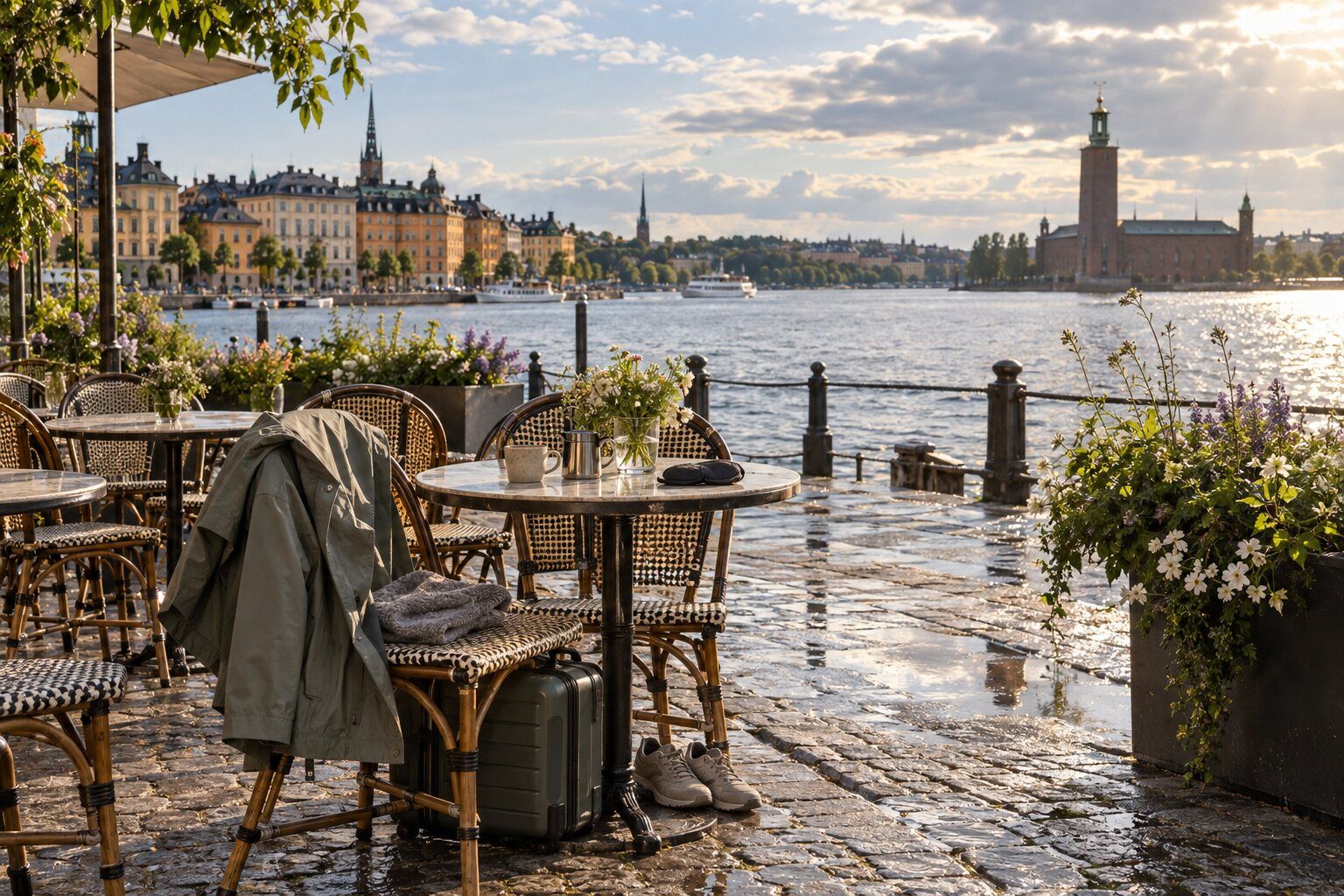
- Pack: a light rain shell, thin sweater, comfortable shoes, and a sleep mask for bright mornings.
A year-round overview of Stockholm’s seasonal timing can help you compare the social benefits of summer with the city’s quieter periods. Treat temperature ranges as planning guidance and check a short-range forecast before packing.
Why Is Early Autumn Good for Clubs and Live Music?
Mid-August to late October is the strongest period for travelers who prioritize clubs, concerts, and cocktail bars over outdoor terraces. Temperatures typically move from about 20°C (68°F) in August toward 8°C–12°C (46°F–54°F) in October, while returning residents and darker evenings restore a more local nightlife rhythm.
Late August keeps much of summer’s comfort without its brightest nights or heaviest holiday effect. You can still begin outdoors, then move inside as temperatures fall. Accommodation remains in demand, but the city generally feels less dominated by peak-season sightseeing than it does in July.
September is arguably the best time to visit Stockholm for nightlife if your ideal trip includes several types of venue. You can combine rooftop drinks on a mild evening, a Södermalm bar, a live performance, and a later club without building the trip around summer-only spaces. Sunset arrives early enough for a true nighttime mood, yet the weather rarely requires full winter clothing.
October shifts attention indoors. Stockholm’s jazz festival commonly takes place during this month, adding concerts across multiple locations, though dates and participating venues change. Rain, wind, and colder nights become more likely. The reward is a more deliberate nightlife scene built around music, restaurants, neighborhood bars, and planned events.
Who gets the most from an autumn visit?
- Couples who want restaurants and cocktails without peak summer crowds
- Solo travelers who prefer ticketed music or cultural events
- Nightlife-focused groups comfortable carrying jackets between venues
- Repeat visitors who have already experienced Stockholm’s summer landmarks
- Budget-conscious travelers who can visit in the second half of October
Pack waterproof outerwear and shoes with reliable grip. By October, daylight can feel short compared with summer, but that supports rather than limits an evening-led itinerary. Reserve daytime for one or two compact activities and avoid scheduling an early excursion after your main club night.
Is Winter a Good Time for Stockholm Nightlife?
Late November to early March works best for indoor nightlife, festive evenings, and lower-season city breaks. Typical temperatures range from about -3°C to 4°C (27°F–39°F), daylight can fall below seven hours in December, and snow or ice may complicate walking, but central bars, restaurants, and clubs continue operating.
The best time to visit Stockholm in winter depends on whether you want celebration or value. Early to mid-December has seasonal lighting, Christmas gatherings, and Lucia observances around December 13. Demand increases around major holiday weekends, and some venues hold ticketed events or private functions. Book a room close to your preferred district so cold weather does not turn every late journey into a logistical task.
New Year’s Eve requires the most preparation. Accommodation, restaurant tables, events, and transport become more pressured, while spontaneous entry may be difficult at popular venues. If that specific celebration is not essential, arriving earlier in December or later in January usually produces a simpler and less costly trip.
January and February are quieter. These months suit travelers who enjoy cocktail bars, intimate music venues, long dinners, and uncrowded museums before going out. They are a weaker fit if your idea of nightlife depends on outdoor social spaces, casual bar-hopping, or lively streets between venues. Wind and wet conditions can feel colder than the thermometer suggests.
What are the main winter trade-offs?
- Temperature: often -3°C to 4°C (27°F–39°F), with colder spells possible.
- Daylight: about six hours near the December solstice, increasing through February.
- Crowds: low in January and February, higher around Christmas and New Year.
- Price level: often below summer levels outside major holiday dates.
- Pack: an insulated waterproof coat, gloves, warm socks, layers, and slip-resistant footwear.
Winter also changes how you structure the night. Pick one neighborhood and stay there instead of crossing the city repeatedly. A dinner-and-club combination in the same area reduces time outside, and leaving a flexible morning after your latest night prevents limited daylight from making the itinerary feel exhausting.
Can Spring Offer Better Value and Lively Evenings?
Late March to mid-May offers improving daylight, moderate visitor numbers, and prices that can remain below summer peaks. Temperatures usually rise from about 3°C–9°C (37°F–48°F) in early spring to 10°C–17°C (50°F–63°F) in May, though wind and rapid weather changes require flexible plans.
March remains closer to winter than many travelers expect. Snow, sleet, and icy surfaces are still possible, particularly early in the month. Nightlife is mainly indoors, but the lengthening days make a city break feel less compressed than it does in December or January.
April is a transitional month. A sunny afternoon can quickly become a cold, wet evening, so pack for variation rather than relying on one heavy coat. Easter dates move each year, and opening hours or crowd patterns may change around the holiday. Confirm the schedule of any venue that anchors your trip.
May offers one of the best compromises in the calendar. Outdoor seating begins to feel practical, daylight stretches into the evening, and summer demand has not always reached full force. Valborg, or Walpurgis Night, is celebrated on April 30 and can create a festive atmosphere, though larger traditional celebrations are especially associated with university cities such as Uppsala. In Stockholm, look for announced local events rather than expecting one citywide nightlife format.
What should a spring nightlife itinerary include?
- One weather-independent evening built around dinner, music, or a club
- One flexible evening that can begin outdoors if conditions are mild
- A compact daytime route rather than multiple island crossings in rain
- Layered clothing that can fit in a cloakroom or small day bag
- Advance confirmation of Easter and Walpurgis opening schedules
For first-time visitors who want both sightseeing and nightlife, the second half of May is especially practical. You gain long days and growing energy while avoiding some of June and July’s strongest accommodation pressure.
Which Dates and Seasons Suit Different Travelers?
Avoid midsummer holiday days, New Year’s Eve without reservations, and the coldest January weeks if spontaneous bar-hopping is central to your trip. First-time visitors generally do best in June or September, budget travelers in October or February, families in late May, and dedicated club travelers from late August through September.
No month is universally poor, but several windows create clear disadvantages. Midsummer can be enjoyable when you have a specific celebration planned, yet it is risky for an unstructured club itinerary because holiday schedules differ. The days immediately around Christmas may also bring reduced hours, family commitments, or private events. January offers value, but the combination of darkness, cold, and quiet streets can disappoint travelers seeking visible outdoor energy.
Your best window should reflect who is traveling and how late you expect to stay out:
| Traveler type | Best window | Why it fits | Main caution |
|---|---|---|---|
| First-time visitor | Early June or September | Strong balance of sightseeing and nightlife | Book central rooms early |
| Club-focused group | Mid-August to late September | Darker evenings and active local calendar | Confirm entry rules for each venue |
| Budget traveler | Late October, November, or February | Lower demand outside event weekends | Weather limits outdoor plans |
| Couple | September or early December | Restaurants, cocktails, and seasonal atmosphere | December prices vary by date |
| Family with one evening out | Late May to June | Long daylight and easier daytime planning | Arrange childcare and accommodation early |
| Live-music traveler | September to October | Indoor cultural programming becomes prominent | Ticketed events may sell out |
Families should also consider the effect of bright summer evenings on children’s sleep. Blackout curtains are not guaranteed, so ask the hotel or bring a travel sleep mask. Groups may prioritize apartments or multi-room accommodation, but they should compare distance from late-night transport before accepting a lower rate outside the center.
If you are still asking what is the best time to visit Stockholm rather than focusing only on nightlife, late May, June, and September remain the most balanced answers. July favors classic summer tourism, while winter is a specialized choice for travelers comfortable designing the trip around indoor experiences.
What Should You Arrange Before a Night Out?
Book central accommodation four to eight weeks ahead for summer and major weekends, verify venue hours and entry conditions, and save a late-night route back to your room. Pack for rain and rapid temperature changes, carry accepted identification, and arrange mobile access before departure so maps, tickets, and transport updates remain available.
Where should you stay?
Södermalm suits travelers who want independent bars, restaurants, live music, and a less formal neighborhood feel. Norrmalm provides central transport access and a broad hotel selection. Östermalm is useful for polished cocktail bars and higher-end venues, while Gamla Stan is atmospheric but can feel oriented toward visitors in its busiest streets.
Choose location before comparing small differences in room rates. Saving money on a distant hotel may be cancelled out by late taxi costs or long waits after public transportation becomes less frequent. Review Stockholm’s official public transportation guidance and check your exact route for the night you plan to use it.
How far ahead should you book?
- June to August: reserve central accommodation six to eight weeks ahead, or earlier for a large group.
- September and event weekends: aim for four to six weeks ahead.
- October to March: two to four weeks may be sufficient outside Christmas and New Year.
- Ticketed events: book once your travel dates are fixed.
- Restaurants: reserve popular Friday and Saturday dinners several days ahead.
Entry conditions vary. Some venues use age limits above Sweden’s legal drinking age, apply dress standards, sell advance tickets, or restrict entry when capacity is reached. Carry valid photographic identification and check the venue’s current policy directly. Before departure, review the latest official foreign travel advice relevant to your nationality and circumstances.
What should you pack?
Use layers in every season. Summer evenings can turn cool near the water, while winter requires insulation that remains manageable in a heated bar or cloakroom. A compact waterproof shell is useful from spring through autumn. Comfortable closed shoes make cobblestones, wet pavements, and journeys between venues easier.
Keep your evening bag compact enough for busy spaces but large enough for identification, a payment card, a small power bank, and any essential medication. For a broader departure list, use this smart packing and airport security guide before finalizing your luggage.
How can you keep maps and reservations available?
An eSIM can provide mobile data without requiring you to replace your physical SIM, provided your phone supports the technology and is not carrier-locked. This is useful at night when you need live directions, digital tickets, venue messages, or a transport update away from hotel Wi-Fi. Devices without eSIM support will need another connectivity option.
If your trip includes Sweden and nearby countries, the ability to match coverage to the actual route can prevent you from paying for an unsuitable fixed bundle. Yoho Mobile lets you choose destination countries, mobile data allowance, and usage duration independently. You can browse Yoho Mobile eSIM plans and select a combination suited to a weekend, a longer Swedish itinerary, or a multi-country Nordic trip.
For a nightlife weekend using messaging, reservations, and navigation rather than heavy video streaming, a modest allowance may be enough. You can estimate navigation needs with the guide to how much mobile data Google Maps uses. Save offline map areas as a backup and keep the address of your accommodation in a note.
If you need to manage the plan before departure or check usage during the trip, use the Yoho Mobile app on iOS or the Yoho Mobile app on Android. Activate the eSIM profile according to the provided instructions and confirm which line should handle mobile data before leaving home.
Late-night directions and digital bookings are poor moments to discover that an eSIM will not activate, so test the setup while you still have dependable Wi-Fi. Use Yoho Mobile’s free eSIM trial to confirm compatibility before departure. If you later travel with an eligible Yoho Mobile plan and its data runs out while you are away from Wi-Fi, Yoho Care may provide emergency data; review the service conditions before relying on it as a backup.
Frequently Asked Questions
What month has the best nightlife in Stockholm?
June offers the best all-around balance of long evenings, outdoor venues, warm weather, and a full social calendar. Late August is a strong alternative if you want active nightlife with slightly smaller crowds. September is often better for clubs because nights become darker and residents have returned from summer holidays.
Does Stockholm nightlife continue during winter?
Yes. Winter nightlife moves indoors to cocktail bars, live-music venues, clubs, restaurants, and seasonal gatherings. December is festive, while January and February are quieter and usually better for travelers focused on indoor venues rather than street atmosphere.
What time do people go out in Stockholm?
Bars become active during the evening, while club crowds generally build later. You can begin with dinner or drinks around 7 or 8 p.m., then move to a club closer to 11 p.m. Entry policies and closing times vary, so check the schedule of your chosen venue.
How many nights should you spend in Stockholm?
Three nights provide enough time for two contrasting nightlife districts and daytime sightseeing. Four nights are better if you want live music, a late club night, and a slower recovery day without compressing your itinerary.
Is Stockholm nightlife suitable for solo travelers?
Stockholm can work well for solo travelers who choose central accommodation, research venues in advance, and arrange a reliable route home. Live-music venues, organized events, and hotel bars can feel more approachable than arriving alone at a busy club.
Is Stockholm expensive for a nightlife trip?
Stockholm can be expensive, particularly for accommodation, drinks, taxis, and late bookings. You can control costs by traveling in October, November, January, or February, using public transportation, booking rooms early, and choosing a mix of clubs, live music, and casual bars.