
Ultimate Vacation Packing List for Every Trip
You want everything you’ll need on vacation, but you don’t want to drag your wardrobe through an airport. A forgotten document can stop the trip, while a bottle larger than 100ml can be taken from your carry-on at security. Build your vacation packing list around the essentials you can’t replace, then adjust clothing, toiletries, and technology for your trip length, climate, transport, and luggage allowance.
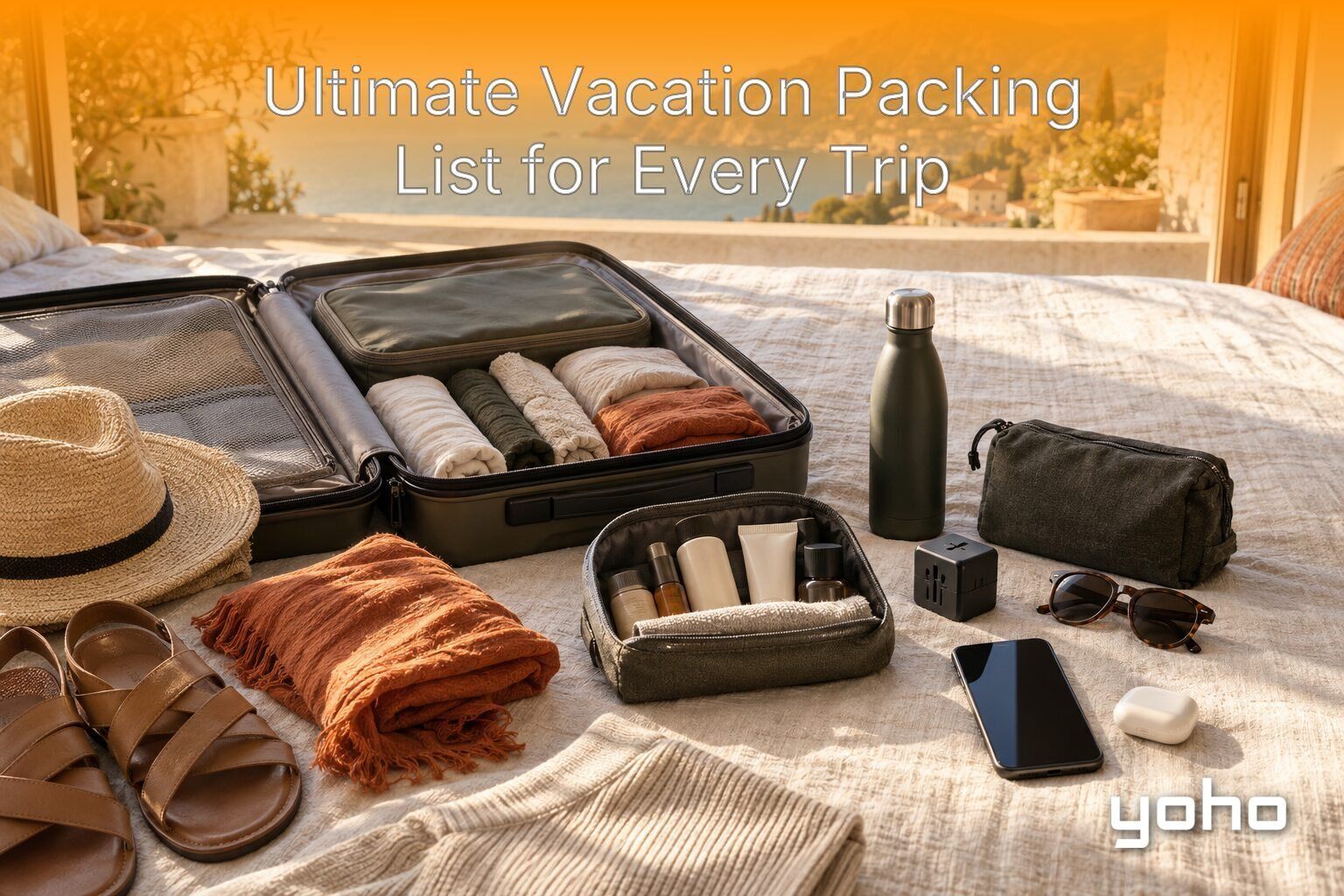
Build a modular list before opening the suitcase
A useful packing list has two layers: non-negotiable essentials and trip-specific modules. Start with documents, money, medicine, clothing, hygiene, and phone access. Then add only the modules required by your climate, planned activities, transport style, and accommodation.
Don’t begin by pulling favorite clothes from the wardrobe. First, write down the conditions each item must handle. A city weekend with elevators and taxis allows different choices from a rail trip involving stairs, platforms, and cobbled streets.
- How many full days will you be away?
- Can you wash clothes during the trip?
- What weather and indoor temperatures should you expect?
- Will you carry your own luggage between stops?
Choose the modules your itinerary actually needs
| Trip condition | Add to your core list | Leave behind unless needed |
|---|---|---|
| Warm beach stay | Swimwear, sandals, sun protection, light cover-up | Heavy outerwear and multiple formal outfits |
| Cold city break | Packable coat, warm layer, gloves, weatherproof shoes | Several bulky sweaters serving the same purpose |
| Road trip | Car charger, small cooler, roadside comfort items | Extra luggage that blocks storage space |
| Train or bus route | Light daypack, refillable bottle, compact outer layer | Large rigid cases that are difficult to lift |
| Business extension | One coordinated formal outfit and wrinkle-resistant layers | Separate shoes for every meeting |
Your transport often matters more than the number of nights. If you’ll change hotels repeatedly, every kilogram must be lifted, rolled, and stored again. A resort stay gives you more freedom because the bag may remain untouched for most of the week.
What clothes should you pack for a week?
For a seven-day trip, start with five tops, four bottoms or alternative layers, three pairs of shoes at most, two outer or specialty pieces, and one versatile dressy option. Adjust the quantities when laundry is available, and make every top work with most bottoms.
The 5-4-3-2-1 method is a framework, not a command. Five tops and four bottoms may be excessive for a relaxed beach week, yet insufficient for a trip mixing hiking, restaurants, and work. The real goal is compatibility: one item should support several outfits.
Match fabrics to weather and washing access
- Choose quick-drying basics: They can be washed in a sink and worn again after drying overnight.
- Pack one temperature bridge: A cardigan, light fleece, or overshirt handles cold aircraft cabins and cool evenings.
- Keep one clean reserve: Store a complete outfit in your carry-on in case checked luggage arrives late.
- Limit single-use clothing: An outfit that works only once must earn its space through a confirmed event.
- Wear the bulky layer: Put your coat or heaviest shoes on during transit rather than filling the suitcase with them.
Reduce shoes before reducing useful layers
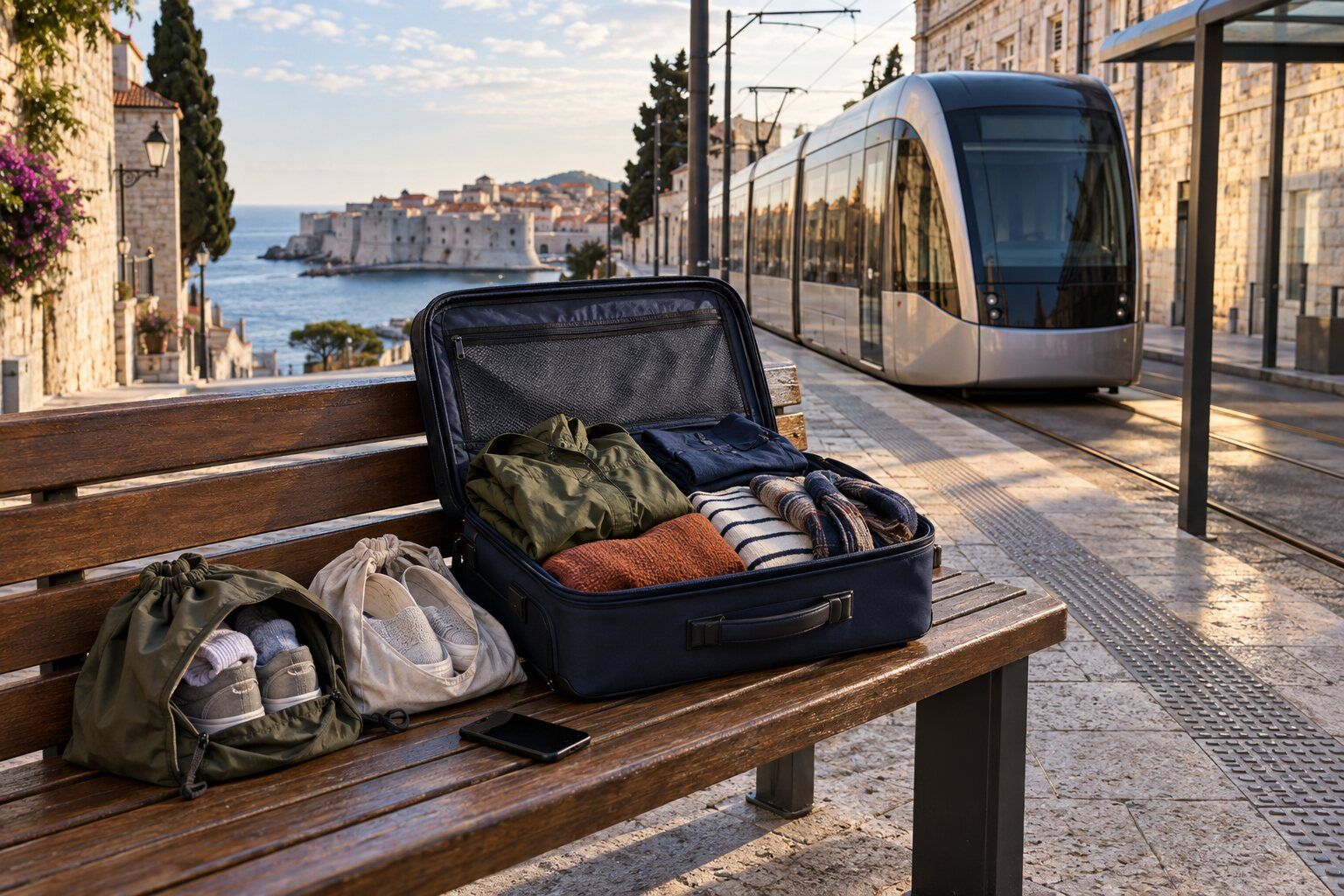
Shoes consume space quickly and bring dirt into the bag. A practical maximum is three pairs: a comfortable walking pair, a lighter casual option, and activity-specific footwear. Many trips need only two. Put socks or small accessories inside clean shoes, then use washable shoe bags.
Build outfits around a small color family. You don’t need a monochrome wardrobe, but matching bottoms with every top removes indecision. Accessories can change the look without taking the space of another jacket.
For tighter cabin limits, review a broader airport security and smart packing checklist before deciding which items belong in your personal item.
Keep toiletries and health essentials compact
Pack daily hygiene products in travel-size containers, but keep prescription medicine in clearly identified packaging. Carry-on liquids should generally use containers no larger than 100ml, placed together in the required transparent bag. Confirm the rules applied by your departure airport and airline before leaving home.
Decant only the amount you will use
A seven-day holiday rarely requires a full bottle of shampoo, body lotion, or cleanser. Small reusable containers reduce both weight and leakage risk. Label each one, particularly if several products look alike.
- Toothbrush, toothpaste, floss, and deodorant
- Shampoo, conditioner, soap, and skincare basics
- Sunscreen and lip protection suited to the destination
- Hairbrush, comb, ties, and required grooming tools
- Menstrual products and personal hygiene supplies
- Glasses, contact lenses, solution, and a spare case
Separate daily medicine from backup supplies
Keep essential medicine in your personal item, not solely in checked luggage. Bring enough for the trip plus a reasonable delay margin, subject to local entry rules. A written prescription or medicine list can make replacement easier if your supply is lost.
A small health pouch may include adhesive bandages, blister treatment, pain relief you already tolerate, oral rehydration supplies, and any personal allergy treatment. Don’t create a full pharmacy for an ordinary city break. Pack for realistic risks and your known health needs.
Which documents and money items belong in your bag?
Carry your passport or required identification, visas, transport confirmations, accommodation details, insurance information, payment cards, and emergency contacts. Store originals in your personal item, keep secure digital copies, and place one backup payment method away from your main wallet.
Verify every name and expiry date
Check that the name on each booking matches the identification you’ll present. Review passport validity and entry requirements well before departure, since rules differ by destination and nationality. Don’t rely on a photograph of a document when the original is required.
Your international travel packing list should include:
- Passport and any required visa or entry authorization
- Boarding details and onward transport confirmations
- Accommodation address and booking reference
- Travel insurance policy and assistance contact
- Driving licence and required permits for a rental car
- Emergency contact details written outside your phone
- Payment cards and a modest amount of usable cash
Split access to money and identification
Keep your main card accessible, but store a second card elsewhere. If your wallet disappears, you’ll still have a route to food, transport, and accommodation. Use a hotel safe for documents you don’t need during the day, then return them to your carry-on before departure.
Photographing documents can support reporting and replacement, but protect those files with device security. Avoid leaving passport images open in a general photo gallery or shared folder. Write down the contact route for freezing each payment card.
How should you prepare your phone and travel technology?
Prepare your phone by confirming destination coverage, saving offline maps, backing up key files, enabling a strong screen lock, and packing compatible charging equipment. Keep power banks in your carry-on, check your airline’s battery rules, and test essential travel apps before departure.
Save essential information for offline use
- Download the local map area: Save your airport, accommodation, and first transport route before you board.
- Capture booking details: Keep tickets and addresses available without requiring a live connection.
- Label charging cables: A small tag prevents confusion when several travelers share an outlet.
- Check plug compatibility: Pack one suitable adapter instead of several loose converters you won’t use.
- Protect battery life: Bring a charged power bank and cable in your carry-on, not checked luggage.
Arrange mobile access before departure
Use one digital connection option: An eSIM is a built-in digital alternative to a physical SIM, so compatible phones can activate a travel eSIM profile without carrying another removable card. Check your device first because older or carrier-locked phones may not support the feature;Apple Support lists activation methods and supported iPhone behavior.
An eSIM avoids the need to carry another removable card, but it does not remove every security risk. Keep your phone locked and protect the email account linked to activation messages.
If your itinerary depends on maps, booking updates, and messages, Yoho Mobile lets you choose destination countries, mobile data, and usage days independently; you can browse flexible eSIM plans, manage your choice through the Yoho Mobile app for iOS or Yoho Mobile app for Android, and, if it’s your first time, review the free eSIM trial together with Yoho Care before departure.
Organize your carry-on around the journey
Your carry-on should prioritize items needed in transit and anything difficult to replace. Keep identification, medicine, valuables, electronics, a clean outfit, and basic toiletries within reach. Confirm the airline’s exact size and weight allowance because cabin limits vary by fare, route, and aircraft.
Pack by access speed rather than item type
The item you need at security shouldn’t sit beneath a week of clothing. Use the top pocket or personal item for documents, liquids, and electronics that may require separate screening. Put in-flight comfort items where you can reach them without opening the overhead bin.
A practical carry-on packing list includes:
- Identification, wallet, tickets, and required documents
- Prescription medicine and essential health supplies
- Phone, charging cable, power bank, and headphones
- One clean outfit and spare underwear
- Travel-size hygiene products in the required liquids bag
- Refillable bottle, emptied before security when required
- Compact layer for a cold cabin
- Glasses, valuables, and fragile personal items
Measure the packed bag at home
Measure wheels, handles, and external pockets, not just the main shell. Many cabin cases are sold as carry-on size, yet an airline may apply a smaller limit. Soft bags offer flexibility, but overfilling can push them beyond the permitted dimensions.
Weigh the finished bag using the scale you have available. Then lift it above shoulder height. If you can’t control it safely, remove weight rather than expecting another passenger to handle it.
A separate daypack packing list can help you move daily essentials out of the main case without carrying everything through museums, restaurants, or short walks.
The final door check catches expensive mistakes
Complete the final check in a fixed order: identity, money, medicine, phone, power, keys, and luggage. Confirm transport times and terminal details only after those essentials are physically accounted for. Clothing can usually be replaced; a missing passport or prescription may stop the trip.
Lay out the seven non-negotiables
Before closing the bag, place your identification, wallet, medicine, phone, charger, keys, and transport details together. Touch each item as you check it. A mental inventory is less reliable when you’re also locking windows, calling a taxi, or helping someone else pack.
Check the room in one direction
Move clockwise through the space and inspect outlets, drawers, the bathroom, the bed, and the floor behind doors. This method also works at hotels. Randomly revisiting the same areas feels thorough but makes it easier to overlook one corner.
- Confirm the departure airport, terminal, station, or pickup point.
- Check that every bag has a secure identification tag.
- Charge your phone and power bank.
- Remove prohibited items from your carry-on.
- Empty rubbish and perishable food from day bags.
- Check the weather once more and wear the bulkiest useful layer.
- Lock doors and windows, then store your keys in their travel pocket.
A strong travel packing checklist isn’t the longest one. It protects the items that can stop your trip, gives each packed piece more than one job, and leaves enough space for you to move comfortably. Once those priorities are secure, close the suitcase and stop adding “just in case” extras.