
US-Malaysia Trade: How eSIMs Power Cross-Border E-commerce
You can run cross-border e-commerce between the US and Malaysia more smoothly when you treat connectivity as core infrastructure rather than an afterthought. Every shipment, negotiation, and site visit relies on real-time communication, and an eSIM gives you coverage without juggling physical cards or unpredictable roaming fees. Before you enter new markets or travel for supplier visits, take time to set up reliable connectivity so you can manage operations, meet partners, and keep transactions moving.
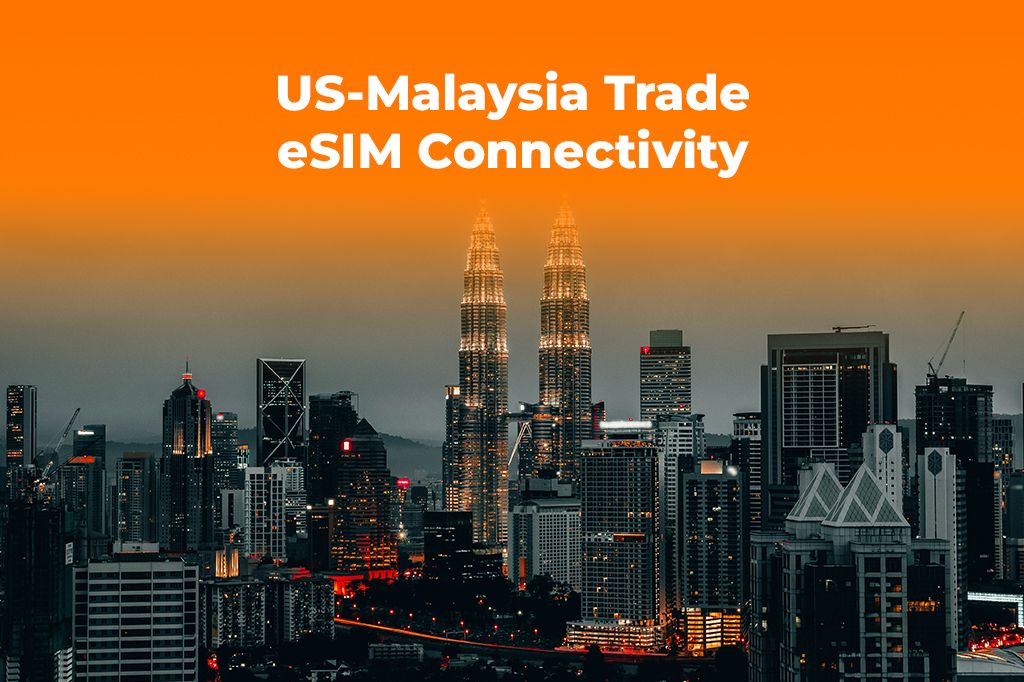
Picture by Chander Mohan on Unsplash
Why Connectivity Matters in US-Malaysia Trade
Cross-border e-commerce between the United States and Malaysia continues to grow, driven by manufacturing partnerships, online retail, and digital services outsourcing. You deal with multiple time zones, distributed teams, and fast logistics cycles—so staying connected matters as much as shipping rates or customs rules.
When you think about us malaysia trade opportunities, you’re really looking at supply chains built on communication. You coordinate factories in Penang or Johor, manage quality control remotely, and negotiate shipping schedules that change at short notice. If your phone stalls, you lose visibility and momentum.
A dependable Malaysia business sim or a flexible esim for business travel removes friction when you:
- Visit warehouses and need access to cloud dashboards
- Meet suppliers in industrial zones without Wi-Fi
- Join video calls while moving between offices
- Track shipments through customs and ports
- Manage messaging with teams in the US overnight
From a trade perspective, international business connectivity isn’t optional—it is how you manage risk, stay responsive, and close deals.
This is why understanding what is an eSIM card becomes valuable for anyone working in a global supply chain. An eSIM lets you activate local data remotely, keep your US number active, and add another profile for Malaysia so you can communicate across regions without downtime.
Malaysia’s Digital Role in Global Supply Chains
Malaysia is a major player in global supply chain networks across electronics, semiconductors, e-commerce fulfillment, and logistics. US-Malaysia trade often centers on components manufacturing, palm oil exports, and technology assembly. Whether you’re sourcing goods or marketing products into Malaysia, your success depends on visibility and contact with in-market teams.
Three trends make connectivity crucial:
- Digitized logistics: Warehouse management, last-mile delivery, and customs processes now run through mobile dashboards and cloud systems.
- Hybrid working models: Local partners split time between factories, offices, and field sites. Messaging and VoIP calls keep them aligned.
- Rising cross-border e-commerce: US retailers and startup brands increasingly ship to Malaysia, requiring customer support, market research, and partner visits.
If you want to grow in cross-border e-commerce between these markets, you need reliable mobile infrastructure that lets you coordinate inventory, manage remote teams, and respond to customer needs on both sides of the Pacific.
This is where international business connectivity powered by eSIM simplifies life. You can move between markets with fast data rather than switching SIM cards or scrambling for Wi-Fi.
Why an eSIM Beats Traditional SIM Cards for Business Travel
Traditional SIM cards served travelers well when trips were short and digital workflows were simple. Today, business visits to Malaysia or US ownership trips to suppliers demand more flexibility. You don’t just land, walk into meetings, and head home—you check cloud dashboards at airports, coordinate border crossings, and send updates across continents.
With an esim for business travel, you don’t rely on finding a kiosk or understanding local prepaid plans. You scan a QR code and connect instantly, and you can return to the region weeks or months later without reinstalling anything.
Advantages include:
- Dual-line use: Keep your US number for texts and banking verification while using a Malaysia business sim profile for data.
- Remote provisioning: Activate before you fly so you arrive connected.
- Cost clarity: No mystery roaming bills; just fixed eSIM packages suitable for frequent trips.
- Scalability: If you run a global supply chain team, you can issue eSIMs to multiple colleagues without couriering physical SIMs.
If your work touches any part of global supply chain coordination, an eSIM gives you predictable access to cloud tools, messaging, and internal systems regardless of where you stand.
Step-by-Step: Setting Up eSIM Connectivity for Cross-Border Commerce
If you want to simplify business travel while scaling your cross-border e-commerce work, follow this setup process before leaving the United States.
-
Confirm compatibility and unlock status
- Check your device supports eSIM and is carrier unlocked.
- Review your phone settings or manufacturer website for clarity.
-
Plan your coverage needs
- Decide if you need only data in Malaysia or if you will add other ASEAN markets later.
- Consider whether colleagues on your global supply chain team will need their own profiles.
-
Choose your plan type
- Estimate daily data use for cloud tools, WhatsApp calls, video conferencing, and shipping portals.
- Look for esim for business travel plans that support hotspot use so you can help team members or power laptops on-site.
-
Purchase and install
- Buy your profile online from a reliable provider.
- Scan the QR code in your mobile settings.
- Rename it clearly (for example, “MY Business Data”) so you can toggle profiles easily.
-
Configure connectivity
- Set the Malaysia business sim profile as your primary data connection when you land.
- Keep your US SIM active for SMS verification and business continuity.
- Disable expensive roaming on your physical SIM to avoid hidden charges.
Once these steps are complete, your phone becomes a portable command center for international business connectivity, supporting shipping teams, supplier visits, and meetings across the Klang Valley or Penang tech corridors.

Case Example: Visiting Malaysia to Expand US Supply Chains
Imagine you manage procurement for a US consumer electronics brand. You fly to Malaysia to review suppliers and finalize factory upgrades. Without a solid mobile setup, you risk slow communication when crossing states or sitting through Wi-Fi drops at industrial parks.
But with an esim for business travel already installed, your day looks very different:
- You land at KLIA with a working profile.
- Your team messages you on WhatsApp as you reach immigration.
- You check production dashboards in the car.
- You hotspot your laptop in a rural industrial area.
- You upload contract files while touring a warehouse.
This is the difference that international business connectivity makes. Instead of calling home only when you find Wi-Fi, you stay synced with both markets across your workday.
Multiply this effect across your organization, and you see why eSIM adoption is rising among trade teams and logistics managers involved in us malaysia trade flows.
Scaling Connectivity for Teams and Operations
If your company runs cross-border e-commerce or oversees manufacturing in Malaysia, you may need multiple lines for travelers, auditors, or engineers. Instead of issuing local plastic SIM cards each time someone travels, a digital provisioning approach works better.
You can centralize:
- Buying and distributing profiles
- Assigning allowances based on role
- Renewing plans for frequent travelers
- Pairing connectivity with mobile device management
This is where a predictable provider helps. If you want to understand how provisioning works, review guides like how Yoho Mobile works so you know how to scale eSIM use for your business mobility needs.
And if you want to make sure your team members walk off the plane ready to connect, you can activate their lines before they travel instead of sending them to find kiosks on arrival.
That level of simplicity proves valuable when decisions about factories, compliance, or logistics need to happen quickly.
How eSIMs Support Global Supply Chain Visibility
Cross-border e-commerce and global supply chain operations rely on three pillars:
- Timely information
- Clear communication
- Ability to adapt
An eSIM plays a role in each area.
-
Timely information
- You can access dashboards from ports, airports, and industrial parks.
- Delays or disruptions become visible sooner.
-
Clear communication
- You can talk to teams on WhatsApp, Teams, or Zoom without hunting for Wi-Fi.
- You can share key documents on the move.
-
Ability to adapt
- You can pivot trade conversations, reroute shipments, or escalate decisions instantly.
When someone on your team loses signal or deals with weak roaming coverage, your supply chain slows down. But when they run an eSIM with reliable coverage, you maintain flow.
This is why professionals working in us malaysia trade align travel technology with operational planning—it gives them smoother oversight and fewer communication gaps.
Key Takeaways for Cross-Border Operators
Here’s a short summary of the biggest insights:
- Cross-border e-commerce depends on real-time communication.
- An eSIM simplifies business travel and reduces roaming risk.
- Dual-line setups let you keep your US number active while using a Malaysia business sim profile.
- Teams that manage global supply chain operations benefit from remote provisioning and unified management.
- You stay agile when your connectivity is reliable everywhere—not just at hotels.
FAQs About eSIMs for US-Malaysia Trade
Does every phone support eSIM?
Many modern devices do, but not all. Check your phone model before purchasing.
Is a Malaysia business sim sufficient on its own?
Yes for data, but if you want to retain your US number, pairing a physical SIM with an eSIM works best.
How much data do I need for business travel?
Most travelers use 5–15 GB per week, depending on video calls and hotspot use.
Can I reuse the eSIM for future trips?
Absolutely. You can keep it installed and refresh the plan each time you travel.
Is this only for big companies?
No. Solo entrepreneurs, consultants, and small sellers growing in cross-border e-commerce benefit as much as large corporations.
Conclusion
US-Malaysia trade relies on infrastructure you might overlook—like the connectivity you carry in your pocket. If you want smoother supplier visits, tighter operational control, and easier communication while scaling cross-border e-commerce, activate a flexible data setup ahead of time. You can choose a ready-to-use global profile such as the Yoho Mobile global eSIM for world travel so you land connected and keep your international business running without interruptions.