
Dubai Taxi City Guide: Plan a Smoother Day
You can cross Dubai by taxi without turning the day into one long ride, but a loose plan can still cost you time between distant stops, missed reservations, and extra trips back to the hotel. Weather conditions, event schedules, opening hours, and unclear pickup points can all shrink the hours you expected to spend exploring. Skip the all-in-one loop and anchor each part of the day on official UAE information, compact neighborhood blocks, and taxi rides that solve a clear transport need.
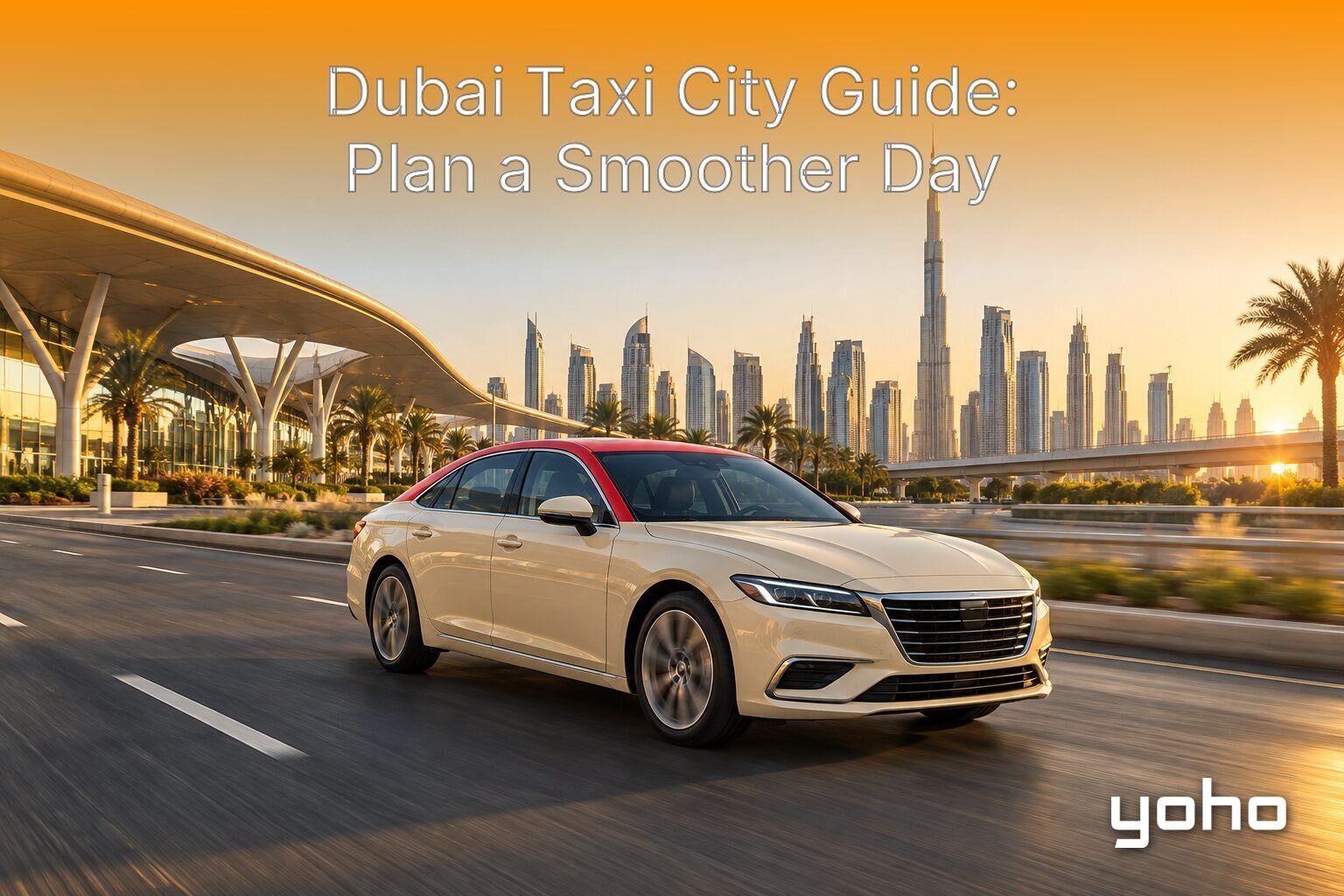
A taxi-first plan needs firm anchors
A useful Dubai taxi itinerary starts with a small number of fixed appointments, then groups flexible stops around them. Use taxis to connect those blocks rather than treating every attraction as an isolated ride. The result is less backtracking, clearer pickup instructions, and more time outside the vehicle.
Start with the parts of your day that can’t move. A timed reservation, a meal booking, an event, or a scheduled departure should become an anchor. Everything else belongs in a nearby block that you can shorten without damaging the whole plan.
This matters because a taxi removes the walking and navigation between districts, not the distance itself. A car can still leave you at the wrong entrance, wait in a busy access lane, or reach a venue after your booked time. Door-to-door travel isn’t automatically frictionless travel.
Build each block around one purpose. Your morning might focus on museums and older streets, while a later block could center on shopping, a meal, or a coastal walk. Don’t force every category into one day. A route with fewer transitions usually feels fuller because you spend more time seeing Dubai and less time reorganizing.
- Fixed anchors: Reservations, ticketed activities, events, and departures that can’t easily move.
- Flexible stops: Cafés, public areas, shopping, and short walks that can expand or contract.
- Recovery space: Unassigned time for traffic, a longer meal, a pickup delay, or an indoor break.
- Exit point: A final stop with a straightforward route back to your accommodation.
A broad list may suggest what visitors commonly seek, but it can’t judge whether those stops belong in the same taxi loop. Distance and timing should decide the route, not the length of your attraction list.
What makes a Dubai taxi day realistic?
A realistic taxi day pairs one fixed activity with a compact group of nearby options in each part of the day. It also leaves room for weather, access roads, venue entrances, and waiting time. Check official destination information before deciding that every saved place deserves a slot.
Use the UAE Ministry of Economy and Tourism’s Explore the UAE guide as an official starting point for destination context. It gives you a stronger planning anchor than an oversized social-media list where opening details, access expectations, and seasonal relevance may no longer be clear.
Then test each stop with three questions: Is it close to the previous activity? Does it require a firm arrival time? Can you remove it without creating a gap? If the answers are no, yes, and no, that stop probably deserves priority. A place that is far away, fully flexible, and easy to replace belongs on another day.
A taxi itinerary also needs visible margins. Don’t schedule a vehicle arrival and a ticket time as if they were the same moment. You may still need to find the correct door, pass an entrance check, collect a ticket, or walk through a large building. The pickup side deserves the same care, especially where several entrances look similar on a map.
| Route element | Keep it when | Shorten or remove it when |
|---|---|---|
| Timed attraction | It is a main reason for your visit | It conflicts with a more important reservation |
| Indoor stop | You need shelter or a slower interval | It duplicates another activity |
| Shopping stop | You have a specific purchase in mind | It requires crossing the city for casual browsing |
| Scenic stop | Conditions and timing support it | Visibility or heat makes the visit less practical |
| Meal reservation | It fits naturally between nearby activities | It creates a separate out-and-back journey |
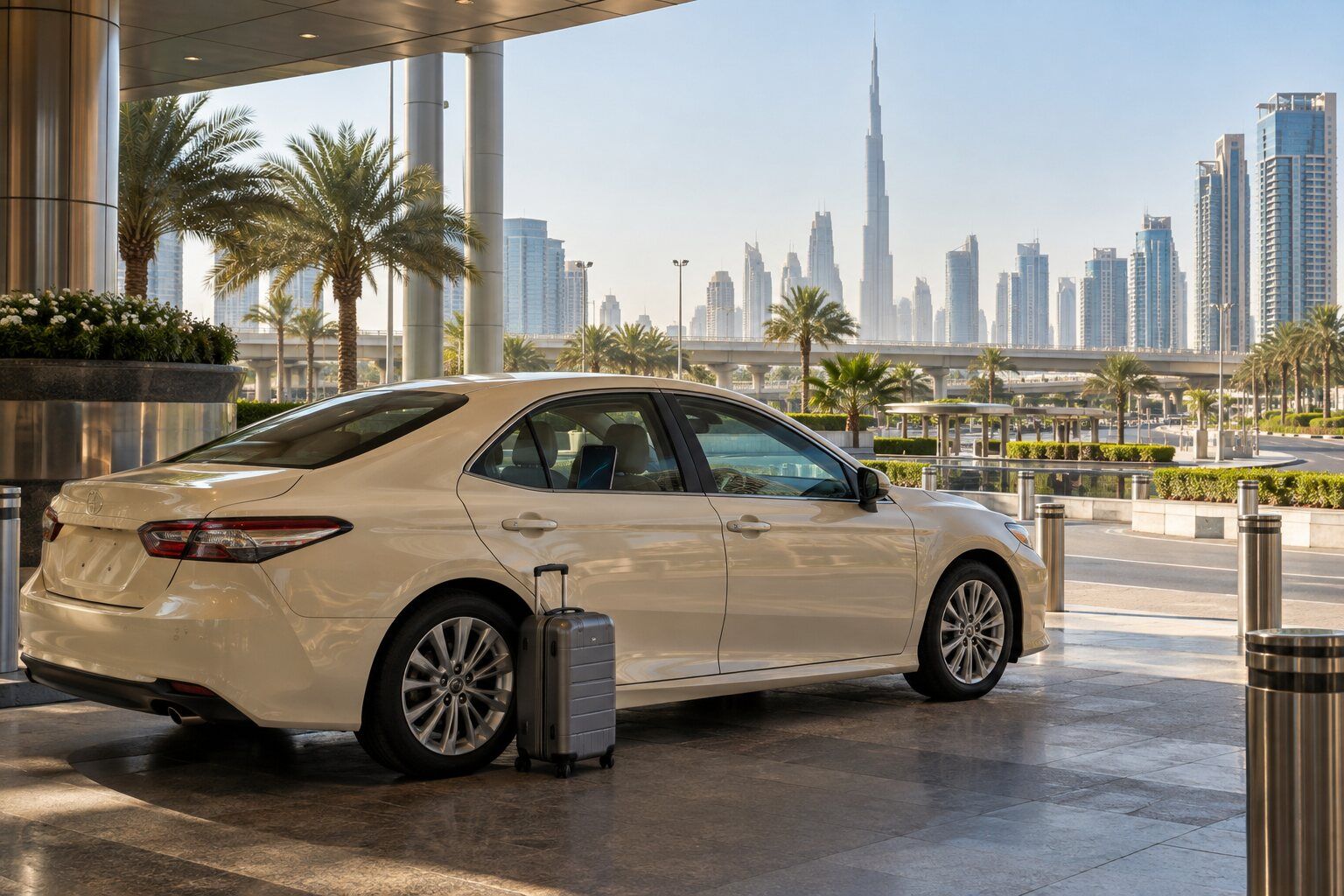
Neighborhood blocks beat a citywide zigzag
Organizing Dubai by activity blocks is more dependable than alternating between distant indoor, cultural, dining, and waterfront stops. Complete one area before moving to the next. Each major taxi ride should begin a new block, while short local transfers should support activities already grouped together.
Think of the city as a series of travel zones rather than a checklist. Within each zone, choose a primary stop, a nearby meal option, and one flexible activity. If your main plan runs long, remove the flexible item. You won’t need to redesign the rest of the day from the back seat.
The strongest sequence usually alternates energy levels. Pair an active outdoor interval with an indoor visit. Follow a dense cultural block with a slower meal. Keep shopping near the point when you’re ready to carry purchases back to the hotel, not before a long afternoon of moving around.
Morning blocks reward an early commitment
Your first destination should be somewhere you genuinely want to spend time, not a placeholder on the way to another place. Confirm its published opening hours and entrance policy directly before leaving. If it opens later than expected, use the first part of the morning for breakfast or a flexible outdoor stop nearby.
Afternoon blocks need an indoor alternative
Keep an indoor option in the same part of the city rather than treating it as an emergency destination across Dubai. That gives you somewhere practical to go if the heat, visibility, or your energy level changes. A café, museum, covered retail area, or long lunch can fill this role.
Evening blocks should end near your return route
Place dinner or your final activity where the trip back to your accommodation remains simple. A late detour for one optional stop can add another pickup, another entrance search, and another chance for your group to separate. Save distant evening ideas for a night when they can become the main event.
Which Dubai rides are worth taking?
Use a taxi when it removes a long transfer, protects a reservation, carries luggage or shopping, or avoids an uncomfortable outdoor connection. A taxi offers less value when two stops are already within the same walkable complex or when the pickup process takes longer than the local move itself.
The right question isn’t whether taxis are convenient in general. Ask what a specific ride solves. If it moves you and your bags from the airport to your accommodation, connects two distant route blocks, or gets you to a timed booking with a sensible margin, its purpose is clear.
Short rides need more judgment. A map pin may sit near your next destination while the practical pedestrian route uses a different exit or entrance. Before requesting a car, check whether the next place is inside the same complex or along a direct covered route. Hotel staff and venue teams can often clarify the best departure point.
Taxis are especially useful when your group has competing needs. Someone may need less walking, a child may need a break, or shopping bags may make public transport awkward. Treat that as a planned comfort decision, not a failure to follow an ambitious itinerary.
- Choose the ride: You have luggage, limited mobility, a firm booking, or a meaningful distance between blocks.
- Check the walk first: Both places appear to share a site, connected building, or straightforward pedestrian area.
- Ask for guidance: The map shows several gates, towers, hotel entrances, or vehicle access lanes.
- Save it for later: The destination creates a stand-alone detour with no other nearby activity.
Leave optional distant stops for another trip. Dubai rewards focused days more than hurried collection. A shorter list also gives you room to stay longer when a meal, exhibition, or public space proves more interesting than expected.
Weather and events can redraw the route
Check official weather and event information before confirming your route, then review it again on the day. Conditions can change how long an outdoor stop feels, while exhibitions and conferences can affect access around major venues. Keep one indoor alternative and one removable stop in every plan.
Check the National Center of Meteorology weather forecast to decide when outdoor walking makes sense and whether an indoor block should move earlier.
Weather planning isn’t limited to carrying the right clothing. It affects pickup behavior too. A shaded hotel entrance may be comfortable, while an exposed roadside pin may not be a good place to wait. Confirm that the marker represents an accessible vehicle lane before leaving an air-conditioned building.
Large scheduled gatherings deserve a separate check. The Ministry of Foreign Affairs publishes UAE Events And Conferences, described as “The official schedule of upcoming events, conferences and exhibitions in the UAE.” Consult it when your route approaches an event venue or when a conference is one of your trip’s main reasons.
An event can change more than road movement. It may influence entrance procedures, pickup zones, restaurant availability, and the time needed to cross a venue. If you’re attending, build the surrounding block around that commitment. If you aren’t, move optional sightseeing away from the busiest period rather than trying to squeeze through it.
- Move exposed outdoor time to the more comfortable part of your day.
- Keep a nearby indoor replacement rather than a citywide backup.
- Reconfirm booked entry and arrival instructions before requesting a taxi.
- Remove the least important stop when conditions reduce your available time.
Reservations and a light daypack prevent delays
Keep booking confirmations, identification, payment options, hotel details, and pickup notes together before you leave. Carry only items that support the day’s weather and activities. A smaller bag is easier to manage during repeated taxi entries, entrance checks, meals, and short walks between nearby stops.
Save essential confirmations where you can reach them without searching through several email threads. The useful details are the venue name, entry instructions, reservation holder, cancellation terms, and the entrance named by the venue. A screenshot can act as a backup if a page is slow to load.
Carry identification appropriate to your plans and keep original travel documents secure. Some activities may have their own requirements, so check the booking terms rather than assuming the same document works everywhere. If you’re uncertain about entry conditions for the UAE, consult official government information before departure and confirm requirements that apply to your nationality.
Your daypack should solve predictable problems without becoming another problem. Pack water when appropriate, sun protection, a light layer for strongly cooled interiors, required medication, and a charging cable or compact power source. Leave unnecessary valuables at your accommodation.
A useful taxi note contains more than a place name. Save the exact building, entrance, hotel, meeting point, or vehicle gate provided by the venue. If you’re traveling with other people, share that note before separating. Everyone should know whether the agreed meeting point is the arrival entrance or the taxi pickup area.
Before leaving each stop, do a quick seat check. Phones, wallets, small bags, and shopping items can slide out of view. Keep any receipt or trip record available until you have confirmed that your belongings came with you.
Pickup points and payment need a backup
Confirm your pickup point before requesting a taxi, and keep more than one usable payment method. Large properties may have separate arrival and departure lanes, so a correct map pin can still create confusion. Share a recognizable entrance description and check the vehicle details before getting inside.
Stand where vehicles can legally and safely reach you. The nearest street edge isn’t always the best pickup location. A designated rank, hotel entrance, or marked vehicle lane is easier for both you and the driver. If staff direct you to another level or exit, update your group before anyone moves.
When booking through a phone, review the pickup marker before confirming. Location services can place the pin on the opposite side of a large property or along a road without practical access. Move it to the entrance you’re actually using and add a short note when the service allows one.
For a street pickup, communicate the destination using the venue name plus a nearby hotel, building, or entrance detail already supplied by the venue. Don’t rely on a cropped screenshot with no context. Keep the full destination saved so you can compare the route if two places have similar names.
Ask about accepted payment methods before the ride begins if that detail matters to you. A card may be your preferred option, but a backup prevents a routine payment issue from delaying the next reservation. Keep small personal purchases separate from your transport budget so you can track the day clearly.
If you’re traveling as a group, agree on what happens if you’re split between vehicles. Share the next destination and entrance, not just the name of the neighborhood. One person should hold the reservation details, while everyone keeps enough information to arrive independently.
Staying connected from the curb to your hotel
Reliable mobile data supports taxi booking, live pickup messages, map checks, reservation access, and communication with your hotel. Arrange it before your busiest travel day, save essential details offline, and carry a charged phone. Keep a second meeting method in case your group becomes separated.
If your Dubai plans depend on changing pickup points and live messages, an eSIM can provide mobile data without replacing your physical SIM. Your phone must support eSIM technology and be unlocked, so confirm compatibility before purchasing or trying to activate an eSIM profile.
Maps can use less mobile data than many travelers expect, but route previews, photos, background activity, and repeated searches still add up. Read the practical estimate of how much data Google Maps uses, then save critical addresses and screenshots before leaving the hotel.
Your required allowance depends on how you travel. Light users who mainly request taxis, exchange messages, and check maps need less than travelers who stream video, upload media, or share a hotspot. Trip length matters too. Avoid paying for a fixed bundle that doesn’t match the number of days you’ll actually use it.
When you need control over those variables, Yoho Mobile lets you choose destination countries, data allowance, and usage duration independently. You can explore Yoho Mobile eSIM plans and match the selection to a short Dubai stop, a longer UAE visit, or a multi-country route rather than accepting a fixed plan structure.
To manage the plan before departure and while moving around the city, use the Yoho Mobile app for iOS or the Yoho Mobile app for Android. Activate the eSIM profile according to the supplied instructions, then verify which line handles mobile data.
If you haven’t used this technology before, the free eSIM trial offers a low-pressure way to become familiar with it, while Yoho Care provides an emergency data service when an eligible plan runs out unexpectedly.
Devices not compatible with eSIM still need another option, such as a physical SIM or a suitable roaming arrangement. Check your phone before departure rather than discovering the limitation beside an airport pickup lane. It’s also sensible to review whether data roaming should be on or off for the line you intend to use.
Connectivity should support the taxi plan, not replace basic preparation. Save your hotel address, key reservations, meeting points, and the day’s route offline. Keep your battery charged and agree on a fallback location with your group. With those details ready, your phone becomes a useful transport tool instead of a single point of failure.
The best Dubai taxi day is rarely the one with the most pins. Keep the route anchored, finish one area before crossing to another, and let weather or event information remove stops when needed. You’ll spend less time correcting the plan and more time enjoying the places you deliberately chose.