
Weather in Hong Kong: Seasonal Travel Guide
Your best time to visit Hong Kong depends on how much heat, humidity, rain, and limited visibility your planned activities can accommodate. A poorly matched season can make long walks, viewpoints, ferry trips, or tightly scheduled outdoor days less enjoyable. This guide compares Hong Kong’s seasonal conditions, matches travel windows to different trip styles, and explains how to pack and keep plans flexible.
Choosing a Hong Kong travel window
If the Hong Kong Tourism Board inspires something specific you want to see, choose the weather window that supports that activity rather than relying on a slogan month. Autumn usually gives first-time visitors the easiest balance, while spring, summer and winter each work better for particular budgets, clothing preferences and daily plans.
Hong Kong is a year-round city, but the experience changes sharply with humidity, rain and wind. A mild afternoon makes waterfront walks and hill routes inviting. A hot, wet day pushes the focus toward museums, markets, covered shopping areas and long meals.
The best time is less about finding a perfect month and more about deciding what matters most. If you want to spend hours outdoors, prioritize comfortable temperatures and lower humidity. If your schedule revolves around food, shopping and indoor attractions, you can accept wetter or hotter conditions and gain more flexibility when choosing dates.
Use seasonal averages as planning tools, not promises. A temperature band tells you what clothes may work, while a short-range forecast determines whether to carry an umbrella that morning. Hong Kong’s dense transport network also makes it easier to change direction during the day. You can move an exposed viewpoint to a clearer afternoon and visit an indoor attraction when showers arrive.
| Season | Typical temperature range | General feel | Crowd tendency | Good fit |
|---|---|---|---|---|
| Spring | About 17–29°C (63–84°F) | Warm, humid and often misty | Moderate | Food, culture and flexible city days |
| Summer | About 26–33°C (79–91°F) | Hot, humid and rainy | Moderate to high | Indoor attractions and short outdoor sessions |
| Autumn | About 19–31°C (66–88°F) | Warm to mild with improving comfort | High in popular periods | Walking, viewpoints and first visits |
| Winter | About 14–20°C (57–68°F) | Cooler, drier and sometimes breezy | Moderate to high | Urban walks and active itineraries |
Spring brings humidity, fog and drizzle
Spring is comfortable for city sightseeing when you accept limited views and occasional dampness. Temperatures rise through the season, but humidity can make mild readings feel warmer. Pack light layers, breathable clothes and a compact umbrella, then keep exposed viewpoints flexible until you can check visibility and the day’s forecast.
March to mid-May is a transitional period rather than a single type of weather. The published summary on Hong Kong Weather says Hong Kong weather in spring from March to mid-May tends to be warm and humid, accompanied by fog and drizzle. That combination matters most when your plans depend on clear views.
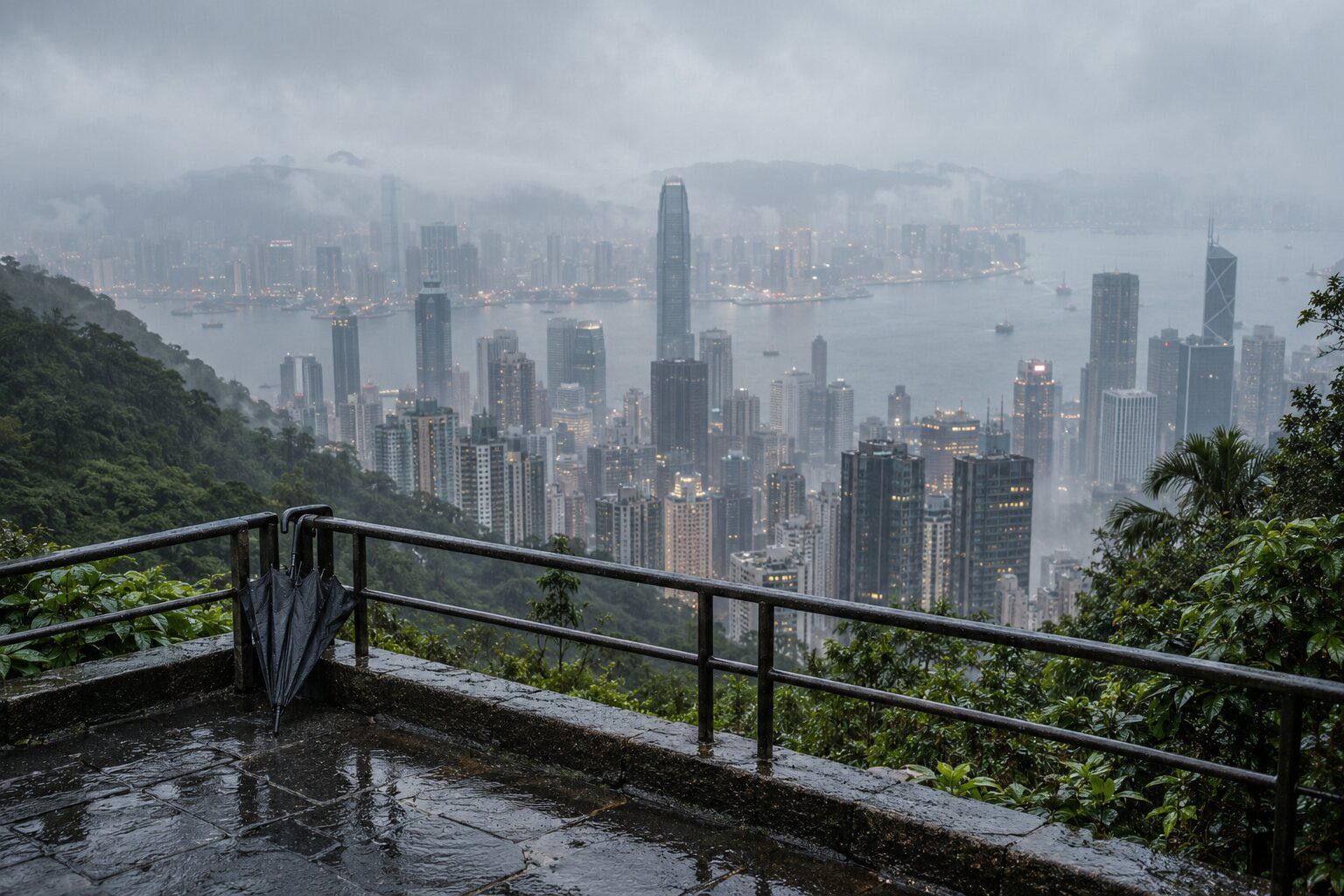
Victoria Harbour still has atmosphere under low cloud, but hilltop panoramas may disappear into mist. Don’t commit every morning to an observation deck or ridge walk. Check conditions first, then use clear spells for elevated places and damp periods for neighborhoods, museums or covered markets.
Early spring can feel cool in shaded streets and air-conditioned interiors. By later spring, breathable fabrics become more useful than heavier layers. A light outer layer should resist drizzle without trapping too much heat. Shoes with reliable grip are more helpful than bulky rain boots because pavements and steps may stay slick after short showers.
Spring works well when your priorities are dining, cultural stops and unhurried exploration. It’s less reliable for a trip built around photography from high viewpoints. The trade-off is manageable if you leave space in the itinerary instead of assigning every attraction to a fixed hour.
Summer rewards flexible indoor-outdoor days
Summer suits travelers who tolerate heat and can reorganize plans around showers or severe-weather warnings. Schedule exposed walks early, reserve the hottest hours for indoor stops, and keep evenings adaptable. Lightweight clothing dries faster, but strong air conditioning means a thin extra layer still earns space in your day bag.
Late May through September generally brings the hottest and wettest part of the year. Days often feel warmer than the temperature suggests because humidity slows the evaporation of sweat. You may cover less ground on foot than expected, especially on steep streets or exposed paths.
Build summer days in short blocks. Start with a promenade, neighborhood walk or outdoor viewpoint in the morning. Move indoors for lunch and the early afternoon, then reassess the sky before the evening. This rhythm is usually more comfortable than attempting one uninterrupted day outside.
Rain doesn’t always mean an entire day is lost. Some showers are brief, while other weather systems can interrupt transport and outdoor attractions more seriously. The Hong Kong Observatory is the practical source for current forecasts, rainfall information and official warnings. Check it before taking a ferry, starting a long walk or heading somewhere exposed.
Summer packing should favor quick-drying shirts, loose trousers or shorts, anti-chafing protection and a small umbrella. Carry water, but don’t overload your bag. Indoor spaces can feel surprisingly cool after you’ve been outside, so a thin shirt or cardigan helps during long meals and museum visits.
This season is not the easiest choice for a first trip centered on hiking. It can still suit travelers who value restaurants, shopping and nightlife, or who don’t mind arranging each day around the forecast.
Autumn is the easiest all-round fit
Autumn is the strongest general choice for a first Hong Kong visit because heat and humidity tend to ease as the season progresses. Outdoor sightseeing becomes more comfortable, visibility is often more useful for viewpoints, and you need fewer weather-specific compromises. Popular dates can still bring heavier demand and higher accommodation prices.
October through November usually offers the most convenient balance for walking, harbor views and day trips. October may retain summer warmth, while November tends to feel milder. You can often spend longer outside without structuring the entire day around air conditioning.
This is the window to consider if Victoria Harbour, urban viewpoints and longer neighborhood walks are central to your plans. It also supports itineraries that mix dense city areas with beaches, islands or hiking routes. Clearer conditions are never guaranteed, but autumn gives outdoor-focused travelers fewer routine obstacles than the humid spring or storm-prone summer.
The main compromise is popularity. Comfortable weather appeals to many visitors, so well-located rooms and time-sensitive experiences may become less flexible. If your dates overlap with a busy holiday period, reserve the parts that matter most rather than locking every meal and hour into place.
Pack breathable daytime clothes, one light layer for evenings and dependable walking shoes. Sun protection still matters because cooler air doesn’t remove ultraviolet exposure. A compact umbrella remains useful too; autumn is more dependable, not rain-free.
For most first-timers, November is a particularly simple packing month. You can dress in light layers, walk for much of the day and carry a small backup for cooler evenings. Travelers who enjoy warmer conditions may prefer October.
Winter favors walking with layers
Winter is a good fit for travelers who prefer cooler walking weather and don’t need tropical heat. Hong Kong rarely requires extreme cold-weather gear, yet damp air and wind can make some days feel chilly. Bring layers rather than one heavy coat, especially if you’ll alternate between waterfronts, hills and indoor spaces.
December through February brings Hong Kong’s coolest conditions. Daytime sightseeing can be pleasant, particularly if you find humid summer weather exhausting. Evenings, exposed ferries and waterfront areas may feel cooler than a basic temperature reading suggests.
A long-sleeved base, a sweater and a light wind-resistant jacket give you more control than a bulky winter coat. You can remove layers on sunny afternoons and put them back on after dark. Travelers arriving from cold climates may find the temperatures mild, but accommodation heating and indoor comfort can differ from what they expect at home.
Winter supports active days. You can spend more time walking through central districts, exploring markets or taking longer outdoor routes without the same heat burden as summer. Daylight is shorter than in the middle of the year, so place walks and viewpoints earlier rather than leaving every outdoor plan until evening.
The busiest dates aren’t always defined by weather alone. Holiday travel and major celebrations can affect accommodation availability and movement around popular areas. Book early when your dates are fixed, but retain some daily flexibility for wind, cloud and occasional rain.
If you want beach weather, winter is a weak fit. If you want food, city life and comfortable walking, it can be one of the most practical seasons.
When should you avoid visiting Hong Kong?
Avoid peak summer if persistent humidity, heavy rain or severe-weather disruptions would spoil your main plans. Spring is also a poor match for a viewpoint-focused trip because fog can limit visibility. There’s no universally bad month, but some periods demand more flexibility than short, tightly scheduled visits can allow.
The least suitable window depends on what would disappoint you. For hikers and travelers planning several exposed day trips, the hottest and wettest months bring the greatest planning burden. You’ll need early starts, more water and backup activities, while official warnings may change transport or attraction access.
Spring deserves caution when skyline photography is the reason for your visit. Fog and drizzle may create atmospheric street scenes, but they can obscure distant buildings and harbor views. A short trip gives you fewer chances to wait for a clear period.
Winter is the period to avoid if your ideal Hong Kong trip means hot evenings, swimming and reliably light clothing. It’s also possible to encounter cool, gray spells that make exposed waterfronts feel subdued. The city remains lively, but the weather may not match a warm-weather escape.
For a tightly timed weekend, prioritize seasons with fewer routine weather interruptions. For a longer stay, a difficult day matters less because you can reorder activities. Trip length changes the calculation almost as much as the season itself.
Which season suits your travel style?
Autumn best suits first-time visitors and outdoor-heavy itineraries, while winter favors walkers who prefer cooler air. Spring works for food and culture trips with flexible viewpoints, and summer fits travelers comfortable with heat and indoor breaks. Families should prioritize manageable temperatures, simple transport and backup activities over a particular seasonal label.
First visits with mixed sightseeing
Choose late autumn for the easiest blend of harbor walks, viewpoints and neighborhood exploration. You’re less likely to spend every day negotiating intense humidity, yet you should still carry light rain protection. Reserve key accommodation earlier if your dates can’t move.
Families balancing energy and comfort
Autumn or winter reduces the physical strain of long, hot days. Keep the schedule light enough for meals, rest and transport between districts. A hotel near a major rail connection can matter more than a small difference in seasonal temperature.
Budget-focused city breaks
Look beyond the most comfortable weather windows, but check why a date appears affordable. Heat, rain, holidays and demand can all affect value. Spring can be a reasonable compromise if indoor attractions and food are more important than guaranteed panoramas.
Hikers and outdoor photographers
Favor autumn or the cooler parts of winter. Start with the clearest day in your forecast rather than saving the most important route for the end. Avoid treating a seasonal average as proof that visibility will be good on a specific morning.
Food, shopping and nightlife trips
Any season can work because much of your itinerary can move indoors. Summer becomes more realistic when you limit midday walking, while spring drizzle is less disruptive if you aren’t relying on distant views or long exposed routes.
Packing and booking around the forecast
Pack for humidity and indoor air conditioning in every warm season, then add rain protection according to the forecast. Reserve fixed priorities before departure, but leave some outdoor activities movable. The most useful kit is compact: breathable layers, comfortable shoes, sun protection, an umbrella and a small bag that handles showers.
Your clothing should match both the temperature and the pace of your itinerary. A slow museum day requires less technical gear than a steep neighborhood walk followed by a ferry ride. Fabrics that breathe and dry quickly are useful from spring into autumn, while winter calls for removable layers.
- Spring: Breathable shirts, a light rain layer, grippy shoes and a compact umbrella.
- Summer: Quick-drying clothes, sun protection, water and a thin layer for air-conditioned interiors.
- Autumn: Light daytime clothing, a layer for evenings and walking shoes suitable for longer routes.
- Winter: Long sleeves, a sweater and a wind-resistant outer layer that can be removed easily.
Keep your day bag light enough to carry for hours. A small umbrella often works better than a heavy waterproof coat in warm, humid conditions. Protect electronics in an inner pouch, and choose shoes you’ve already worn on wet pavement.
For bookings, separate essential reservations from weather-sensitive ideas. Accommodation and limited-capacity experiences may need advance planning. Viewpoints, outdoor walks and ferry outings are better kept flexible when possible. The official Transport Department overview can help you understand public transport choices before building routes between districts.
If you’re arriving by air, save your terminal and onward-transport details before departure. Airport navigation can take longer when you’re tired, carrying luggage or reorganizing plans after a delayed flight. Pair those details with your hotel address in both English and Chinese characters when the accommodation provides them.
Staying online when plans change
Reliable mobile data is useful in Hong Kong because rain, visibility and transport updates can change your schedule during the day. Arrange access before departure, save essential details offline, and check whether your phone supports digital service. Travelers with incompatible devices will still need a physical SIM or another connection method.
When your day depends on live forecasts, maps and booking messages, having mobile data ready reduces the need to search for public Wi-Fi. If the format is unfamiliar, start with this explanation of an eSIM card and confirm that your phone supports it before paying for a plan.
Weather changes also affect how much mobile data you may use. Repeated map checks, transport searches and indoor backup planning can add up over several days. This guide to Google Maps mobile data use can help you estimate your needs and decide what to save offline.
If you want trip-specific control rather than a fixed bundle, Yoho Mobile lets you choose the destination country, mobile data allowance and usage duration independently. For a short Hong Kong visit, select only the amount and number of days that fit your itinerary, then view the available Hong Kong eSIM plans.
Once you’ve selected an eSIM plan, you can manage it through the Yoho Mobile app for iOS or the Yoho Mobile app for Android. Activate it according to the supplied instructions, and keep your booking confirmation available offline in case you need it after landing.
If you’re trying digital service for the first time, the Yoho Mobile free eSIM trial offers a low-commitment starting point, while Yoho Care provides a backup option if your included mobile data runs out unexpectedly.
Check the weather in Hong Kong today each morning rather than relying on the forecast you saw before departure. Use official warnings for decisions involving exposed routes, boats or severe conditions, and keep one indoor alternative ready. That small habit is more useful than trying to predict every hour before your trip begins.