
Córdoba Spain Travel Guide: Things to Do and Stay
Córdoba’s main sights are close enough to explore on foot, but you still need to choose between a focused day trip and an overnight stay while accounting for heat and changing entry times. Packing too many timed stops into one day can mean rushed interiors, missed breaks, and less time for patios, taverns, and the riverfront. This guide covers Córdoba’s essential attractions and one- or two-day routes, the best seasons and areas to stay, and local food and open-air walks.
What are the best things to do in Córdoba?
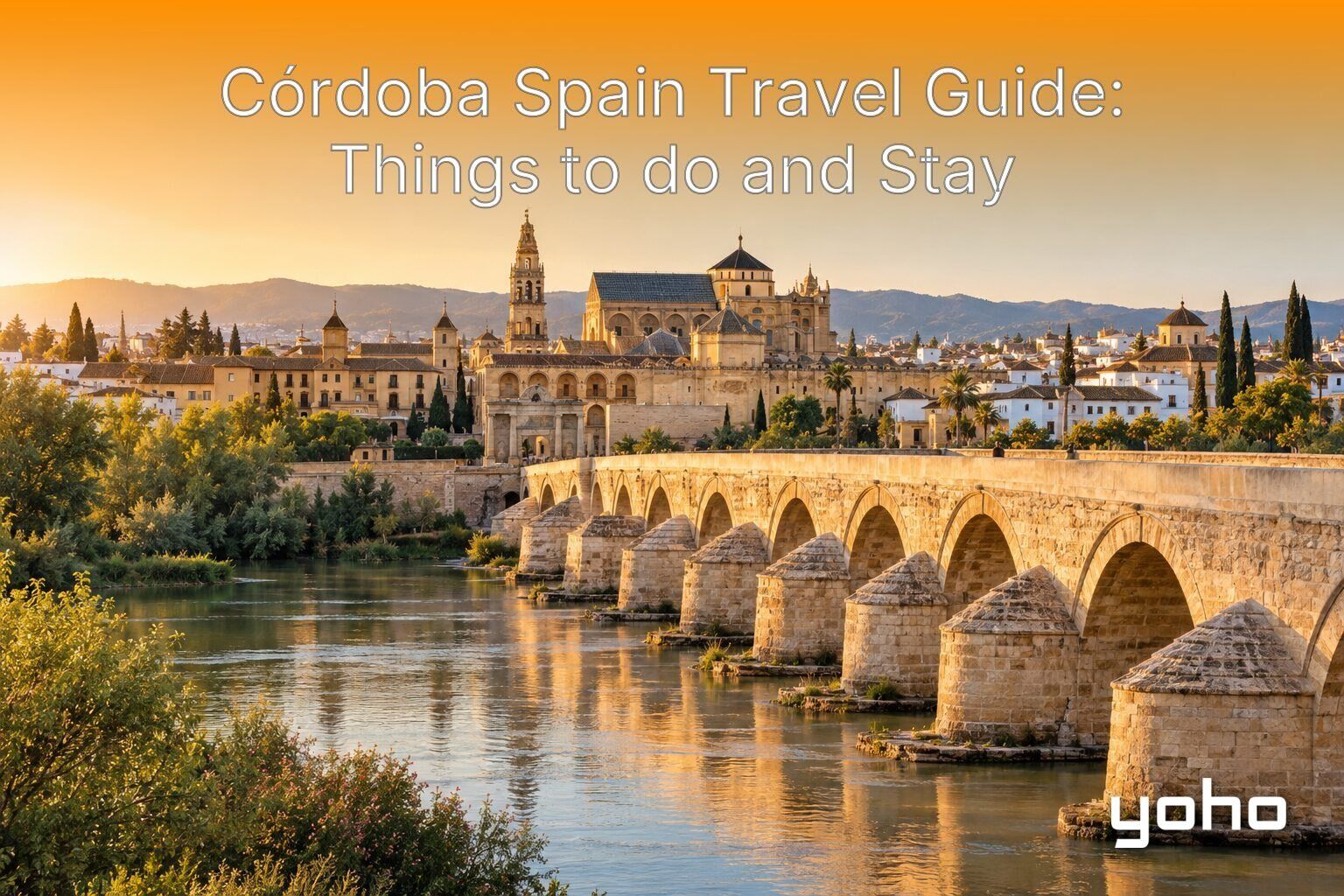
The best things to do in Córdoba include visiting the Mosque-Cathedral, crossing the Roman Bridge, touring the Alcázar gardens, exploring the Jewish Quarter, seeing traditional patios, and eating in a local tavern. Most of these experiences are within walking distance in or near the historic center, so they fit naturally into a one-day or two-day route.
Start with the Mosque-Cathedral as the architectural anchor of the city, then follow the surrounding lanes into the Jewish Quarter. From there, you can visit the Alcázar de los Reyes Cristianos, explore San Basilio’s patio district, or cross the Roman Bridge for a broad view of Córdoba’s historic skyline.
The city’s appeal is not limited to ticketed monuments. Plaza de la Corredera, Palacio de Viana, Calleja de las Flores, and the quieter residential lanes north of the main sights each reveal a different side of Córdoba. Alternating major interiors with gardens, squares, and open-air walks keeps the day varied and creates regular opportunities to rest.
Many travelers arrive on a day trip, and a focused route is entirely workable. Staying overnight, however, adds relaxed evening walks, a tavern dinner, and time to see the riverfront without a departure deadline. Once the largest tour groups leave, the old-town streets become noticeably calmer.
Plan Córdoba activities for the right season
Spring and autumn generally offer the most comfortable conditions for walking, visiting patios, and eating outdoors. Summer can still work if you reserve indoor attractions for the hottest part of the day, rest during the afternoon, and return to the streets and riverfront in the evening.
Spring draws attention to Córdoba’s courtyards and flowers, especially around patio season. It is also a popular time to visit, so centrally located rooms and timed landmark entries deserve early attention. Autumn suits travelers who want long walks without organizing the entire day around heat and shade.
Summer requires a different schedule. Begin sightseeing early, choose a long lunch or indoor break, and save the Roman Bridge, riverfront, and neighborhood bars for later. Winter is quieter and can feel refreshingly spacious, although shorter daylight hours make a loose daily plan more useful.
Walking is the best way to get around Córdoba, particularly if you’re spending most of your visit in the historic center, an approach also recommended in Travel + Leisure’s guide to Córdoba. A taxi can help with station transfers or a tired return to your accommodation, while a car generally creates more parking difficulty than value in the narrow old town.
Visit five essential attractions in the historic center
A strong first visit combines the Mosque-Cathedral, Roman Bridge, Alcázar, Jewish Quarter, and one historic palace or square. Together, these Córdoba tourist attractions create a clear route through the city’s religious, civic, and residential history without turning the day into a string of disconnected interiors.
Opening schedules and admission conditions can change by season, worship schedule, or special event. Check current details before visiting, especially for the Mosque-Cathedral and Alcázar, rather than building a tight schedule around an unconfirmed entrance time.
Mosque-Cathedral of Córdoba: Make this the anchor of your morning rather than squeezing it between smaller stops. Allow time to notice both the famous arches and the later architectural layers within the building.
- Hours: Seasonal and affected by worship schedules.
- Entry: Ticketed; advance reservation is sensible during busy periods.
- Transport: Walk from anywhere in the historic center.
Roman Bridge: Cross for an open view back toward the historic skyline, river, and old city.
- Hours: Open-air access throughout the day.
- Entry: Free to cross.
- Transport: A short walk from the Mosque-Cathedral.
Alcázar de los Reyes Cristianos: Choose it for formal gardens and a different visual pace after the dense historic interiors.
- Hours: Check seasonal opening times and closure days.
- Entry: Ticketed.
- Transport: Reach it on foot from the river or Jewish Quarter.
Jewish Quarter: Treat the lanes as a neighborhood rather than simply a corridor between attractions. Slow down around its small squares, historic façades, and narrow passages.
- Hours: The streets remain accessible, while individual sites keep separate schedules.
- Entry: Walking through the neighborhood is free.
- Transport: Continue on foot from the Mosque-Cathedral.
Palacio de Viana or Plaza de la Corredera: Pick one according to whether you prefer courtyard architecture or a broad public square with cafés and evening activity.
- Hours: The palace has scheduled access; the square is open-air.
- Entry: The palace is ticketed, while the square is free.
- Transport: Walk from the center or use a short taxi ride if time is limited.
Explore Córdoba’s patios and quieter streets
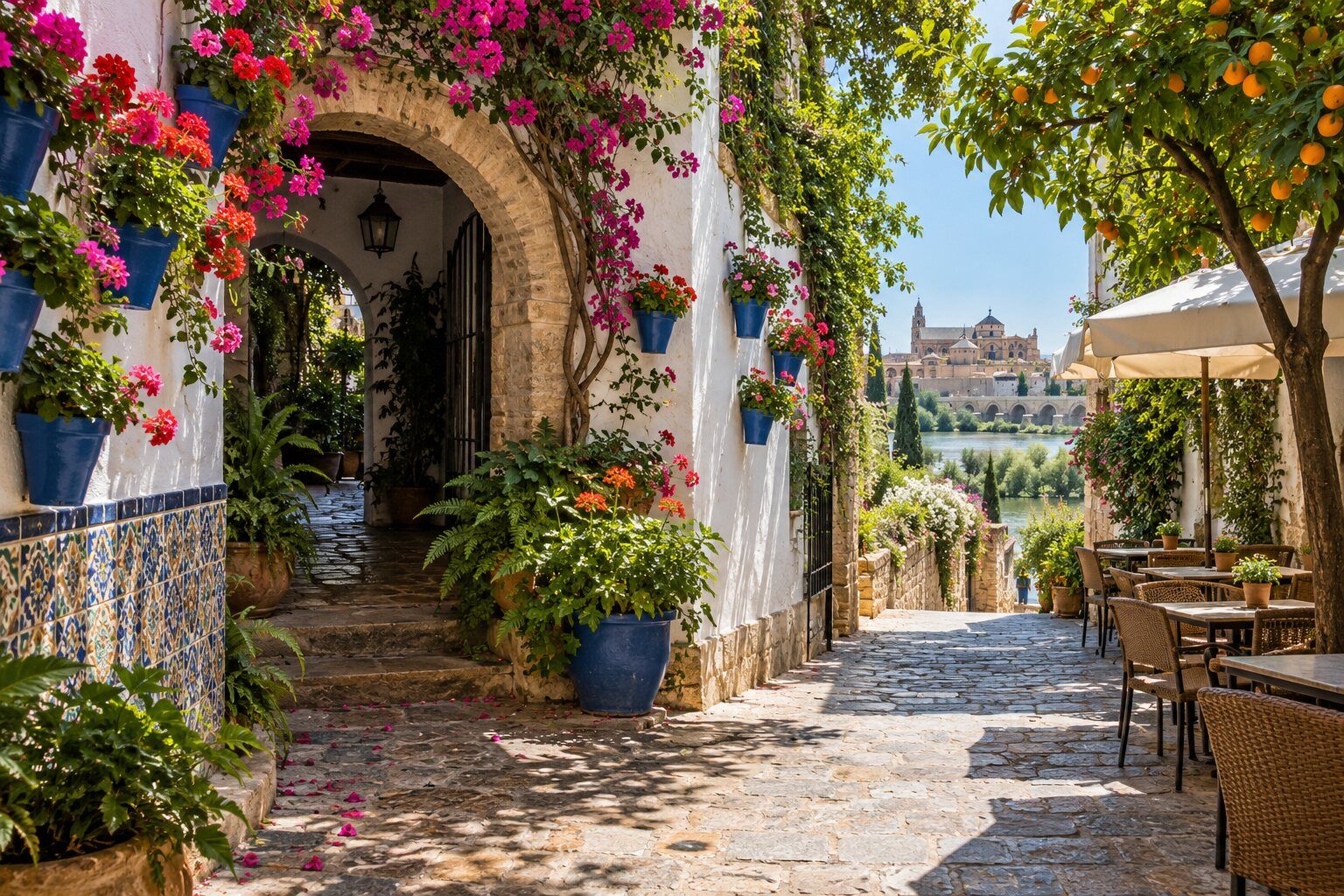
Córdoba’s patios and side streets are not filler between monuments. They show how shade, plants, tiled surfaces, and shared courtyards shape local architecture and daily life, making San Basilio, the Jewish Quarter, and the lanes around Palacio de Viana valuable parts of a first visit.
Patios deserve patience and consideration. Some belong to private homes, so access depends on the resident, season, or organized opening period. An open doorway is not always an invitation. Respect signs, keep voices low, and do not treat a lived-in courtyard like a public photo studio.
San Basilio is a natural area for courtyard-focused wandering. Pair it with the nearby Alcázar rather than making a separate trip across the city. Farther north, Palacio de Viana offers a more structured way to see how multiple courtyards can create distinct moods within one property.
Calleja de las Flores is narrow, photogenic, and very close to the Mosque-Cathedral. This street is a highlight for tourists and tour groups. Visit early or pass through later in the day if you want more space. A crowded few minutes here do not represent the whole old town; quieter corners appear quickly once you leave the shortest routes between major attractions.
For a less hurried walk, continue beyond the best-known photo stops and look for shaded plazas, small fountains, and residential façades. These unticketed discoveries are easy to combine with a scheduled monument because they do not require a fixed arrival time.
Follow a one-day or two-day Córdoba itinerary
With one day, center your Córdoba itinerary on the Mosque-Cathedral, Jewish Quarter, Roman Bridge, and one garden or patio stop. With two days, keep the first day focused on the historic core and use the second for Palacio de Viana, local neighborhoods, slower meals, and unplanned wandering.
One day anchored on the old town
Begin at the Mosque-Cathedral, then walk through the Jewish Quarter before the busiest midday period. Continue to the Alcázar if its gardens interest you, or cross the Roman Bridge if you prefer open views and a shorter schedule.
Lunch should be a real pause rather than a snack eaten while navigating. Afterward, choose one compact experience: the patio area in San Basilio, a walk through quieter lanes, or coffee near a shaded square. Finish with a riverfront walk, an evening drink, and dinner after the daytime rush begins to thin.
Two days with room for neighborhoods
Keep the first day around the southern historic core. On the second morning, head toward Palacio de Viana and nearby streets, then continue toward Plaza de la Corredera. This divides the trip into two distinct areas instead of repeating the same tourist corridor.
A second night also gives you flexibility if a site is closed or fully booked. You can move a landmark to another time without sacrificing the rest of the plan. If you are combining Córdoba with other European cities, a compact route works better than borrowing the faster pace of a larger capital; compare it with the broader structure of a three-day Paris itinerary before allocating every hour.
Choose where to stay near Córdoba’s attractions
Stay in the historic center for direct access to landmarks, near Plaza de las Tendillas for convenience, or around San Basilio for quieter lanes and patio atmosphere. Travelers catching an early train may prefer the station side of the modern center, even though it feels less atmospheric.
| Area | Strongest reason to stay | Trade-off |
|---|---|---|
| Jewish Quarter | Immediate access to major monuments and evening walks | Busy lanes and less direct vehicle access |
| San Basilio | Patios, residential character, and a slower atmosphere | Fewer late-night choices directly outside your door |
| Plaza de las Tendillas | Central position between the old town and modern shopping streets | Less intimate than the narrow historic lanes |
| Plaza de la Corredera | Square life, bars, and access to the eastern center | Some rooms may pick up evening noise |
| Station area | Easy arrival, departure, and luggage handling | A longer walk to the oldest streets |
When deciding where to stay in Córdoba, Spain, look beyond the map pin. Check whether a taxi can reach the entrance, whether the building has stairs or a lift, and whether the room faces a busy lane or an internal courtyard. A beautiful historic property may offer more character than sound insulation or easy luggage access.
For a first stay, Plaza de las Tendillas offers a practical balance. You can walk to the main sights while keeping shops, transport, and broader streets nearby. Choose the Jewish Quarter when historic atmosphere matters more than effortless vehicle access, or San Basilio when quieter evenings and nearby patios are the priority.
Taste Córdoba’s local food and visit its taverns
Eating is one of the best things to do in Córdoba: choose a traditional tavern for a regional lunch, take an afternoon pause, and return for drinks or dinner later. Ordering several dishes to share lets you sample local flavors without making one heavy meal the center of the entire day.
Look for salmorejo, a thick chilled tomato preparation commonly served with toppings, and flamenquín, a rolled meat dish with a crisp coating. Eggplant with honey appears frequently, while oxtail is a richer choice suited to a longer meal. You do not need to order every local specialty at once.
The historic center has convenient restaurants, but location alone does not determine quality. Read the menu before sitting, notice whether prices are clearly displayed, and move one or two streets away from the busiest approach to the Mosque-Cathedral when you want a calmer table.
Traditional bars can feel direct and lively rather than carefully staged. If the counter is busy, be ready with a simple order and allow for local evening dining times. Plaza de la Corredera and its surrounding streets provide an easy setting for a drink, although an unremarkable side street may hold the more relaxed table.
To keep sightseeing and meals in balance, place lunch between two nearby attractions rather than crossing the city solely for a restaurant. Dinner can be more flexible, especially if you stay overnight and no longer need to coordinate the meal with a train departure.
Enjoy Córdoba’s sights safely
Córdoba is generally manageable for first-time visitors who use normal city precautions. The main practical concerns are opportunistic theft in crowded areas, heat-related fatigue, uneven paving, and late-night awareness rather than unusual destination-specific risks. Keep valuables secure and plan realistic walking breaks.
In busy tourist areas, carry your phone and wallet somewhere harder to access than an open back pocket. Keep bags closed at café tables, and do not leave a device on the edge of an outdoor table. Crowded entrances, narrow photo stops, and transport areas deserve extra attention.
The old center’s paving can be slippery or uneven. Shoes with grip are more practical than dressy footwear, particularly if your accommodation is on a cobbled lane. At night, stay on active routes when you are unfamiliar with the area and use a licensed taxi when you are tired or carrying luggage.
Heat can become the more immediate concern during warmer periods. Carry water, use shade, and avoid treating midday as a test of endurance. Save your accommodation address offline and keep a copy of essential documents separate from the originals.
For travelers wondering whether Córdoba is safe for tourists, the practical answer is that awareness matters more than anxiety. Plan how you will return after dinner, know where your valuables are, and leave enough energy for the walk back through the old town.
Walk the riverfront and see Córdoba after dark
For an easy open-air activity, walk across the Roman Bridge, follow the Guadalquivir riverfront, and return toward the illuminated historic center. In the evening, revisit the lanes around the Mosque-Cathedral or continue toward Plaza de la Corredera for a drink and a livelier local atmosphere.
The Roman Bridge works at several points in the day. Morning offers cooler conditions, late afternoon brings warmer light across the stone, and evening reveals the historic skyline after the main sightseeing schedule has ended. Crossing the bridge is free and requires no reservation, making it easy to add when another attraction closes earlier than expected.
After dark, stay on well-used routes and allow more time on uneven paving. The area around the Mosque-Cathedral remains a natural choice for an atmospheric walk, while Plaza de las Tendillas and Plaza de la Corredera provide busier public spaces with restaurants and bars nearby.
What to carry for a walking-heavy day
- Walking shoes: Choose a broken-in pair with grip for stone and cobbled surfaces.
- Light layer: Carry one for cool mornings, evenings, and air-conditioned interiors.
- Sun protection: A hat and sunscreen are useful when routes cross exposed squares and the river.
- Refillable bottle: Regular water breaks are easier than waiting until lunch.
- Compact day bag: Keep valuables secured without carrying a large backpack through tight interiors.
Pack lightly if your accommodation is inside the old town. Wheeled luggage does not remove the effort of stairs, curbs, or uneven paving. For a broader pre-departure check, use these smart packing and airport security tips and adapt them to a walking-heavy city break.
Your schedule needs similar restraint. Build the day around one timed entry rather than several consecutive reservations. That leaves room for a delayed lunch, an unexpectedly open patio, a riverfront detour, or a shaded square that deserves another half hour.
Navigate between Córdoba tourist attractions
Arrange mobile data before arrival if you rely on walking directions, digital tickets, train updates, or accommodation messages. Córdoba’s compact center is navigable with saved maps, but a live connection is useful when similar-looking lanes, temporary closures, and unfamiliar entrances interrupt your planned route.
An eSIM, short for embedded SIM, lets a compatible phone use a digital mobile profile without swapping a physical SIM. The GSMA’s eSIM overview provides background on the technology and its role in connected devices. If the format is new to you, read more about what an eSIM card is before purchasing or activating anything.
Network performance changes over time and can vary by location, device, congestion, and building construction. According to the Speedtest Global Index, Spain ranked 55th in the world for mobile speeds and 18th for fixed broadband speeds. Rankings are snapshots rather than guarantees, and Ookla’s Córdoba network-performance page cannot predict reception inside every thick-walled historic building or enclosed courtyard.
If your Córdoba plans depend on live maps, digital reservations, and messages from your accommodation, a trip-specific data plan can reduce reliance on public Wi-Fi. For that need, Yoho Mobile lets you select Spain, choose a data amount, and set the validity period according to the length of your visit. Compare the available Spain eSIM plan options with your Córdoba itinerary and expected usage before purchasing.
Before paying for any eSIM, confirm that your phone supports the feature and is eligible to use another mobile profile. Apple maintains an official guide to using eSIM on iPhone, while travelers with other devices can consult the eSIM-compatible device list. A phone without eSIM support will require another connection method, such as a physical SIM or Wi-Fi.
If you want your connection installed before traveling to Spain so that directions are available when you leave the station, you can manage setup through the Yoho Mobile app for iOS or the Yoho Mobile app for Android. Follow the supplied activation instructions, then save your accommodation address, tickets, and essential map areas offline as a backup.
A short Córdoba stay may not make your likely data use obvious, especially if most navigation happens on foot. New customers who want to test the setup before relying on it around the historic center can use the free eSIM trial before choosing a paid plan. Travelers concerned about losing access to directions after using their allowance can also review how Yoho Care provides emergency data under its applicable terms.
You do not need a complicated digital setup for Córdoba. Reliable directions, saved tickets, and a reachable accommodation host are enough. The same principle applies to the city itself: choose a few landmark anchors, leave room between them, and let the patios, squares, taverns, and riverfront shape part of the day.