
Best Place to Visit in Kathmandu Valley
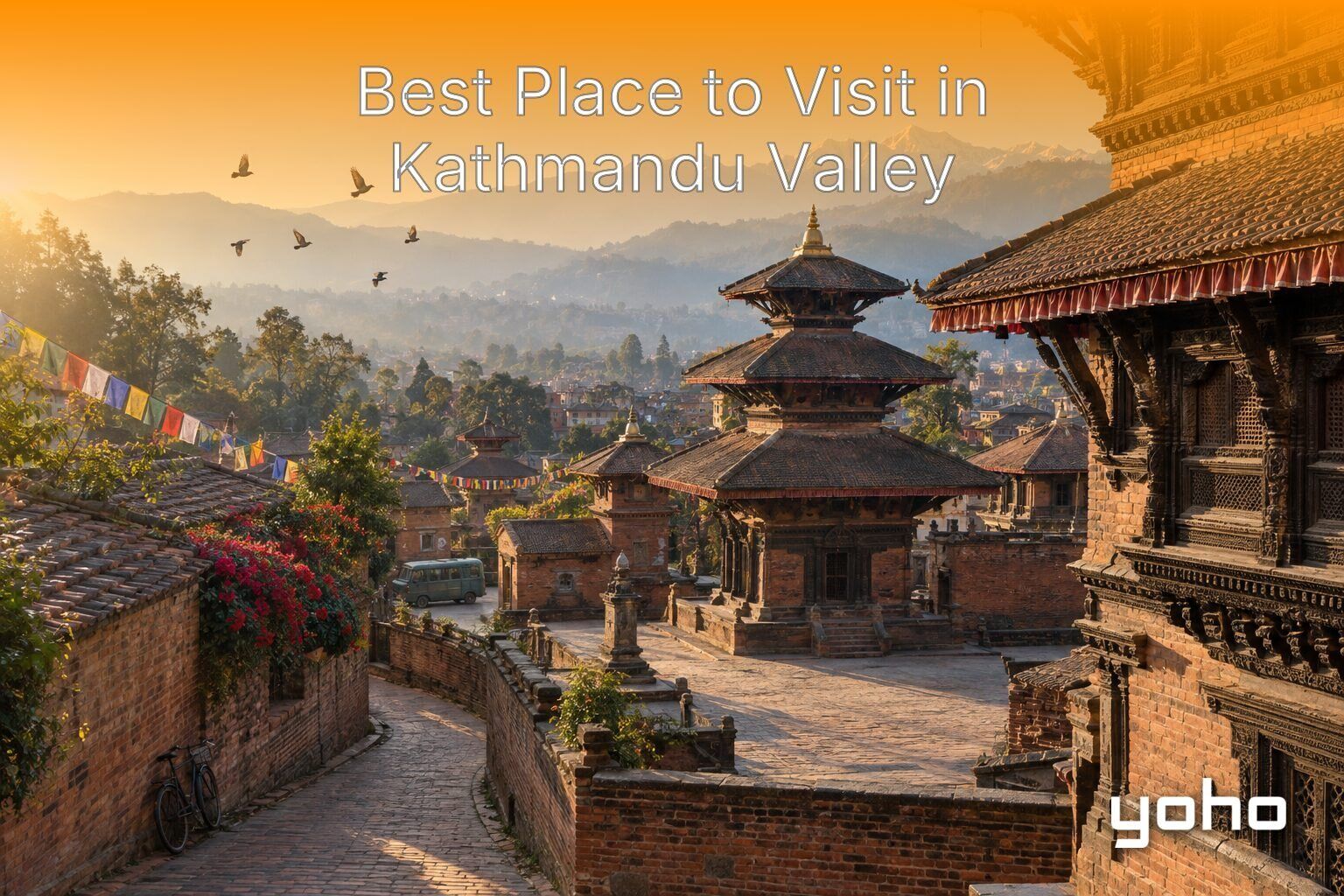
Kathmandu Valley’s main bases look close on a map, but choosing among Patan, central Kathmandu, Bhaktapur, and the valley edge means deciding how often you are willing to cross busy roads. A poor fit can turn short-looking journeys into traffic-heavy transfers and leave less time for historic streets, courtyards, markets, and neighborhoods. This guide compares the valley’s main bases and explains how to choose accommodation, group daily sightseeing, and plan transport.
Which part of Kathmandu Valley is the best base?
The usual planning miss is Local Transportation, not a generic phone problem or a belief that you can simply switch everything on after arrival. Patan is the strongest all-round base for atmosphere and manageable exploration, while central Kathmandu suits travelers who value transport access, tour departures, and a wider choice of services.
Patan is our overall pick for travelers who want a slower rhythm without feeling removed from the valley’s main activity. Its compact historic core rewards walking, and the surrounding neighborhoods give you room to pause rather than moving between stops all day. It works especially well if cafés, craft shops, courtyards, and evening walks matter as much as checking off major attractions.
Central Kathmandu remains the practical choice for a first visit with several onward connections. You’ll generally have more departure options, travel services, accommodation styles, and places serving visitors with limited time. The tradeoff is intensity. Busy roads, dense commercial areas, and frequent route changes can make short distances feel longer than expected.
Bhaktapur fits a different trip. Choose it when you want the old city itself to be the focus, particularly in the early morning and evening when day visitors are less present. Staying there creates a more immersive experience, but it’s less convenient if you plan to cross the valley repeatedly.
- Choose Patan for the best balance of atmosphere, walkability, and access.
- Choose central Kathmandu for transport, services, and onward travel arrangements.
- Choose Bhaktapur for a focused historic stay with fewer daily transfers.
- Choose a valley-edge stay for quiet surroundings, accepting longer journeys to urban areas.
Kathmandu, Patan, and Bhaktapur compared
Kathmandu offers the broadest practical base, Patan provides the most balanced city experience, and Bhaktapur rewards travelers who prefer depth over constant movement. The best choice depends less on which place has the longest attraction list and more on how often you’re willing to cross busy parts of the valley.
| Base | Strongest reason to stay | Main tradeoff | Good fit for |
|---|---|---|---|
| Central Kathmandu | Transport access and visitor services | Busier streets and a faster pace | First visits and onward connections |
| Patan | Walkable historic atmosphere | Some departures still require a cross-city journey | Culture, food, crafts, and slower evenings |
| Bhaktapur | Immersion in a concentrated old city | Less convenient for frequent valley crossings | Photography, architecture, and an unhurried stay |
| Valley edge | Quieter surroundings and open views | Greater dependence on arranged transport | Rest days and retreat-style stays |
The comparison changes when your Nepal itinerary extends beyond the valley. Kathmandu becomes more useful when you need to coordinate departures, store luggage, or return between different parts of the country. The official tourism information on Local Transportation explains the available movement options within the valley and around Nepal.
For broader context, Nepal travel - Lonely Planet | Asia frames the country’s range with the line “From Everest to Annapurna, discover mountain treks, Terai safaris, adventure activities and more in our Nepal travel guide.” That range matters because your valley base may also serve as the organizational point for a much larger trip.
How should you balance major sights and local stops?
Build each day around one main area, then leave space for nearby lanes, meals, workshops, and courtyards. Kathmandu Valley is more satisfying when you explore connected places on foot instead of crossing the city for every famous stop. A shorter list often produces a fuller sense of the place.
The valley looks compact on a map, which tempts travelers to combine distant areas in the same outing. Road conditions, traffic, pickup delays, and unfamiliar entrances can turn that neat plan into a day of waiting. Group places geographically and treat travel time as part of the schedule rather than an empty gap.
A neighborhood-first rhythm
Start with the area closest to your accommodation. Walk while streets are easier to read, pause for breakfast, and continue through the surrounding lanes. This approach helps you understand the neighborhood before you depend on a driver to find your return point later.
After the main attraction, resist the urge to leave immediately. The smaller details often sit nearby: residential courtyards, artisans at work, local food counters, shrines used by residents, and rooftops that reveal how tightly the city is built. Keep your attention on daily life, and be respectful when a space is actively used for worship or family routines.
When a cross-valley outing makes sense
A longer transfer is worthwhile when the destination deserves most of the day. Bhaktapur is a clear example of that style of visit if you aren’t staying there. Arrive with enough time to move slowly, eat locally, and wait for the atmosphere to change rather than treating the old city as a brief stop.
If you prefer spontaneous exploration, keep an optional place near your base for the late afternoon. You can use it when energy and traffic allow, then skip it without feeling that the entire route has failed.
Timing, crowds, and daily pace
Early starts suit photography, walking, and quieter public spaces, while late afternoons bring changing light and more neighborhood activity. Midday is better reserved for meals, indoor visits, rest, or a short transfer. Seasonal conditions matter, but your daily pacing often has a greater effect on comfort.
Weather should shape the order of your day rather than dictate every choice months in advance. Check the local forecast close to departure and again each morning. Rain can slow road journeys and make uneven surfaces harder to navigate, while strong sun can make exposed walking tiring. A flexible route handles both better than a tightly timed checklist.
Morning for orientation
Use the first part of the day for places where direction and atmosphere matter. Streets are easier to learn before traffic builds, and you can identify landmarks near your accommodation for the return journey. Save a location pin at the entrance to your hotel or guesthouse, not just at its street address.
Afternoon for a smaller radius
Keep the afternoon geographically simple. Choose lunch near your main stop, visit a nearby indoor space, or return to your base before heading out again. This prevents a delayed ride from affecting several reservations at once.
Evening close to your room
Plan dinner within a comfortable walk or short ride of where you’re staying. This is especially useful during your first evenings, when streets may look different after dark and some lane entrances are easy to pass. Carry the accommodation name and location in a form you can show a driver.
Where should you stay in Kathmandu Valley?
Stay in Patan for a balanced cultural visit, central Kathmandu for logistics, Bhaktapur for historic immersion, or the valley edge for rest. Before booking, compare access by vehicle, walking conditions, nighttime surroundings, and the distance to the places you’ll actually visit rather than relying only on a neighborhood name.
Your accommodation’s exact position matters more than a broad district label. A peaceful room deep inside a lane may be pleasant once you arrive, yet awkward with heavy luggage or a late pickup. A property on a major road may be easier for drivers, but street noise can affect light sleepers. Ask about both access and room orientation.
Patan for a balanced stay
Patan works well when you want historic surroundings without making the entire trip about transport. It supports slow mornings and relaxed dinners, and you can dedicate other days to trips across the valley. Look for a stay within an easy walk of the core area while still reachable by a driver.
Central Kathmandu for practical access
Central Kathmandu is better when your schedule includes changing bookings, tour meetings, shopping, or departures beyond the valley. The broad range of services reduces planning friction. Check recent accommodation details carefully because the experience can shift from a quiet side lane to a busy road within a short distance.
Bhaktapur for depth and quiet hours
Bhaktapur suits travelers who want to experience the old city before and after the main flow of visitors. The advantage isn’t simply sleeping near historic architecture. It’s having time to revisit the same streets under different light and notice routines that a quick visit can miss.
Valley-edge properties for recovery time
A quieter property outside the dense urban core makes sense after a demanding journey or before leaving Nepal. Confirm meal availability, pickup arrangements, and access to basic services. The view may be the main attraction, but isolation becomes inconvenient if every small errand requires a vehicle.
Transport choices that shape your visit
Walking is best within compact historic areas, while taxis or arranged cars are more practical for cross-valley trips and luggage transfers. Public transport can suit flexible travelers, but routes and stopping points may be less obvious to newcomers. Always build extra time around departures that can’t be missed.
Transport isn’t just a way to reach the best places in Kathmandu Valley. It determines how much energy remains when you arrive. A low-cost route involving several changes may save money, yet it can be a poor trade when you have bags, limited daylight, or a fixed entry time.
- Walk when your stops are concentrated within the same historic area.
- Use a taxi for direct urban journeys when timing matters.
- Arrange a car for valley-edge stays, early departures, or several linked stops.
- Consider public transport when your schedule is flexible and you can confirm the route locally.
- Use tourist buses for selected onward journeys outside the valley.
Nepal’s tourism authority states that “Tourist bus services provide easy transportation to prime areas like Pokhara and Chitwan.” These routes are most relevant when Kathmandu is the starting point for a wider itinerary, so confirm the departure location rather than assuming every service leaves from the same place.
Agree on the journey before departure
Confirm the destination, pickup point, and payment expectation before the vehicle moves. Showing a map pin can be clearer than relying on a property name alone, especially when several businesses have similar names or when the entrance sits away from the main road.
Keep fixed departures separate
Don’t place a long sightseeing transfer immediately before an onward bus or flight. Return close to your departure area earlier, store luggage if needed, and treat the final connection as its own task. This buffer is more useful than squeezing in one extra stop.
What should you prepare before your first full day?
Prepare a small amount of local cash, comfortable walking shoes, sun and rain protection, your accommodation details, and an offline copy of essential bookings. Mark your main destination and return point before leaving. A lightly packed day bag makes uneven streets and frequent stops much easier to manage.
Your first full day should teach you how the valley works. Keep the route close to your base and pay attention to road crossings, lane entrances, pickup areas, and the time needed to cover short distances. This practical orientation makes later outings easier.
Carry only what supports the day
- A refillable water bottle and a light snack
- Comfortable footwear with reliable grip
- A compact rain layer or sun protection
- Cash stored in more than one place
- A portable battery and charging cable
- Written accommodation details and a saved map pin
A bulky bag becomes tiring in narrow lanes and crowded areas. Keep valuables secure and avoid placing your phone or wallet in an easy-to-reach outer pocket. For a broader departure routine, the daypack packing guide explains how to organize essentials without carrying unnecessary weight.
Leave room for changes
Save alternative lunch spots and one optional nearby activity, but don’t build a minute-by-minute schedule. A closure, ceremony, road delay, or sudden weather change may alter the day. The strongest plan gives you another good choice without forcing a long detour.
How can mobile data make the valley easier to explore?
An eSIM can provide mobile data without replacing your physical SIM, making it useful for maps, booking updates, and messages while moving through Kathmandu Valley. Arrange access before departure, but confirm that your phone supports the technology and is unlocked before purchasing an eSIM plan.
If the format is unfamiliar, this guide explains what an eSIM card is and how it differs from a removable card. Some devices aren’t compatible with eSIM, so checking the phone model and carrier restrictions remains necessary. A local physical SIM can still be a practical alternative when your device doesn’t support it.
Reliable mobile data helps when you need maps, translation, digital tickets, ride-hailing, booking confirmations, or messaging. Save essential information offline as well, since indoor spaces, dense buildings, and valley-edge locations can affect access. The guide to Google Maps mobile data use can help you estimate how much you’ll need.
If your route combines several bases or an onward Nepal journey, choose access that matches the actual itinerary rather than accepting fixed allowances. Yoho Mobile lets you select destination countries, data allowance, and usage duration independently. You can browse Yoho Mobile eSIM plans and tailor the choice to a short city stay or a longer regional trip.
When you want to manage the plan before departure and during the trip, use the Yoho Mobile app for iOS or the Yoho Mobile app for Android. Keep the activation details available offline until you’ve confirmed that mobile data works.
If you’re trying the format for the first time, the free eSIM trial offers a low-commitment starting point, while Yoho Care provides an extra layer of support if your included data runs out unexpectedly.
The best place to visit in Kathmandu Valley is Patan for most travelers seeking balance, but the practical answer changes with your priorities. Choose central Kathmandu for logistics, Bhaktapur for immersion, or a valley-edge stay for quiet. Whichever base you select, group each day by area and treat transportation as part of the experience, not an afterthought.