
Digital Nomad in SE Asia? Get the Best Regional eSIM Data Plan
The best data setup for a digital nomad in Southeast Asia is a reliable regional eSIM that keeps you connected across borders without swapping SIM cards or paying roaming fees. This matters because you’ll likely move between countries like Thailand, Singapore, Vietnam, and Malaysia while working remotely, managing cross border ecommerce SEA tasks, and running your business on the go. If you want a smoother travel workflow, start your trip by activating a flexible Yoho Mobile plan so you stay online from the moment you land.

Why Digital Nomads in Southeast Asia Need Reliable Regional Connectivity
As a digital nomad Southeast Asia traveler, your phone becomes mission-critical: it’s your office, your navigation tool, your payment method, your hotspot for your laptop, and your safety line when moving between cities. Understanding how connectivity works in this region helps you choose the best data plan for Asia and avoid frequent issues like SIM registration delays, border disconnections, and unreliable Wi-Fi.
Before going deeper, your first mention should explain how an eSIM works. If you haven’t used one before, here’s a full breakdown of what is an eSIM card. This digital alternative to physical SIMs makes life dramatically easier when hopping between countries in Southeast Asia.
Why this matters: remote work Thailand setups often require you to switch locations frequently—Bangkok coworking in the morning, Chiang Mai cafés in the afternoon, and a flight to Vietnam or Malaysia the next day. Moving so often means you need frictionless connectivity everywhere you go.
And if you’re running cross border ecommerce SEA operations, your phone must remain online for payments, customer service messages, marketing dashboards, and marketplace updates. A local SIM card can work, but a multi-country eSIM for Asia is far more efficient, especially when your itinerary covers multiple borders in short periods.
External sources like the GSMA highlight that eSIM adoption is surging, making it a standard for global travelers and remote professionals. Tech outlets like Android Authority also cover frequent updates to eSIM compatibility across brands.
Benefits of Using an eSIM for Asia When Working Remotely
If you’re deciding what’s the best data plan for Asia, consider these key benefits:
- No physical SIM swaps. Keep your phone sealed and secure while moving between airports.
- Instant activation. Install the QR code before your trip and go online the moment you arrive.
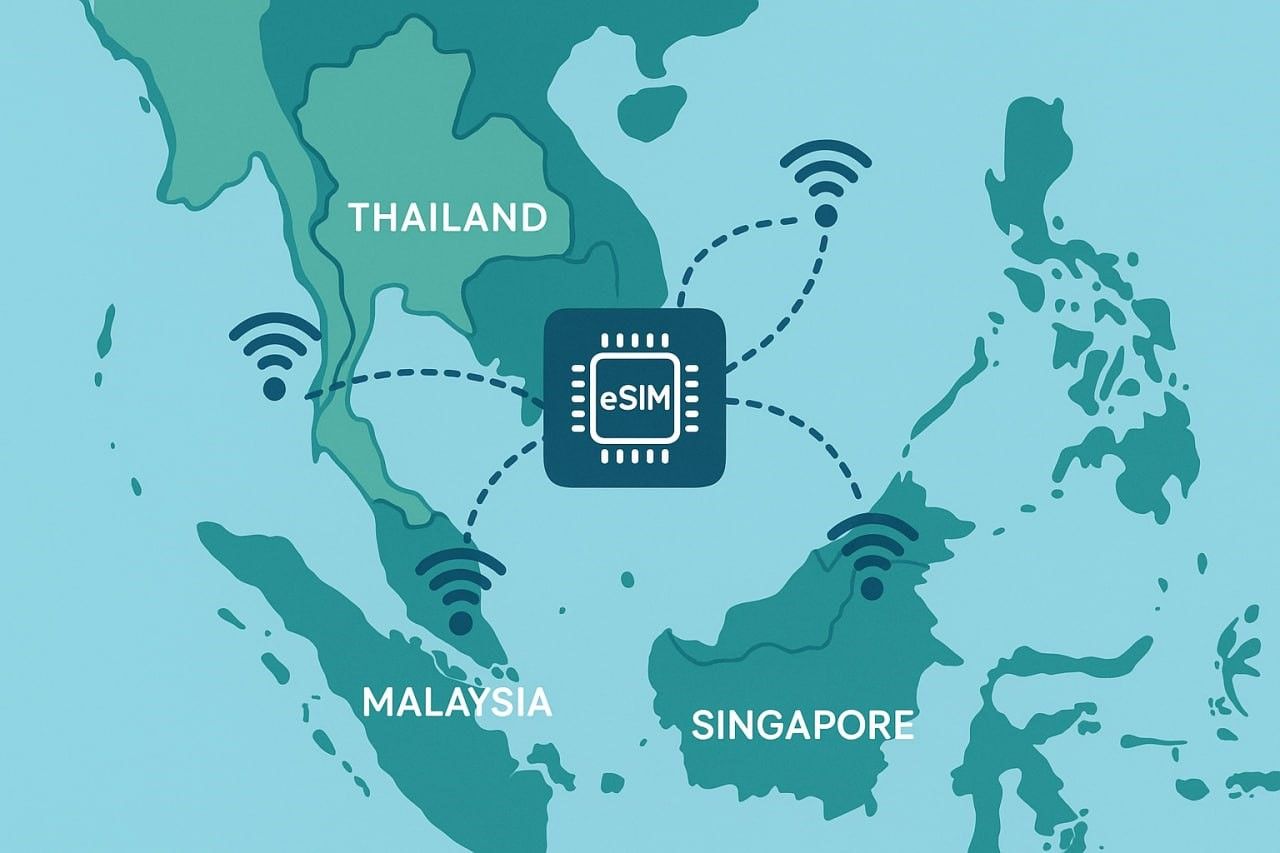
- Great for business travel Asia routes. One plan keeps you covered across Singapore, Thailand, Vietnam, Malaysia, Cambodia, Indonesia, Laos, and more.
- Borderless connectivity. No signal drops when crossing land borders or switching flights.
- Cost control. Avoid unpredictable roaming fees, especially when handling mobile data Singapore usage or uploading large files.
- Better for digital nomads. You can manage work, calls, hotspots, and travel logistics without interruption.
To understand the full installation and usage flow, you can also check the internal guide on how Yoho Mobile works.
Best Countries for Digital Nomads in Southeast Asia — And Why eSIM Helps
Digital nomads love Southeast Asia because it offers excellent Wi-Fi, excellent food, comfortable living, and a thriving creator scene. But your connectivity often depends on strong 4G/5G coverage, which varies by location.
Here’s how an eSIM for Asia improves your workflow across major hubs:
Thailand
Remote work Thailand communities—especially in Chiang Mai, Bangkok, and Phuket—thrive on mobility. A regional eSIM keeps your laptop connected during travel days and coworking transitions.
Singapore
Mobile data Singapore is extremely fast, but local plans can be expensive. A regional eSIM keeps your costs predictable while giving you fast speeds for cloud backups and video calls.
Vietnam
Saigon and Hanoi have great cafés but inconsistent public Wi-Fi. An eSIM makes your phone a reliable hotspot during meetings.
Malaysia
Great for long stays in Penang or Kuala Lumpur. Regional coverage helps if you’re commuting between Singapore and Malaysia for business.
Cambodia & Laos
Travelers appreciate the stability of a multi-country plan because border zones can have weaker local SIM performance.
If you’re planning a long-term digital nomad Southeast Asia route, choosing a regional plan early ensures reliability everywhere you go. And if you’re starting soon, it’s a great time to secure your setup so your first work session abroad starts smoothly with high-speed data.
Choosing the Best Data Plan for Asia as a Digital Nomad
When comparing options, focus on these essential criteria:
-
Coverage
Look for a plan that includes all major Southeast Asian countries, especially Thailand, Singapore, Vietnam, Malaysia, and Cambodia. -
Data Amount
- Light use: 5–10 GB
- Remote work & nomads: 15–30 GB
- Heavy creators (uploads/meetings): 30–50 GB+
-
Speed
Ensure 4G or 5G (where available). Singapore and Thailand have excellent 5G networks. -
Hotspot Use
Essential for video calls, working from cafés, and cloud uploads. -
Validity & Flexibility
Month-long plans are ideal for digital nomads. -
Device Compatibility
Check your phone model on the manufacturer’s page—Apple, Samsung, and Google list eSIM-ready devices.
As you plan your time in Southeast Asia, many long-term travelers find it easiest to activate a Yoho Mobile plan before arrival so your digital workspace is functioning from day one.
Step-by-Step: How to Set Up Your Regional eSIM for Southeast Asia
Using an eSIM for Asia is simple and ideal for anyone working remotely. Just follow these steps:
-
Check device compatibility
Visit your device manufacturer’s support page. iPhones, recent Samsung Galaxy phones, and Google Pixels support eSIM. -
Choose your plan
Make sure the plan covers all countries where you’ll be traveling, especially if your digital nomad Southeast Asia route includes multiple borders. -
Purchase and install before departure
You’ll receive a QR code instantly. Scan it and load your profile. -
Activate upon arrival
Turn on your eSIM as soon as you land. It will automatically connect to the strongest local network. -
Disable roaming on your physical SIM
This prevents accidental charges, especially with mobile data Singapore or Thailand networks. -
Use hotspot for remote work
Hotspot support is essential for video calls, coworking sessions, and working during travel days. -
Track your usage
Both iPhone and Android show per-app data consumption. Remote work Thailand sessions with video can consume more than expected, so check frequently.
Digital nomads often say this setup completely transforms their workflow. If you want a smooth start to your regional journey, you can activate a Yoho Mobile plan and stay fully connected across Southeast Asia without worrying about border transitions.
Real Nomad Use Cases: How eSIM Improves Your Workflow
Here are a few scenarios where a regional plan is life-saving:
-
Café hopping in Bangkok, Chiang Mai, and Saigon
Seamlessly transition from one hotspot to another while staying connected to your cloud tools. -
Travel days between Singapore and Malaysia
Work from the bus or train using hotspot mode without losing signal at the border. -
Island hopping between Thailand and Indonesia
Keep navigation, payments, and messaging apps online even in remote areas. -
Managing cross border ecommerce SEA orders
Stay reachable for customer messages, inventory alerts, and platform notifications. -
Remote meetings from anywhere
Switch effortlessly between coworking spaces, airports, and hotels.
If you want your Southeast Asia adventure to be fully productive, the best upgrade you can give yourself is a stable regional data plan from the very start.
Quick Tips for Digital Nomads in Southeast Asia
- Use a power bank during long work days.
- Download offline maps before remote trips.
- Keep important files in cloud storage.
- Rely on your eSIM instead of public Wi-Fi for sensitive tasks.
- Always have an extra data buffer for video calls or uploads.
FAQs
Do I need separate SIM cards for each country?
No. A regional eSIM covers all major Southeast Asian destinations.
Is mobile data Singapore more expensive locally?
Yes. A regional plan can be cheaper than buying a Singapore-only SIM.
Can I use my phone as a hotspot for remote work?
Yes—verify your plan includes hotspot support.
Is this suitable for business travel Asia trips?
Absolutely. Regional coverage makes traveling for meetings and conferences far easier.
Can I activate before traveling?
Yes. Install at home and activate once you arrive.
Conclusion
Working and traveling across Southeast Asia is dramatically easier when your data stays stable across borders. A regional eSIM gives you the flexibility, speed, and reliability needed for remote work and long-term nomad life—so starting your journey with a Yoho Mobile plan helps you stay connected anywhere you go.