
Best Time to Visit Baku and Almaty
Baku sits on the windy Caspian coast while Almaty rises toward the Tian Shan mountains, so a single Azerbaijan Kazakhstan travel plan has to solve two different climate puzzles. If you time it poorly, you may face dusty heat on Baku Boulevard, closed-feeling mountain trails near Almaty, expensive peak-season hotels, or a suitcase that fits one city and fails in the other. This guide shows the best months for combining both cities, with weather, crowds, costs, packing, and route choices you can use before booking.
What Are the Best Months to Visit Baku and Almaty Together?
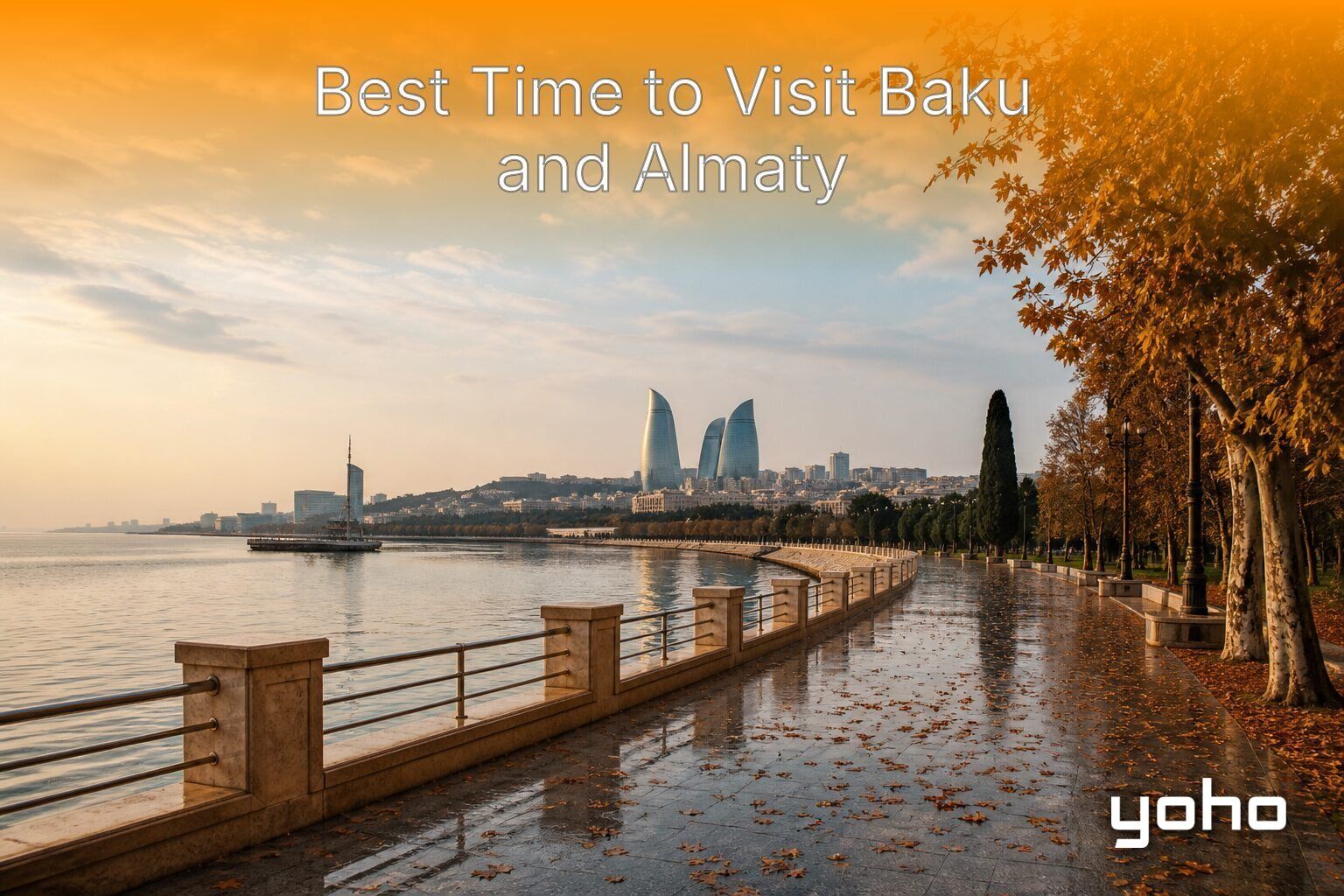
Late April to early June and mid-September to mid-October are the best windows for visiting Baku and Almaty on one trip. You get mild Baku city weather, usable daylight, lower heat risk, and better mountain conditions near Almaty without the highest summer crowds.
The simplest answer is that the best time to visit Baku and Almaty is shoulder season, not peak summer. Baku is at its most comfortable when you can walk the Old City, the waterfront, and hillside viewpoints without harsh midday heat. Almaty is at its best when the city is mild and the mountains are accessible enough for day trips to Medeu, Shymbulak, Big Almaty Lake viewpoints, or nearby valleys.
For most travelers, May and September are the safest all-round choices. In Baku, daytime temperatures often sit in the comfortable spring or autumn range, and evenings still feel pleasant for the boulevard. In Almaty, those same months usually support café terraces, city parks, and mountain excursions with layered clothing rather than heavy winter gear. June can also work well, especially in Almaty, though Baku starts to feel hotter by late month.
If your priority is price, aim for late March, April, late October, or November. You trade some weather certainty for lower demand. If your priority is mountain scenery, favor late May to June or September. If your priority is city nightlife, rooftop meals, and long evenings, early summer has energy, but you need to plan around heat in Baku.
| Travel window | Baku conditions | Almaty conditions | Best for | Trade-off |
|---|---|---|---|---|
| Late March to April | Mild, windy, changeable | Cool, spring thaw | Budget trips, culture, light crowds | Mountain areas may feel muddy or cold |
| May to early June | Warm, walkable, bright | Mild city days, better mountain access | First-timers, families, photography | Popular weekends need advance booking |
| July to August | Hot and busy | Warm, green, mountain-friendly | High-altitude day trips | Baku heat can limit daytime sightseeing |
| September to mid-October | Warm, calmer than summer | Crisp, scenic, comfortable | Balanced two-country itineraries | Cooler nights require layers |
| November to February | Cold, windy, low crowds | Cold, snowy mountain season | Ski add-ons, museums, lower hotel demand | Short daylight and heavier packing |
How Does Baku Weather Compare With Almaty Weather?
Baku weather is shaped by the Caspian Sea, wind, and dry urban conditions, while Almaty weather is shaped by elevation and nearby mountains. The same month can feel like a seaside city break in Azerbaijan and a layered mountain-gateway trip in Kazakhstan.
Baku weather by month matters because the city is highly walkable when conditions are mild and much less forgiving when wind or heat dominates the day. March and April can be breezy, May is usually one of the most pleasant sightseeing months, July and August can feel hot around stone streets, and November brings cooler air that suits museums more than long waterfront lingering. December in Baku is not usually a classic snowy city break; it is more often cold, windy, and atmospheric.For eSIM standards background, check GSMA eSIM overview.
Almaty weather by month has a bigger elevation story. The city itself sits at a higher altitude than Baku, while nearby recreational areas climb quickly into colder terrain. April can be fresh and unpredictable. May and June are comfortable for city wandering and many day trips. July and August are warmer, but mountain escapes remain appealing. September brings clear, crisp conditions that many travelers prefer. By December, Almaty leans fully into winter, with snow sports possible in nearby resorts.
This contrast is the reason a Baku Almaty itinerary should not be packed as one simple city break. You may want linen or light cotton for Baku afternoons, a fleece or insulated layer for Almaty evenings, and shoes that can handle both polished city promenades and uneven mountain paths. For broader trip planning beyond these two cities, a good travel app setup helps you manage maps, translations, and reservations; this list of useful travel apps for international trips is a helpful starting point.
- Baku in May: best for Old City walks, Baku Boulevard, cafés, and evening viewpoints.
- Baku in November: better for museums, architecture, food, and lower crowds than beach-style wandering.
- Baku in December: festive city atmosphere, but pack for wind rather than dependable snowfall.
- Almaty in June: strong for parks, cable cars, and mountain day trips.
- Almaty in September: one of the best months for clear air, comfortable walking, and autumn color.
Why Is Spring a Strong Season for a Caucasus Central Asia Trip?
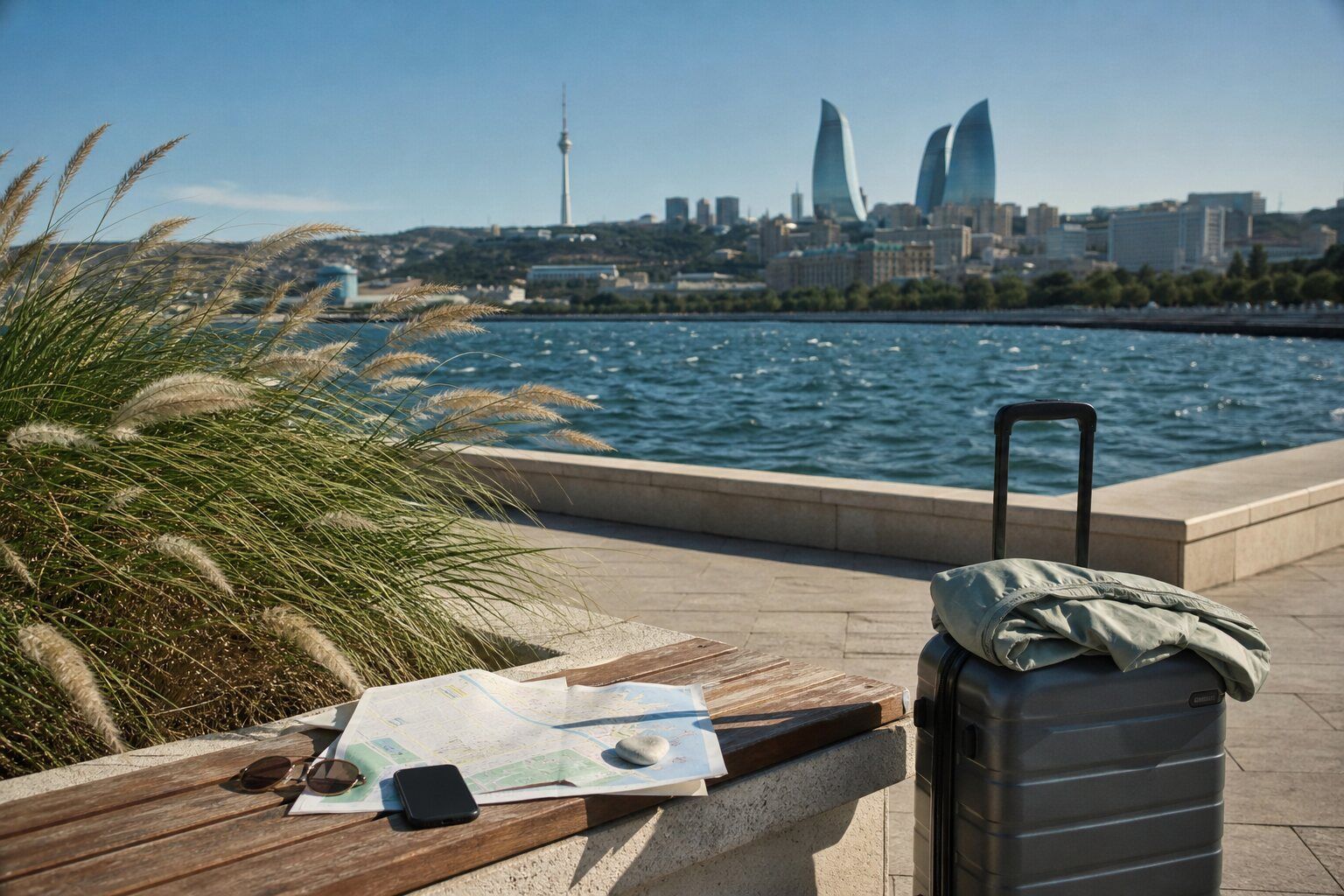
Late March to early June gives you the most gradual seasonal transition between the Caspian coast and the Tian Shan foothills. Expect roughly 12–15 daylight hours, low-to-moderate crowds, moderate prices, mild Baku days, and Almaty conditions that improve steadily from cool spring to early summer.
Spring is the season that makes the two-city contrast feel exciting rather than awkward. In Baku, April and May are especially good for exploring Icherisheher, the Flame Towers viewpoints, the Heydar Aliyev Center exterior, and long walks along the Caspian. The best time to visit Baku Boulevard is often late afternoon in spring, when the light softens and the wind feels refreshing rather than biting.
In Almaty, spring arrives in layers. The city parks and café streets become pleasant before every mountain area feels fully open for relaxed hiking. Late March and early April can still feel cold in shaded or higher places, while May and early June usually give you a better balance of green landscapes and manageable temperatures. If you are trying to combine city culture with outdoor scenery, late May is one of the most forgiving choices.
Spring also suits families and first-time visitors because the route does not demand extreme packing. You can build relaxed mornings, avoid the worst midday heat, and still enjoy long enough days for side trips. Book central hotels four to six weeks ahead for May weekends, especially if your dates overlap with regional holidays or events. Spring prices are not always low, but they usually feel fair compared with peak summer.
What should you pack for spring?
- Light jacket or windbreaker for Baku evenings and Caspian wind.
- Fleece or warm mid-layer for Almaty and mountain viewpoints.
- Comfortable walking shoes with grip for mixed city and trail surfaces.
- Sunglasses, sunscreen, and a compact umbrella for variable spring weather.
- A daypack that leaves room for layers; this daypack packing guide can help you avoid overloading daily outings.
Can Summer Work for Baku and Almaty?
Late June to early September can work if you prioritize Almaty mountains and plan Baku sightseeing early or late in the day. Expect about 14–15 daylight hours, high crowds in popular areas, peak or near-peak prices, hot Baku afternoons, and warm Almaty city weather.
Summer is not a bad season for this route, but it is a season that rewards discipline. Baku can feel intense in July and August, especially around stone-paved streets, exposed viewpoints, and open waterfront areas during the middle of the day. The city is still lively, and warm evenings can be enjoyable, but your itinerary should lean toward morning walks, indoor architecture stops, air-conditioned museums, and sunset meals.
Almaty gives summer a stronger case. The mountain setting lets you escape city heat more easily, and longer daylight supports day trips without rushing. This is a good time for travelers who care more about green valleys, cable cars, and outdoor cafés than low prices. You should still expect popular mountain sites to be busy on weekends, with higher demand for drivers, tours, and well-located hotels.
For families, summer works best with slower pacing. Avoid stacking Baku Old City, Gobustan, and a long boulevard walk into one hot day. For couples or friend groups, summer evenings can be the highlight: rooftop views in Baku, late dinners, and Almaty terraces with mountain air. If you are budget-sensitive, book flights and hotels at least six to eight weeks ahead and compare midweek arrivals. Yoho Mobile also has a guide on how flight booking days can affect trip planning, which is useful when combining two countries on one ticket or separate tickets.
What should you pack for summer?
- Breathable shirts and trousers for Baku heat.
- A sun hat, sunglasses, and high-SPF sunscreen for exposed sightseeing.
- A light layer for Almaty mountain evenings.
- Refillable water bottle and electrolyte sachets for long sightseeing days.
- Comfortable sandals plus closed shoes for uneven paths.
Why Is Autumn Often the Most Balanced Time?
Mid-September to mid-October is often the best overall window for Baku and Almaty because it combines warm Caspian city days with crisp mountain-gateway weather. Crowds drop from summer levels, daylight remains practical, and packing stays lighter than in winter.
Autumn is the season many travelers picture after reading about the best time to visit Baku Azerbaijan and Almaty together. In Baku, the most uncomfortable summer heat usually eases, making Old City wandering, seaside walks, and architecture stops more pleasant. September evenings are still sociable, and October brings a calmer city rhythm that works well for food, museums, and photography.
Almaty in September can be excellent. The city often feels clear and energetic, mountain backdrops look sharper, and the temperature gap between downtown and higher areas is manageable with layers. By mid-October, the weather can turn cooler, but autumn color adds atmosphere to parks and foothill routes. If your dream trip combines Caspian urban design with Central Asian mountain scenery, this is the window to check first.
Autumn also gives you a smoother crowd profile. You avoid the busiest family holiday period and usually find more hotel flexibility than in July or August. That said, do not leave every booking until the last week. Well-reviewed boutique hotels in Baku and central stays in Almaty can still fill on weekends, event dates, and conference periods. A four-to-six-week booking window is a sensible baseline.
What should you pack for autumn?
- Layered tops, a light sweater, and a wind-resistant jacket.
- Comfortable walking shoes for long city days.
- A warmer layer for Almaty mountain viewpoints after sunset.
- Compact rain protection for changeable October days.
- A scarf or light beanie if traveling in late October.
When Should You Avoid or Reconsider This Two-City Route?
Late November to February is the hardest period for a balanced Baku and Almaty trip unless you want winter sports or low-season city travel. Baku is often cold and windy, Almaty requires heavier clothing, daylight is shorter, and flight delays can affect tight connections.
Winter is not automatically wrong, but it changes the purpose of the trip. If you search for the best time to visit Baku for snowfall, the honest answer is that Baku is not a reliable snow destination. Snow can happen, yet the Caspian climate and urban conditions mean it may be brief, wet, or absent. December in Baku can still be atmospheric, especially for indoor dining, museums, modern architecture, and moody waterfront views, but it is not the best month if your trip depends on postcard snow.
Almaty is a different story. Winter gives you clearer reasons to travel if skiing, snowboarding, or snowy mountain scenery are part of the plan. Shymbulak and other nearby winter areas make Almaty more appealing in cold months than Baku for outdoor activities. The trade-off is heavier packing, shorter days, and less flexibility if weather interrupts mountain transport or flights.
January and February are best treated as a specialist version of the route: Baku for culture and food, Almaty for winter scenery. If you are a first-timer who wants a balanced Caucasus Central Asia trip with both outdoor and urban comfort, winter should not be your first choice. If you are a budget traveler, winter can lower accommodation pressure, but savings may be offset by taxis, warmer clothing, and fewer easy outdoor hours.
What should you pack for winter?
- Insulated coat, gloves, warm socks, and a hat for Almaty.
- Windproof outer layer for Baku’s Caspian gusts.
- Water-resistant shoes with traction.
- Thermal base layers if you plan mountain activities.
- Extra buffer time between flights if separate tickets are involved.
How Should You Plan a Baku Almaty Itinerary by Season?
A practical Baku Almaty itinerary needs eight to ten days, with three to four nights in Baku and four to five nights in Almaty. Start with the lower-elevation Caspian city, then finish with Kazakhstan’s mountain gateway for a stronger scenic progression.
The route works best when you resist the urge to make it too fast. Baku and Almaty are not neighboring weekend cities; they belong to different regions, cultures, and flight networks. You need time to absorb the shift from the Caucasus to Central Asia rather than treating the transfer day as a minor detail.
For a balanced spring or autumn trip, spend your first three nights in Baku. Use one day for the Old City, Maiden Tower area, Shirvanshah’s Palace surroundings, and Baku Boulevard. Use another day for modern architecture, museums, and viewpoints. Add a third day for Gobustan, mud volcano landscapes if conditions allow, or Absheron Peninsula sights. Then fly to Almaty and give yourself four nights for the city, Kok Tobe, Green Bazaar, Panfilov Park, cafés, and at least one mountain day.
In summer, shift more active time toward Almaty. Keep Baku sightseeing early and late, then use the hottest afternoon hours for indoor stops. In winter, reverse your expectations: Baku becomes the lower-intensity cultural half, while Almaty carries the snowy landscape appeal. If flights force you to start in Almaty, the trip still works, but ending in Baku can feel less dramatic if mountains are the emotional peak of your journey.
| Trip length | Baku nights | Almaty nights | Best season | Who it suits |
|---|---|---|---|---|
| 6 days | 2 | 3 | May or September | Fast travelers with direct flight options |
| 8 days | 3 | 4 | April to June, September to October | First-timers who want balance |
| 10 days | 4 | 5 | May, June, September | Families, photographers, slower travelers |
| 12 days | 5 | 6 | Late spring or early autumn | Travelers adding day trips and rest days |
What Should You Book, Pack, and Prepare Before You Go?
Book flights and central hotels early for May, June, and September, pack layers for two climates, and prepare payments, maps, and mobile access before departure. The smoothest trips treat Baku and Almaty as one connected journey with two different weather systems.
Flights are the first practical constraint. Baku and Almaty may require a direct connection, a regional transfer, or separate tickets depending on your origin and travel dates. If you book separate tickets, leave generous buffer time because a delay on the first leg can affect the second. For shoulder-season trips, check prices six to eight weeks ahead; for holiday periods or summer weekends, start earlier.
Hotels should match your daily rhythm. In Baku, staying near the Old City, the waterfront, or central metro access saves energy when wind or heat changes your plans. In Almaty, a central location near restaurants, parks, and pickup points for mountain trips is usually worth paying slightly more. Families should prioritize elevators, laundry access, and breakfast; budget travelers should compare transit access rather than booking only by nightly rate.
Packing is where many two-country trips go wrong. You need city clothes that feel polished enough for Baku evenings, practical layers for Almaty’s elevation shifts, and a daypack that handles snacks, water, and outerwear. If you want a broader airport-ready system, this smart packing guide for travel and airport security pairs well with a multi-climate route.
For staying connected, the first thing to understand is eSIM: it is a digital SIM technology built into compatible devices, and the GSMA describes eSIM as a way to remotely provision mobile subscriptions without swapping a removable card. Apple also lists iPhone models and regions that support eSIM, which is worth checking before you travel with a newer or region-specific device.
Yoho Mobile is useful on this route because you can choose destinations, mobile data amount, and usage days independently instead of forcing your Azerbaijan Kazakhstan travel dates into a fixed bundle. If you are new to this setup, you can read about a free eSIM trial and keep Yoho Care in mind as an emergency data service while you compare options.
Before departure, download the Yoho Mobile app on iOS or the Yoho Mobile app on Android so you can manage your eSIM plan before your flight. You can also browse Yoho Mobile eSIM plans for a trip-specific setup that matches your exact days in Azerbaijan and Kazakhstan. Some travelers prefer a physical SIM bought after arrival, and that can work if your phone is not compatible with eSIMs or you want local voice services; the trade-off is airport time, language friction, and less control before landing.
Navigation can quietly affect your budget and confidence. Offline maps help, but live maps are better for ride-hailing pickup points, metro checks, and restaurant changes. If you are estimating usage, this guide to how much mobile data Google Maps uses can help you pick a realistic allowance instead of overbuying or running short.
- Money: carry a backup card and some cash for small purchases, taxis, markets, or rural day trips.
- Transport: use official taxis, ride-hailing where available, metro in Baku, and trusted drivers or tours for mountain routes near Almaty.
- Documents: check entry rules for your passport well before booking nonrefundable flights.
- Timing: avoid same-day international transfers before major mountain tours or prepaid excursions.
- Health and comfort: pack basic medication, hydration support, and sun protection even outside summer.
Frequently Asked Questions
Is November a good time to visit Baku and Almaty together?
November can work if you want lower crowds, food, architecture, and museums, but it is not the smoothest month for a first combined trip. Baku is cooler and windier, while Almaty can feel grey in the city with early winter conditions in the mountains. Choose November for value and atmosphere, not for the easiest weather.
Can you see snowfall in Baku on this route?
Snowfall in Baku is possible, but it is not dependable enough to build a trip around. If snow matters, plan that part of the journey around Almaty and nearby mountain areas in winter. Baku in December is better treated as a cold city-break destination with wind, lights, dining, and indoor culture.
How many days do you need for Baku and Almaty?
Eight to ten days is the best range for most travelers. Three full days in Baku let you cover the Old City, boulevard, modern architecture, and one day trip. Four to five days in Almaty give you time for the city, food, parks, and mountain excursions without turning every day into a rush.
Should you visit Baku or Almaty first?
Starting in Baku and ending in Almaty usually creates the strongest travel rhythm because the trip builds from Caspian cityscapes to mountain scenery. That said, flight schedules, fares, and entry requirements matter more than symbolism. If the reverse route saves money or avoids a long layover, it is still a good choice.
Is this route suitable for families?
Yes, this route suits families best in May, early June, September, and early October. These months reduce the risk of extreme heat in Baku and deep cold in Almaty. Keep the itinerary at eight days or longer, choose central hotels, and avoid packing too many day trips into consecutive mornings.