
Best Places to Visit in Bulgaria for a First Trip
A first visit to Bulgaria requires choosing a compact route among Sofia, Plovdiv, monasteries, mountains and the Black Sea. Combining too many distant stops can create long travel days and leave less time at each destination. This article helps you prioritize city and monastery highlights, compare mountain and coastal options, and build a route for seven, ten or fourteen days.

How should you plan a first trip to Bulgaria?
Approach Bulgaria as a series of compact regional stays rather than one continuous national circuit. Sofia and Plovdiv form the strongest cultural core for first-time visitors. From there, add one monastery, one mountain area, or one section of the Black Sea coast without spending most of the trip in transit.
The appeal lies in the contrasts. Sofia combines Roman remains, Orthodox churches, broad boulevards, and a mountain at the city's edge. Plovdiv feels warmer and more intimate, with a hilltop old town, Roman archaeology, and creative spaces in Kapana. Beyond them, Rila Monastery adds religious art and mountain scenery, while the Black Sea changes the pace again.
That variety also creates the main planning trap. Roads and rail lines do not always connect Bulgaria's tourist attractions as directly as the map suggests. A place that looks close may still require a transfer through a larger city. Rather than collecting destinations, choose a daily anchor and treat nearby stops as optional.
- For a short cultural trip: Pair Sofia with Plovdiv.
- For monasteries and scenery: Add Rila Monastery from Sofia.
- For accessible hiking: Choose Vitosha or the Seven Rila Lakes area.
- For the coast: Base yourself around Varna or Burgas instead of crossing between both.
Best things to do in Sofia and Plovdiv
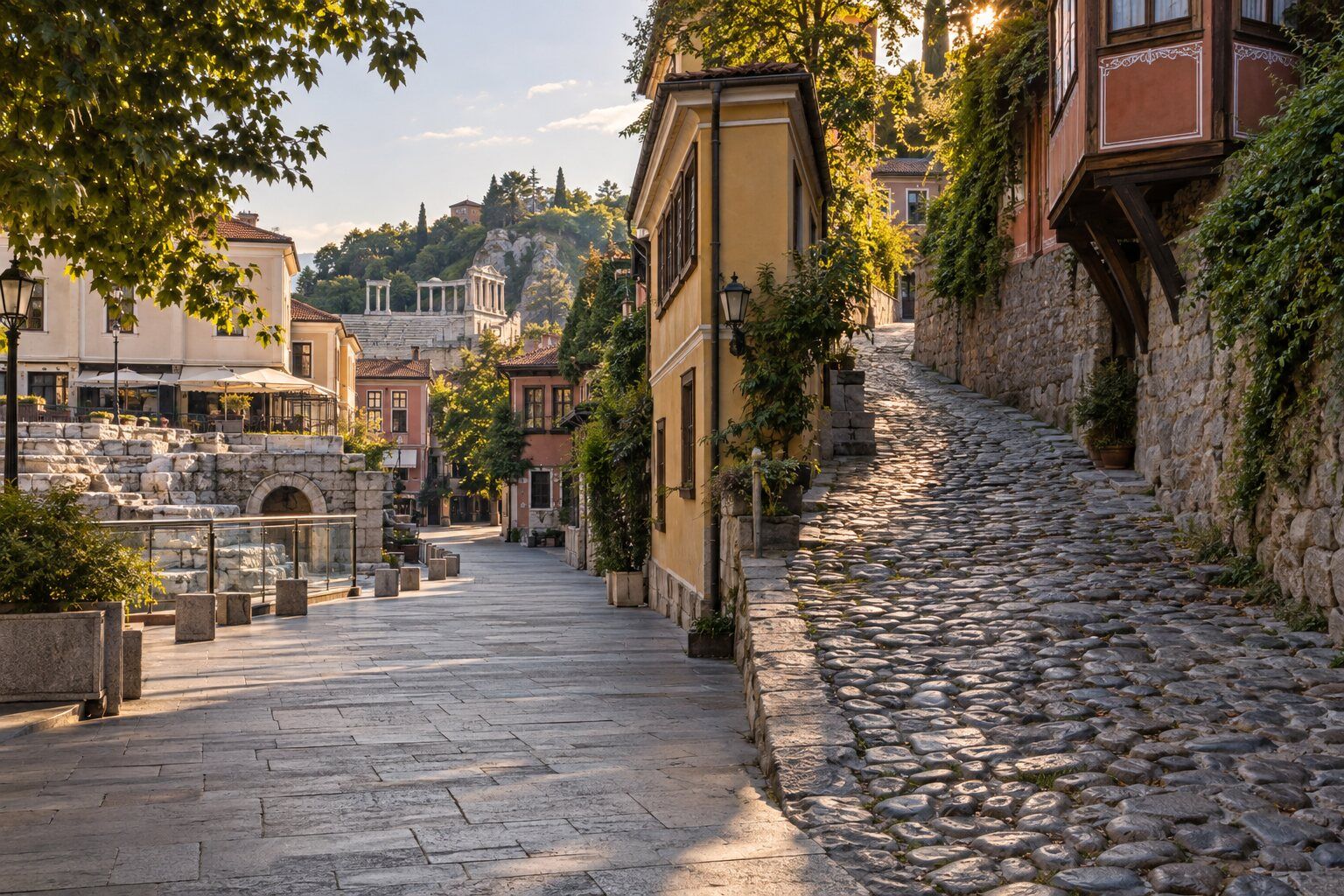
Give Sofia and Plovdiv separate full days instead of treating either city as a transport stop. In Sofia, walk between the cathedral district and Ancient Serdica, visit Boyana Church, and spend time in local food and café areas. In Plovdiv, explore the Roman theatre, Revival-era Old Town, Kapana, and the city's hilltop viewpoints.
Walk through Sofia's historic center
Start around Alexander Nevsky Cathedral, then continue toward the Russian Church, Saint Sofia Church, and the yellow-paved government quarter. The route is compact enough to explore on foot, and cafés provide easy pauses between churches and museums.
- Alexander Nevsky Cathedral: Usually open daily, with free entry to the main church; access periods can change during services. Reach it on foot from the central area or by public transport to the cathedral district.
- Ancient Serdica archaeological complex: The outdoor remains can be viewed throughout the day without an entry fee. Serdika metro station places you beside the site.
- Boyana Church: Access is controlled to protect the medieval frescoes, and admission is charged. It sits outside the center, so allow time for a bus connection or taxi ride.
Do not rush indoors after the main monuments. Sofia's character also appears around the Central Market area, the mineral-water fountains, and the streets near Shishman and Oborishte. Stop for banitsa and coffee, browse small shops, or return in the evening for an unhurried dinner.
Explore Plovdiv above and below the hills
Plovdiv works best when you separate its steep Old Town from the flatter pedestrian center. Begin near the Roman Stadium, walk through Kapana, and climb into the Old Town later when the light softens. Cobblestones can be polished and uneven, so shoes with grip matter more than formal sightseeing clothes.
- Ancient Theatre of Philippopolis: Daytime admission is charged, and access may change when performances are scheduled. You can walk uphill from the main pedestrian street.
- Plovdiv Old Town: The streets and viewpoints are free to explore at any hour, while individual historic houses keep their own ticket desks and schedules.
- Kapana Creative District: The neighborhood has no admission fee. It is directly north of the central pedestrian zone and is easiest to explore on foot.
- Hilltop viewpoints: Climb one of Plovdiv's accessible hills near sunset for broad views over the city, allowing enough daylight to descend safely.
Which Bulgarian monasteries should you visit?
Rila Monastery is the priority for a first trip because its painted arcades, mountain setting, and cultural significance justify the journey from Sofia. Bachkovo Monastery is the more natural addition from Plovdiv. Choose one unless your itinerary focuses specifically on religious architecture and rural travel.
See Rila Monastery from Sofia
Rila Monastery is the classic day trip, but the building itself is not the only reason to go. The approach through the Rila Mountains creates a clear change from Sofia, and the enclosed courtyard reveals layers of arches, striped stonework, and painted biblical scenes.
- Explore the courtyard and church: The main complex is generally accessible daily without a basic entry charge, while museums and special areas require tickets.
- Study the exterior frescoes: Allow time to walk slowly beneath the painted arcades rather than treating the monastery as a quick photo stop.
- Visit during daylight: Religious services and seasonal schedules can affect access, making daytime the safest planning window.
- Plan the return journey: A day tour, rental car, or limited public connection from Sofia is more practical than trying to combine the monastery with Plovdiv on the same day.
Dress for an active religious site. Shoulders and knees should be covered, voices kept low, and photography restrictions respected inside decorated spaces. In cooler months, the mountain setting can feel much colder than central Sofia.
Combine Bachkovo with a woodland walk
Bachkovo Monastery suits travelers who want a shorter monastery excursion from Plovdiv. Explore the active complex, view its religious art, and follow a nearby woodland path if conditions allow. Its location makes it easier to return to Plovdiv for a relaxed evening.
Both monasteries can be crowded around major Orthodox celebrations. An early start gives you a calmer courtyard and leaves room for transport delays. It also avoids the pressure to rush through a place where quiet observation is part of the experience.
What can you do in Bulgaria's mountains?
Vitosha is the easiest place for a woodland walk or viewpoint outing from Sofia. The Seven Rila Lakes area offers a larger alpine day, while Bansko works as a multi-night base for exploring the Pirin Mountains. Choose according to weather, footwear, transport, and available time rather than name recognition.
Take a flexible walk on Vitosha
Vitosha rises directly behind Sofia, making it the least disruptive mountain addition. Depending on conditions, you can choose a woodland walk, visit a viewpoint, or attempt a longer climb. Transport access changes by season and day of the week, so confirm the return journey before starting a trail.
Vitosha is still a mountain, not an urban park with constant services. Carry water, a warm layer, and an offline map. Fog can erase familiar views quickly, and shaded paths may stay wet after rain.
Hike around the Seven Rila Lakes
The Seven Rila Lakes area requires more planning. Many visitors use a chairlift for part of the ascent and then follow a walking circuit above it. Lift operations, ticket prices, and trail conditions vary seasonally, so do not build a tight onward transfer around the outing.
Choose a shorter route if clouds are building or the ground is icy. You do not need to complete every viewpoint. A lower loop can still deliver broad mountain scenery without turning the day into a race against the final lift or fading daylight.
Use Bansko as a Pirin base
Bansko is useful when you want a mountain base rather than a single excursion. Walk through its old quarter, eat in a traditional tavern, and use the town as a starting point for routes toward Pirin National Park. Outside the ski season, some lifts and resort businesses operate on reduced schedules, so verify the services you need before booking.
Things to do along the Black Sea coast
Choose the northern Black Sea around Varna for an urban base, city beaches, and nearby coastal excursions. Pick the southern coast around Burgas for access to Nessebar and Sozopol. Trying to include both ends on a short first trip adds transport without enough extra variety to justify the lost time.
Varna is the better fit if you want a city beach, restaurants, museums, and transport connections in one base. Walk through the Sea Garden, spend time on the waterfront, and use the city for nearby coastal outings while returning to the same hotel at night.
Burgas feels more practical than monumental, but its rail and bus connections make it a useful southern base. Walk through its Sea Garden between travel days, then visit Sozopol for wooden houses and sea views or Nessebar for churches, stone lanes, and a compact historic peninsula.
- Varna: Walk through the Sea Garden, visit the beach, and use the city as a northern transport base.
- Burgas: Enjoy the waterfront and plan day trips along the southern coast.
- Sozopol: Explore the old peninsula and stay overnight if you want quieter streets in the early morning and evening.
- Nessebar: Visit early to see its historic churches and lanes before the compact old town fills with day visitors.
Beach expectations should follow the season. The coast remains interesting outside summer, but swimming services, boat trips, and resort businesses may be limited. A coastal day can still work for walking, historic sightseeing, and seafood; it simply becomes a different kind of trip.
What are the best seasonal things to do in Bulgaria?
Use late spring or early autumn for city walks, monastery visits, and lower mountain routes. Summer is best for swimming and waterfront evenings on the Black Sea, while winter suits skiing, thermal breaks, and cultural sightseeing in Sofia or Plovdiv. Match the activity to the region instead of expecting one season to suit every destination.
May and June work well for exploring Sofia and Plovdiv on foot, visiting monasteries, and seeing green landscapes. Higher mountain paths can still hold snow or mud, so a warm city forecast does not confirm safe alpine conditions. Check conditions for the specific trail area before planning a Seven Rila Lakes or Pirin outing.
July and August make the strongest case for swimming, visiting beach towns, and spending evenings on the Black Sea waterfront. They also make exposed city sightseeing less comfortable in the middle of the day. Visit churches and museums during hotter hours, then return to outdoor neighborhoods in the evening.
September often supports the broadest mix of things to do in Bulgaria. Coastal weather may remain pleasant, cities are comfortable for walking, and wine regions become more appealing. October brings colorful woodland walks and quieter historic streets, but shorter days make long sightseeing combinations less forgiving.
December through March can suit skiing around Bansko, thermal breaks, and winter city visits. Build extra margin around mountain transfers because road conditions and changing lift schedules matter more than the distance shown on a map.
Which places fit a 7-, 10-, or 14-day Bulgaria itinerary?
A seven-day Bulgaria travel itinerary should focus on Sofia, Rila Monastery, and Plovdiv, with Vitosha as a flexible weather-dependent outing. With ten days, add Bansko or the southern Black Sea coast. A two-week route can include one mountain base and one coastal base without reducing every destination to a rushed stop.
| Trip length | Suggested route | Main trade-off |
|---|---|---|
| One week | Sofia, Rila Monastery, Plovdiv | You will see the cultural core but skip the coast. |
| Ten days | Sofia, Rila Monastery, Plovdiv, Bansko or the southern coast | You must choose between deeper mountain time and seaside time. |
| Two weeks | Sofia, Rila Monastery, Plovdiv, one mountain base, one coastal base | The route is varied, but at least one transfer day will feel long. |
Follow a compact cultural route
Begin with several nights in Sofia, using one day for the historic center and another for Rila Monastery or Vitosha. Continue to Plovdiv and stay long enough to see the Old Town before the day crowds arrive. This route works without a rental car if you accept fixed public transport schedules.
Extend the journey to the coast
After Plovdiv, continue toward Burgas for the southern coast or travel north toward Varna. Do not add both cities merely to say you have seen the coastline. Select one base, take a day trip, and leave space for a beach morning or waterfront dinner.
Choose a mountain-led alternative
If hiking matters more than swimming, replace the coast with Bansko and a Pirin stay. This reduces the number of long crossings and gives you weather flexibility. You can move a demanding trail day when rain arrives rather than losing the main reason for visiting.
How should you base yourself to reach Bulgaria's top attractions?
Stay near Sofia's center or a metro station for access to its principal landmarks, around central Plovdiv for the Old Town and Kapana, and near transport links in Varna or Burgas for coastal day trips. Trains suit selected city routes, buses reach more destinations, and a rental car adds freedom for monasteries, rural stays, and mountain bases.
Pick neighborhoods near the sights
In Sofia, the center keeps major sights within walking distance, while accommodation near a metro station can simplify airport access. Oborishte offers a quieter feel near the cathedral area. Around Vitosha Boulevard, restaurants and evening activity are close by.
In Plovdiv, the pedestrian center and Kapana make practical bases. Staying inside the Old Town adds atmosphere, but carrying luggage over cobblestones and steep lanes can be awkward. If you have mobility concerns, check the exact slope and vehicle access before reserving.
On the Black Sea, location depends on your priority. Stay centrally for bus and rail connections or closer to the shore if beach time matters more. Resort addresses can be farther from historic centers than the destination name suggests.
Match the transport to your sightseeing route
Trains offer space and scenery on some intercity routes, but journey times may be longer than expected. Buses often provide more direct links between major destinations. Station names, departure points, and ticket procedures vary, so confirm where your service actually leaves.
A rental car becomes valuable for rural guesthouses, smaller monasteries, and trailheads. City parking is the downside. A calmer approach is to collect a car when leaving Sofia or Plovdiv rather than keeping it during central sightseeing days.
Keep cash available for small stations, local buses, parking, and rural businesses. Cards are common in cities, but relying on a completely cashless day becomes less practical away from major centers.
Which Bulgarian food and cultural activities belong on your itinerary?
Try banitsa for breakfast, shopska salad with lunch, and grilled meats, bean dishes, or kavarma at dinner. Share several plates in a traditional tavern, leave time for Sofia and Plovdiv's café culture, and visit markets or neighborhood bakeries between major attractions.
Banitsa is a practical start before a travel day: flaky pastry commonly filled with cheese and sometimes paired with yogurt. Shopska salad combines tomatoes, cucumbers, peppers, onion, and grated white cheese. It appears throughout the country, although its quality still depends on the freshness of the vegetables.
For a longer dinner, menus may include kebapche, kyufte, kavarma, stuffed peppers, grilled vegetables, and slow-cooked beans. Portions can make sharing sensible. Ask about weight-based pricing when fish or meat is listed by quantity rather than by plate.
Plovdiv's Kapana is convenient for combining café stops with galleries, creative spaces, and an evening meal. Sofia offers broader international choices around the center, while mountain towns and monastery routes lean toward traditional taverns. Service can feel unhurried, so do not schedule dinner immediately before a train.
Basic courtesy travels well during cultural activities. Greet staff when entering smaller shops, dress respectfully at religious sites, and ask before photographing people. Bulgaria's head gestures can sometimes confuse visitors because local movement for agreement and disagreement may differ from what you expect. Listen for the spoken answer rather than relying only on the gesture.
How can you stay connected between destinations?
Arrange mobile data before leaving Sofia if you rely on live maps, bus updates, accommodation messages, or ride bookings. Coverage can weaken on mountain roads and remote trails, so save essential details offline. Network rankings provide useful national context, but they cannot guarantee service at every monastery, beach, or trailhead.
An eSIM is a digital SIM profile that lets a compatible phone connect without swapping a physical SIM. The GSMA overview of eSIM technology describes how the technology enables mobile subscriptions through an embedded device component. For a multi-stop Bulgaria trip, this means you may be able to keep your primary line in place while using a separate profile for travel data.
Check compatibility before purchasing. Apple maintains an official list of iPhone models and regions that support eSIM, while other manufacturers publish model-specific details. Some devices do not support eSIM, and carrier-locked phones may not accept another profile even when the hardware is compatible.
For network context, the Speedtest Global Index tracks country-level mobile performance. Ookla's Award Report states that A1 was the Fastest Mobile Network in Bulgaria for Q1–Q2 2026. That result reflects a measured period and does not promise identical performance in a mountain valley, stone building, or crowded resort.
If your route depends on maps and same-day transport changes, choose mobile coverage around your actual dates and expected data use rather than accepting a fixed bundle without checking it. For that trip-specific control, Yoho Mobile lets you select destination countries, mobile data allowance, and usage duration independently. You can explore Yoho Mobile eSIM plans and match those choices to a city break or a longer regional itinerary.
Once you have chosen a Yoho Mobile plan, you will need a convenient way to install and manage it before moving between cities. Use the Yoho Mobile app for iOS or the Yoho Mobile app for Android, follow the supplied activation instructions, and confirm which line handles mobile data before departure.
If you have never installed a digital SIM profile, testing the process before your Bulgaria trip can reduce setup pressure at the airport. The free eSIM trial provides a way to check the process on a compatible device. If a supported plan later runs out unexpectedly while you need directions or transport information, Yoho Care provides emergency data service.
Save accommodation addresses, tickets, and mountain route information before leaving reliable coverage. Offline navigation is especially useful on intercity transfers; you can also check how much mobile data Google Maps uses when estimating the allowance for your trip.
Which Bulgaria attractions and activities should make your final shortlist?
For a balanced first visit, prioritize Sofia's historic center, Plovdiv's Old Town, and Rila Monastery. Then add either a Vitosha walk, a longer mountain stay around Bansko, or one Black Sea base. Reserve slower days between major transfers and leave one flexible block for weather.
- Walk between Alexander Nevsky Cathedral and Ancient Serdica in Sofia.
- Explore Plovdiv's Roman sites, Old Town, Kapana, and hilltop viewpoints.
- Visit Rila Monastery for its religious art and mountain setting.
- Choose Vitosha for the simplest outdoor escape from Sofia.
- Use Bansko when you want several nights near the Pirin Mountains.
- Pick Varna or Burgas rather than trying to cover the entire Black Sea coast.
- Try banitsa, shopska salad, and a shared meal in a traditional tavern.
- Check current opening periods and admission prices before visiting ticketed attractions.
- Confirm bus, rail, lift, and seasonal mountain connections close to your travel date.
- Pack shoes with grip for Plovdiv's cobblestones and a warm layer for higher ground.
- Keep key reservations, addresses, and route information available offline.
The best places in Bulgaria do not need to appear in one continuous sprint. A strong first trip gives Sofia and Plovdiv room to feel distinct, uses a monastery or mountain as a genuine change of pace, and treats the coast as a destination rather than a box to tick. The result is more time for Bulgaria's churches, trails, neighborhoods, food, and waterfronts—and fewer hours spent watching them through a bus window.