
Best Time to Visit Bratislava: A Month-by-Month Travel Guide
Planning a trip to Slovakia's capital means balancing pleasant weather against tourist crowds and flight prices. Pick the wrong month and you might find yourself shivering in empty cobblestone streets or overpaying for a hotel room during the peak summer rush. This guide breaks down exactly when to book your trip based on weather, events, and budget.
What Should Travelers Know Before Visiting Bratislava?
Bratislava is the capital of Slovakia, situated directly on the Danube River bordering Austria and Hungary. It features a highly walkable, compact historic center, a mild continental climate with four distinct seasons, and a strategic location just an hour by train from Vienna, making it an accessible and affordable European destination.
Before deciding if you should visit Bratislava, it helps to understand the city's unique geographic and cultural layout. Slovakia entered the Schengen Area in 2007 and adopted the Euro in 2009, which makes traveling here seamless for those already touring neighboring Austria or Hungary. You can literally walk across the border from Austria into the outskirts of the city, a quirk that highlights just how close Bratislava is to Vienna.
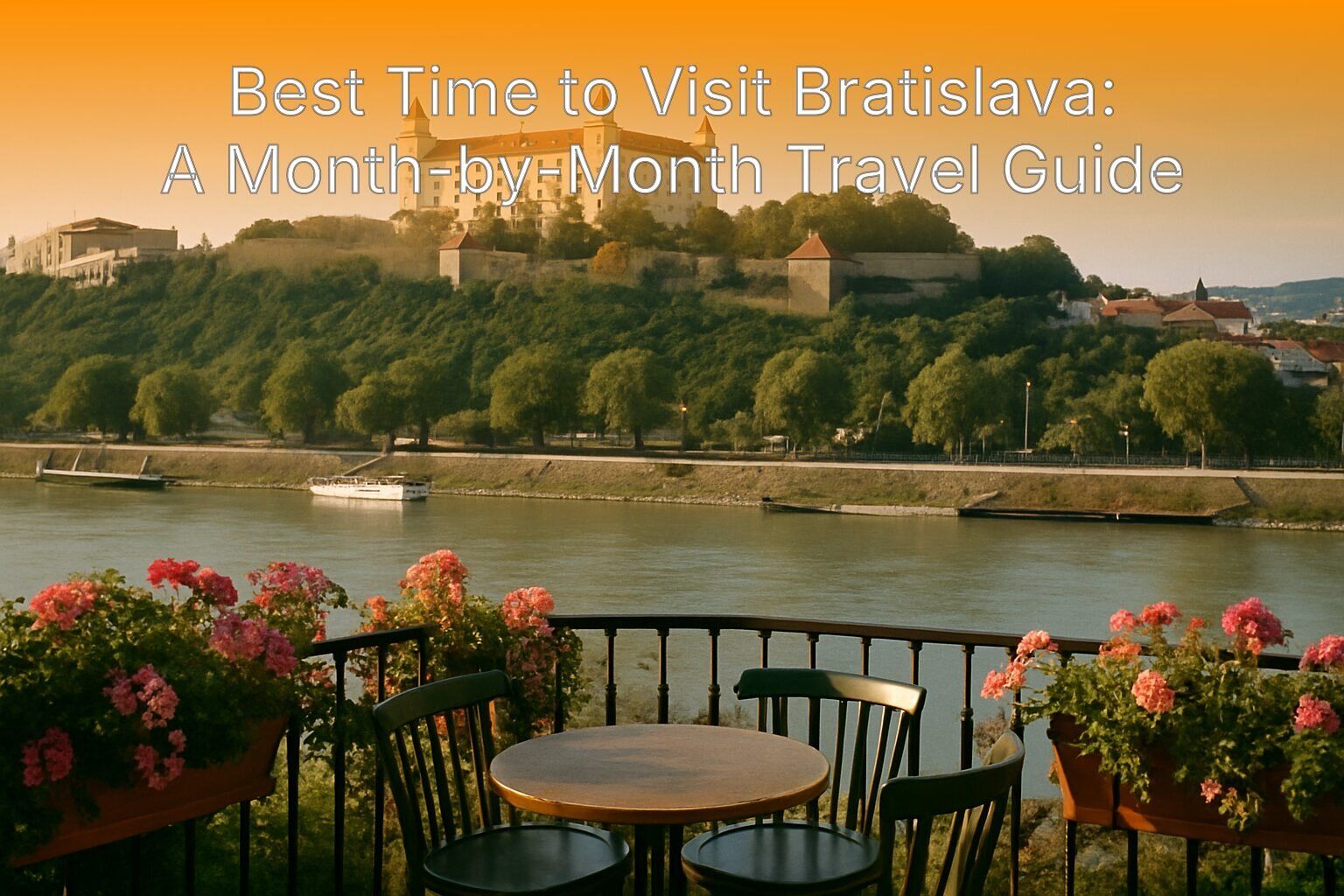
The city is divided by the Danube. North of the river, you will find the charming Old Town (Staré Mesto), dominated by Bratislava Castle and a maze of pedestrianized medieval streets. South of the river lies Petržalka, a residential area known for its dense concentration of socialist-era panelák housing blocks, which offers a stark architectural contrast to the historic center. Most visitors spend their time north of the river, where the main restaurants, museums, and sights are located.
Bratislava functions as a fantastic standalone city break, but it truly shines when combined with a broader Central European itinerary. The city offers a slower, more relaxed pace compared to Prague or Budapest. You can comfortably see the major sights in two full days, leaving plenty of time to enjoy the local cafe culture, sample Slovak wines from the nearby Small Carpathian wine region, and dine on hearty local dishes like bryndzové halušky (potato dumplings with sheep cheese) without the massive tourist premiums found in Western European capitals.
When Is the Best Time to Visit Bratislava?
The best time to visit Bratislava is during the shoulder seasons of late spring (May to June) and early autumn (September to October). During these months, daily temperatures hover comfortably between 15°C and 25°C (59°F to 77°F), outdoor terraces are open, and the peak summer tourist crowds have not yet arrived or have already dissipated.
Determining the best month to visit Bratislava depends heavily on your travel priorities. If you want the absolute best weather for walking and sightseeing, June and September are unmatched. The days are long, the skies are generally clear, and the evenings are mild enough to enjoy a drink by the Danube without breaking a sweat or freezing. For official planning context, check Time Out music guides.
Summer (July and August) brings the warmest weather, with temperatures frequently climbing above 30°C (86°F). This is when the city hosts its largest outdoor festivals and when river cruises are operating at full capacity. Prices for accommodations peak during this window, and the main squares can feel crowded with tour groups. If you are planning a weekend plan during the summer, booking your hotel well in advance is essential.
Winter transforms the city into a cozy, festive destination. December is famous for its traditional Christmas markets, where you can drink mulled wine and eat grilled sausages under the glow of the Old Town's medieval towers. January and February are quiet, cold, and gray, but they offer the lowest prices and a chance to experience the city like a local. If you do not mind bundling up, the winter months provide an authentic, crowd-free experience.
What Is the Weather Like in Bratislava by Season?
Bratislava experiences a temperate continental climate characterized by warm, dry summers and cold, cloudy winters. Spring and autumn serve as transitional periods with moderate temperatures and varying levels of rainfall, making the region highly dynamic depending on the month you choose to arrive.
Understanding the Bratislava weather by month is crucial for packing the right gear. The city sits in a lowland area near the Danube, meaning it can get surprisingly hot in the summer and bitingly cold in the winter. Here is exactly what you can expect from the Bratislava climate throughout the year.
Spring (March to May)
Spring is a beautiful time to explore Slovakia, as the city slowly wakes up from winter. March can still be quite chilly, with average highs around 10°C (50°F) and a biting wind. By April, the temperatures rise to a pleasant 15°C (59°F), and the parks begin to bloom. May is arguably the best time of year to visit Bratislava if you love mild weather. The average high reaches 20°C (68°F), and the city's outdoor cafes set up their terraces for the season. Rain is possible throughout the spring, so a light, waterproof jacket is a must.
Summer (June to August)
Summer is the peak tourist season. June offers long, sunny days with highs around 24°C (75°F). July and August are the hottest months, with temperatures regularly hitting 30°C (86°F) or higher. The evenings remain warm, which is perfect for enjoying the nightlife along the Danube or taking a boat cruise. Sudden summer thunderstorms are common, so keep a small umbrella or a quick-dry layer in your daypack. The extended daylight hours give you plenty of time to explore the city on foot.
Autumn (September to November)
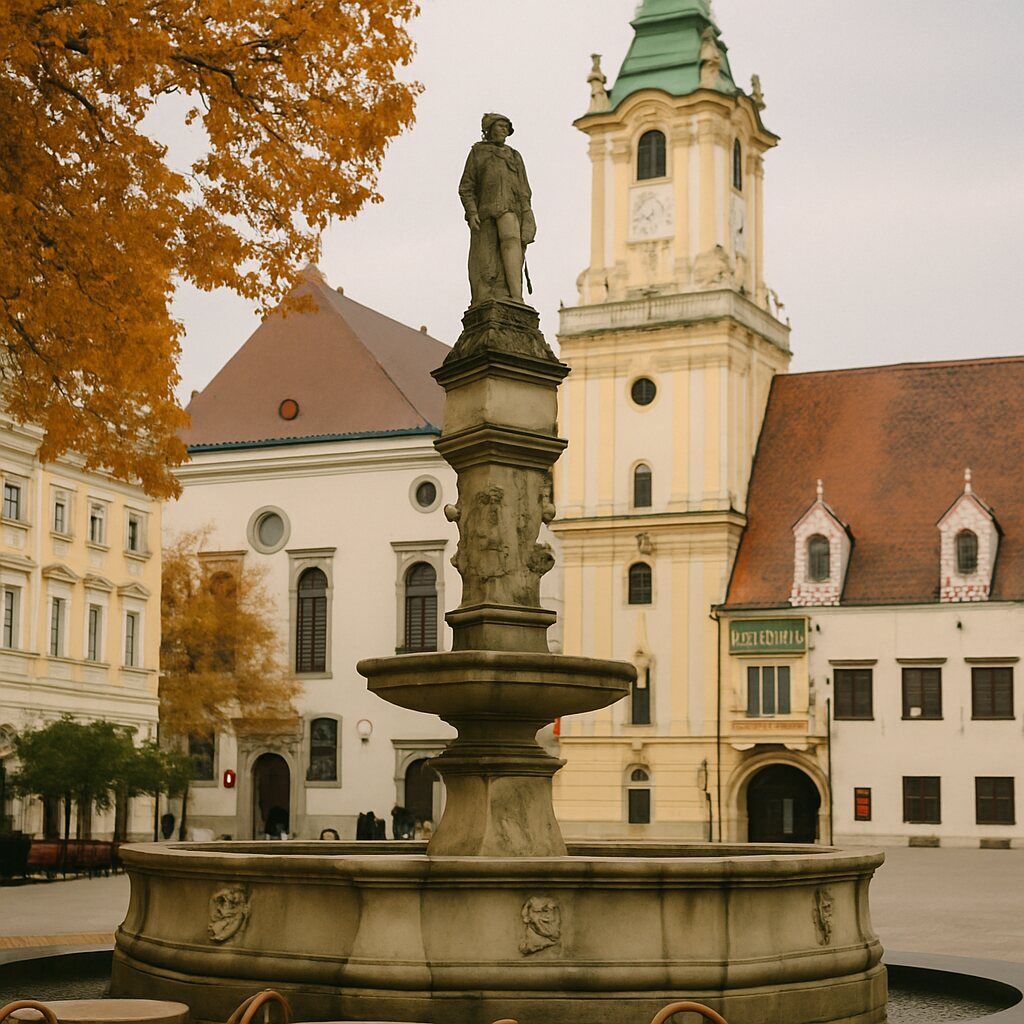
Autumn is spectacular in the Small Carpathian wine region surrounding the city. September feels like an extension of summer, with warm temperatures around 22°C (72°F) and thinner crowds. October brings the changing of the leaves, casting the castle hill in beautiful shades of gold and red, with temperatures dropping to around 14°C (57°F). By November, the weather turns gray and damp, with highs barely reaching 7°C (45°F). This is the quietest time to visit, offering deeply discounted hotel rates.
Winter (December to February)
Winter is cold, dark, and undeniably charming. December brings the Christmas markets, where the scent of cinnamon and roasted nuts fills the air. Average highs hover around 3°C (37°F), and snow is possible, though not guaranteed. January and February are the coldest months, with temperatures frequently dropping below freezing at night. If you visit during this time, you will need a heavy winter coat, thermal layers, and sturdy, water-resistant boots to navigate the cobblestone streets comfortably.
What Should You Book Before Visiting Bratislava?
Before visiting Bratislava, you should book your accommodation, airport transfers, and major dining experiences. Because the city is a popular add-on to Vienna itineraries, train tickets between the two capitals and boutique hotel rooms in the Old Town sell out quickly during the summer and December market seasons.
Bratislava offers a wide range of accommodations, from budget hostels to luxury boutique hotels. If you want to stay in the heart of the action, look for lodging in the Old Town (Staré Mesto). Staying here puts you within walking distance of the Main Square, the castle, and the best restaurants. For a quieter, more local experience, consider staying near the Danube riverfront, which offers modern hotels with spectacular views.
Transportation to and from the city is highly efficient. Many travelers fly into Vienna International Airport and take the direct bus or train to Bratislava. The journey takes roughly one hour. If you are already traveling through Europe, you might wonder will my phone work in Europe when crossing borders by train. The good news is that Slovakia is part of the Schengen Area, so there are no passport checks or mobile network barriers when arriving from Austria.
Booking a table at popular restaurants is highly recommended if you are visiting on a weekend. Traditional Slovak pubs and modern fusion restaurants fill up quickly on Friday and Saturday nights. Securing your spot ensures you will not have to wait in the cold for a taste of the local cuisine.
What Should You Pack for Bratislava?
You should pack comfortable walking shoes with good grip, layered clothing adaptable to sudden temperature shifts, and a high-quality daypack. The city's historic center features uneven cobblestone streets that are challenging for wheeled luggage and unsupportive footwear, making practical packing essential.
When considering smart packing for travel and airport security, your footwear should be your number one priority. Bratislava's charm lies in its medieval architecture, which means miles of uneven cobblestones. Leave the high heels and flimsy sandals at home. A pair of supportive, water-resistant sneakers or lightweight hiking shoes will serve you well in any season.
Layering is the secret to mastering the best time to visit Slovakia. Even in summer, the evenings can be breezy near the river. In winter, you will need a windproof outer layer, a warm sweater, and thermal undergarments. A compact, foldable umbrella is useful year-round, as the weather can change rapidly.
Carrying a well-organized daypack is the best way to navigate the city. Keep your essentials—water bottle, camera, power bank, and an extra layer—in your bag. The city is very safe, but standard urban precautions against pickpockets apply in the most crowded tourist squares during the peak summer months.
How Can You Stay Connected While Traveling in Bratislava?
You can stay connected in Bratislava by activating an eSIM before you arrive. This digital solution allows you to access local mobile data instantly without swapping out your physical SIM card, ensuring your maps, translation apps, and ride-hailing services work the moment you land.
Having reliable mobile data is non-negotiable for modern travel. You will need data to navigate the cobblestone streets using Google Maps, translate Slovak menus, call a Bolt ride-share when it rains, and keep your friends updated on WhatsApp. Relying on public Wi-Fi is risky, as connections can be slow, unsecure, and unavailable when you are walking between distant sights.
Yoho Mobile offers flexible eSIM plans that cover Slovakia and over 200 other countries. You can freely choose your destination, data allowances, and usage duration without being locked into a fixed plan. If you are planning to continue your trip to Vienna or Budapest, you can easily adjust your coverage on the go. You can explore available options and get your eSIM plan for Slovakia directly from the Yoho Mobile website. Download the Yoho Mobile app on iOS or Android to manage your data easily while traveling.
If you are new to this technology, you can try a free eSIM trial to see how it works before your trip. If you ever run into an emergency and need extra data, Yoho Care emergency data service has you covered.
Frequently Asked Questions
What is the absolute best month to visit Bratislava?
The absolute best months to visit Bratislava are May, June, and September. During these months, the weather is warm and pleasant for walking, the peak summer tourist crowds have not yet arrived or have already left, and outdoor cafe culture is in full swing.
Is Bratislava worth visiting in the winter?
Bratislava is absolutely worth visiting in winter, especially if you enjoy traditional Christmas markets and fewer crowds. The city's historic center looks magical under a layer of snow, and the Bratislava Christmas Market runs from late November through December.
How many days do you need in Bratislava?
Two to three days is the ideal amount of time to spend in Bratislava. This gives you enough time to explore the Old Town, walk up to Bratislava Castle, visit Devin Castle, and enjoy the local food scene without feeling rushed.
Does it rain a lot in Bratislava?
Bratislava does not experience excessive rainfall, but late spring and summer can see sudden, heavy showers. The city averages around 500 to 600 millimeters of precipitation annually, which is relatively low compared to Western European capitals.
Is Bratislava a walkable city for tourists?
Bratislava is highly walkable. The historic Old Town is compact and mostly pedestrianized, meaning you can easily walk between major sights, restaurants, and the Danube riverfront on foot.
Should I visit Bratislava or Vienna?
You should visit both if time permits, as they are only an hour apart by train. Vienna offers grand imperial palaces and massive museums, while Bratislava provides a more relaxed, compact, and affordable experience with a distinctly cozy atmosphere.