
Border Travel: Data Plans for Thailand and Cambodia Trips
Traveling between Thailand and Cambodia is simple, and the best way to stay online through every border crossing is to use a reliable Asia eSIM that keeps your data active in both countries without swapping SIM cards. This matters because many travelers experience roaming issues, patchy coverage, and unexpected fees when moving between these two popular destinations. Ready to simplify your Southeast Asia travel experience? Start your trip with a flexible plan from Yoho Mobile and enjoy instant activation the moment you land or cross the border.

Understanding Connectivity When Crossing Between Thailand and Cambodia
If you’re planning overland travel in Asia—especially along the Thailand–Cambodia border crossing routes—your mobile connectivity becomes just as important as your passport. Having steady internet means you can use maps, translation tools, hotel confirmations, and e-payment apps, all of which matter when moving through busy checkpoints. Before diving into setup, it’s good to understand how an eSIM works. Your first mention should link to a detailed explanation, so here it is: learn exactly what is an eSIM card and why it’s ideal for overland travel in Asia.
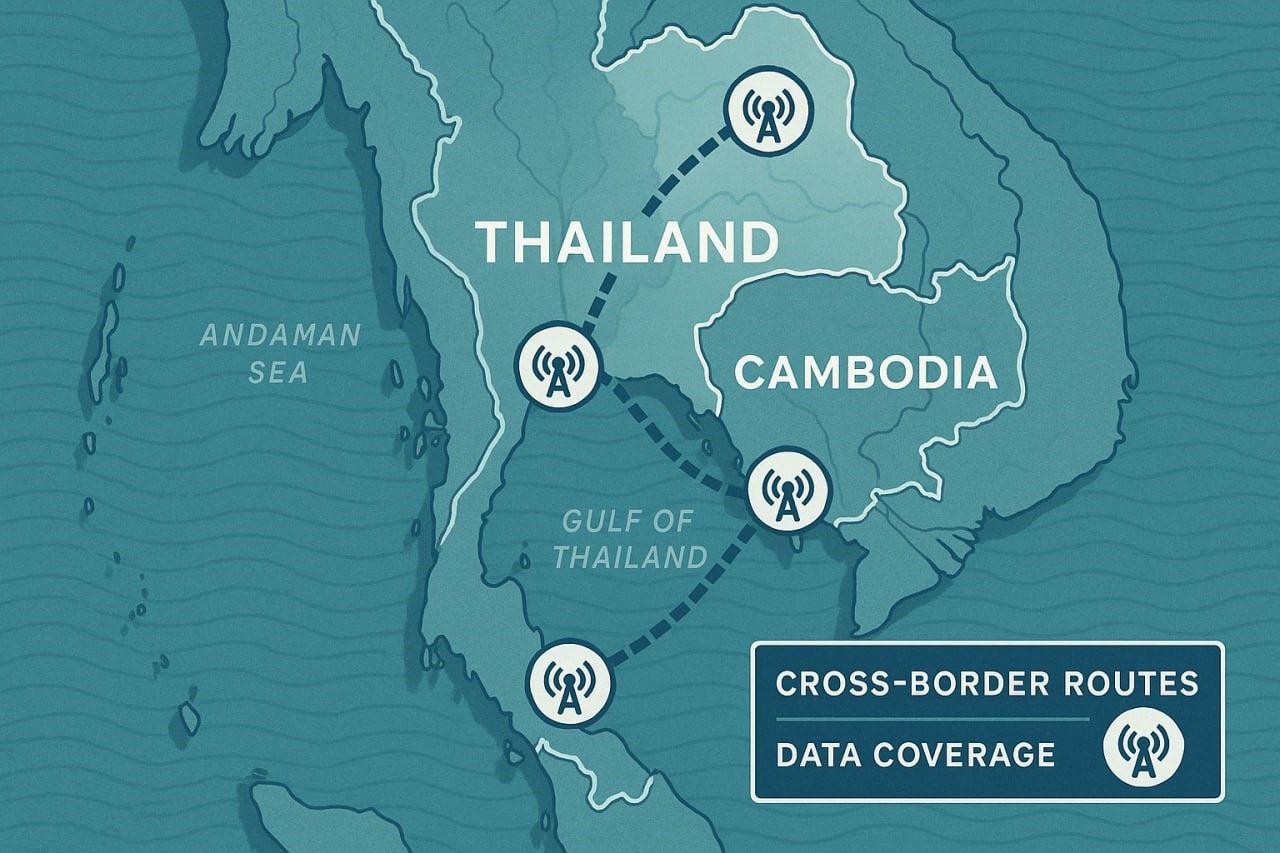
Between Poipet–Aranyaprathet, Ban Pakard–Phsar Prum, or Hat Lek–Koh Kong, signal quality varies, and some providers throttle speeds right at the border. This is why many travelers switch to a multi country eSIM that keeps roaming seamless between both networks. It’s reliable, cheaper than buying two physical SIM cards, and removes the hassle of losing service halfway through immigration lines.
Using an Asia eSIM also eliminates the expensive international roaming Thailand–Cambodia travelers often face. Instead of activating local SIMs on each side—something that requires time, documents, and standing in vendor lines—you can install your digital profile before departure, making the entire transition smoother.
Finally, both countries support strong 4G and growing 5G coverage. As long as you have a device that supports eSIM, you’ll be connected from Bangkok to Siem Reap, from Phnom Penh to Chiang Mai, even on long overland stretches.
Why an Asia eSIM Is the Best Choice for Thailand–Cambodia Border Travel
For travelers, creators, and digital nomads, staying connected during Southeast Asia travel is non-negotiable. A multi country eSIM removes the friction of managing two different SIM cards and ensures uninterrupted browsing, navigation, and uploads.
Here’s why an eSIM is the preferred solution for Thailand–Cambodia border crossing trips:
- It works instantly. Activate before departure and connect as soon as you arrive.
- No physical swap. Your phone stays sealed and secure.
- One plan, multiple countries. Perfect for overland travel Asia routes.
- Stronger privacy. No need to hand over passport photos to unknown vendors.
- Cost-effective. Avoid high roaming Thailand Cambodia fees from traditional carriers.
Many travelers rely on Yoho Mobile because it offers consistent Southeast Asia travel coverage and frictionless installation. If you want more background on how these plans operate, you can learn from the internal guide on how Yoho Mobile works.
External experts like the GSMA highlight that eSIM adoption is accelerating globally, making digital connectivity more secure and standardized for travelers. You can also explore device compatibility lists from reputable sources like Apple Support or Samsung’s global roam guides.
As you move across Southeast Asia, the biggest advantage is never losing a signal mid-journey. Whether you’re heading from Bangkok to Siem Reap, island-hopping, or road-tripping across borders, you’ll appreciate the reliability.
Choosing the Right Data Plan for Both Thailand and Cambodia
When selecting a plan for cross-border travel, you should compare features carefully. Your needs depend on whether you’re backpacking, sightseeing, or creating travel content.
Here are the key factors to check:
-
Coverage
Ensure the plan explicitly supports both countries. Some “Asia plans” exclude Cambodia or throttle speeds near border zones. -
Speed
Choose 4G/5G where available. Cambodia’s cities now support broad 4G+ networks, while Thailand offers fast 5G coverage in most major destinations. -
Validity period
Match your itinerary—short trips may only need 7 days, but creators or digital nomads typically prefer 15–30 days. -
Data allowance
- Light travel: 3–5GB
- Moderate use: 8–15GB
- Heavy use (video, maps, cloud backup): 20GB+
-
Tethering/hotspot
If you need to connect a laptop at the border crossing or during long bus rides, verify hotspot support. -
Device compatibility
Make sure your phone supports eSIM. Both Apple and Android provide lists—Apple’s device page is a reliable external reference.
Southeast Asia travel often includes several countries in one trip. If you’re visiting Laos, Vietnam, or Malaysia afterward, picking a multi country eSIM from the start saves time and reduces costs. Travelers frequently note that switching plans mid-trip leads to unnecessary downtime, especially when arriving in bus terminals or remote entry points.
To make cross-border travel even smoother, you can secure a plan now and install it before your flight. Because activation is instant, you avoid last-minute stress and stay online throughout your overland travel Asia route, even while waiting in immigration queues.
When planning your trip across Thailand and Cambodia, it’s easiest to start with an Asia regional plan from Yoho Mobile so you remain connected from your first step at the border.
Step-by-Step: How to Use an eSIM for Thailand–Cambodia Border Trips
Setting up an eSIM is easier than buying a physical SIM and is ideal for roaming Thailand Cambodia itineraries. Follow these steps to make sure you’re prepared before your border travel begins.
-
Check device compatibility
Confirm your phone supports eSIM through the manufacturer’s official compatibility page. Newer iPhones, Samsung Galaxy devices, and Google Pixels all support this feature. -
Choose your Asia plan
Pick a multi country eSIM with coverage for both Thailand and Cambodia. Many Yoho Mobile plans include extra countries, which is helpful if you decide to add Vietnam or Laos spontaneously. -
Buy and install before departure
Most travelers receive a QR code instantly. Scan it following your phone’s instructions and load the profile into your device. -
Enable the eSIM at the right time
Turn on the line once you arrive in Thailand or Cambodia, or right as you approach the border. You’ll connect to the strongest local network automatically. -
Disable roaming on your physical SIM
This avoids accidental carrier roaming fees, which can be high when crossing borders in Southeast Asia travel. -
Use hotspot if needed
Long bus rides or remote checkpoints often lack Wi-Fi, so turn on hotspot mode if you need to use a laptop. -
Monitor your data usage
Both iOS and Android show detailed data breakdowns. Travelers often underestimate how much GPS consumes during border travel, so check daily.
Crossing between these two countries doesn’t need to be complicated. Many experienced backpackers mention that using a multi country eSIM is the single best upgrade they’ve made to their travel routine.
As you explore temples, national parks, floating villages, or vibrant cities, staying online helps you navigate safely and share every moment in real time. If you’re planning a multi-stop route through Thailand, Cambodia, and other ASEAN destinations, choosing your data plan early ensures a smooth and well-connected journey from the very beginning.
Real Traveler Scenarios: What to Expect at the Border
Let’s look at a few common routes where travelers especially benefit from stable connectivity.
-
Bangkok to Siem Reap (Poipet crossing)
A long but popular overland trip. Buses occasionally drop you before the border, and having mobile data helps you avoid scams and find correct immigration lanes. -
Trat to Koh Kong (Hat Lek crossing)
Travelers heading to Cambodia’s southern coast often experience weak local SIM coverage right after entering the country. A multi country eSIM avoids this temporary blackout. -
Battambang to Chanthaburi
This rural crossing has limited facilities. Staying online is crucial for navigation, translation, and payment apps.
Consistent coverage also helps with safety—many travelers rely on location sharing during long bus or minivan journeys, especially at night. On top of that, contactless payments, e-tickets, and hotel apps all require data.
During your trip, you may want to upload stories, call rideshares, or book excursions last-minute. With a dependable Asia plan, you can do all of this without searching for a Wi-Fi hotspot or switching SIM cards in crowded border areas.
If you’re starting your Asia route soon, this is the perfect moment to secure your regional plan from Yoho Mobile so your Thailand–Cambodia trip begins with full connectivity and zero stress.
Quick Tips for Smooth Border Travel
- Download offline maps but keep data on for updates.
- Screenshots of confirmations help if immigration Wi-Fi is down.
- Carry a power bank for long travel days.
- Use hotspot sparingly, as it increases battery drain.
- Keep your Yoho Mobile eSIM active for instant reconnection after crossing.
FAQs
Do I need two SIM cards for Thailand and Cambodia?
No. A multi country eSIM covers both countries without needing physical SIM swaps.
Will my phone work in both countries?
If your device supports eSIM and is unlocked, it will work seamlessly across Thailand and Cambodia.
Is a regional Asia eSIM better than a local SIM?
For overland travel and multi-stop itineraries, yes. It’s easier, safer, and more cost-effective.
Do eSIMs support roaming between Thailand and Cambodia?
Yes—most multi country plans include roaming Thailand Cambodia options by default.
Can I activate my eSIM before I travel?
Yes. Install it at home and activate it once you arrive or reach the border.
Conclusion
Traveling between Thailand and Cambodia becomes significantly smoother when your mobile data stays active across the border. With a multi country eSIM, you avoid roaming issues, stay safe, and stay connected everywhere you go—and you can start by choosing a plan from Yoho Mobile designed specifically for Southeast Asia travel.