
Europe Weather in November 2026: Where to Go
Planning a European trip for November 2026 can leave you unsure which destinations will suit the weather and type of holiday you want. Shorter days, rain, and sharp regional differences can disrupt outdoor plans or make a packed itinerary less enjoyable. In this guide, we cover Europe weather in November 2026, destinations for different travel styles, and practical advice on where to stay and what to pack.
What does November feel like across Europe?
November feels like late autumn in southern Europe and the beginning of winter farther north. Daylight contracts, rain becomes more disruptive, and evenings turn cold across most routes. Southern coastal cities offer the best chance of comfortable outdoor afternoons, while northern destinations work better for museums, cafés, seasonal food, and early festive atmosphere.
Early to late November is a transition rather than one stable weather window. The beginning of the month can retain autumn color and softer afternoons. By the closing days, darker evenings, stronger winds, and wintry conditions become more plausible in northern and inland areas.
The Europe weather November 2026 outlook should be treated as a seasonal expectation, not a precise forecast. A city can follow its usual pattern and still receive an unusually wet, windy, or bright week. Check a short-range forecast shortly before departure, then keep one indoor alternative for every outdoor-heavy day.
| Destination | Typical November character | Strongest travel fit | Main trade-off |
|---|---|---|---|
| Portugal | Gentle coast, changeable Atlantic weather | Outdoor cafés and city walks | Rain can interrupt coastal days |
| Spain | Milder south, cooler interior | Food, architecture, and mixed indoor-outdoor days | Conditions vary sharply by region |
| Italy | Cool cities with a softer southern edge | Art, food, and lower-pressure sightseeing | Wet spells can affect long walking days |
| Greece | Mild by northern European standards | Quiet cities and coastal scenery | Beach services may be limited |
| France | Cool, damp, and increasingly wintry | Museums, dining, and short urban breaks | Early darkness shortens sightseeing time |
| Germany | Cold autumn shifting toward winter | Culture and early seasonal atmosphere | Grey or wet days are common possibilities |
| Denmark | Cool, windy, and darkening quickly | Design, dining, and cosy interiors | Wind can make conditions feel colder |
| Great Britain | Changeable, damp, and breezy | Theatre, museums, and pub-centered evenings | Outdoor plans need flexibility |
Where should you go for warmer November days?
Portugal, southern Spain, southern Italy, and Greece are the strongest choices when warmth matters most. None promises summer beach weather, but they generally offer softer daytime conditions than northern Europe. Choose Portugal or Spain for the broadest outdoor potential, then consider Italy or Greece when food, history, and quieter streets matter equally.
The first half of November usually gives warmth-seeking travelers the better chance of bright afternoons. The sun can feel pleasant in sheltered streets, yet shade and evening air may still require a jacket. Later in the month, unsettled weather becomes a bigger part of the decision.
The warm places in Europe November travelers often consider aren't interchangeable. Portugal has Atlantic exposure, Spain changes greatly between coast and interior, and Italy stretches across several climate zones. Greece can feel mild in the daytime while becoming quiet after dark. Choose a city with indoor depth rather than booking around the beach alone.
A realistic definition of warm
November warmth in Europe usually means comfortable walking weather when the sun is out, not guaranteed swimming conditions. Unheated pools, seasonal beach businesses, and evening dining terraces may not operate as they do in summer. A light layer remains useful even on the most promising southern route.
Portugal and Spain keep the Atlantic side gentler
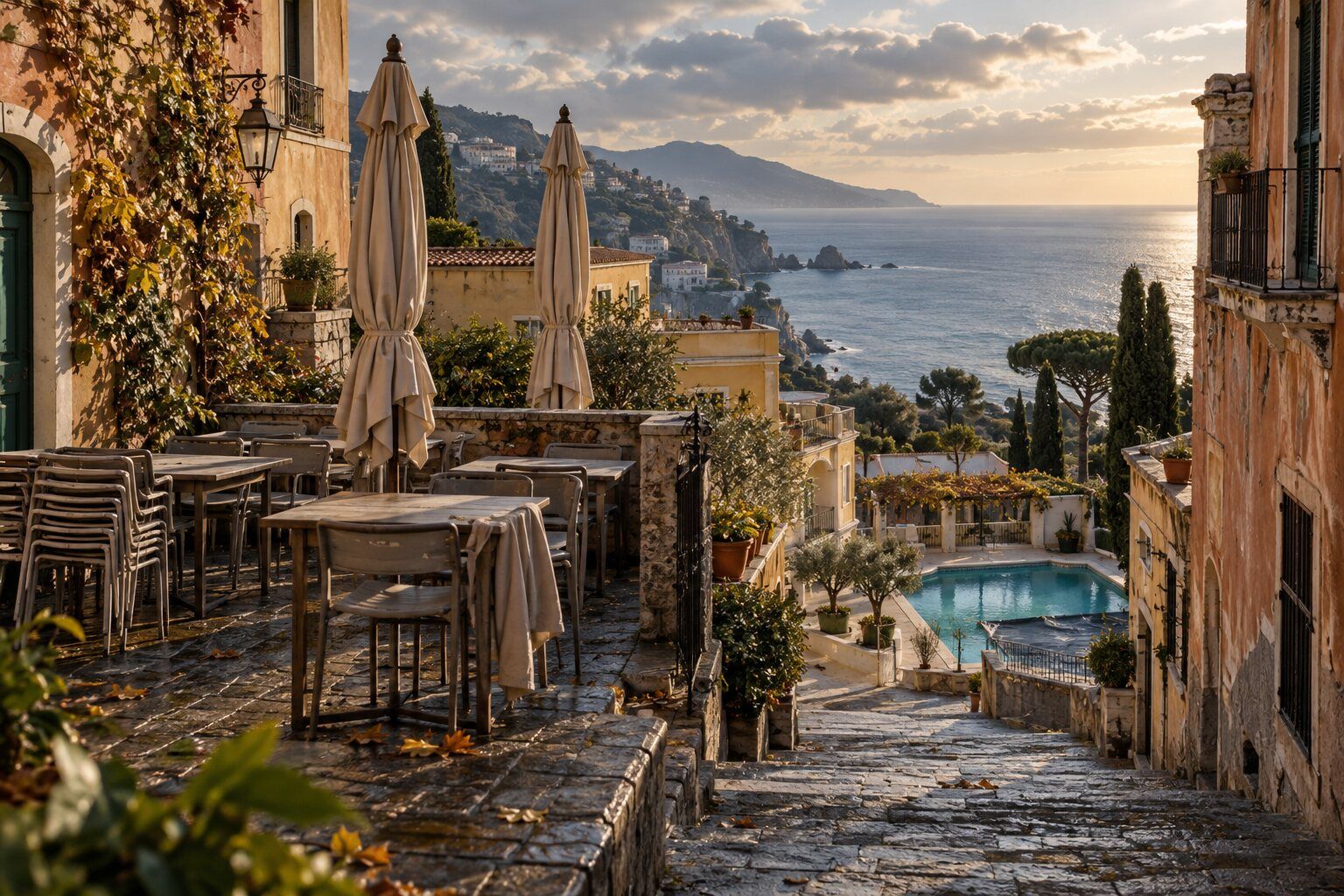
Portugal and Spain offer November's most versatile mix of softer weather, active cities, and manageable crowd levels. Portugal is the simpler choice for a compact coast-and-city trip. Spain gives you more regional variety, but that variety also makes packing and routing less predictable when you combine southern, central, and northern stops.
Early through mid-November is the appealing window for outdoor lunches, waterfront walks, and day trips. Portugal works well when you want to slow down without abandoning outdoor plans. Atlantic rain remains part of the bargain, so don't build the entire itinerary around exposed viewpoints or long coastal walks.
Spain asks for a more deliberate regional choice. Its southern cities are better suited to travelers chasing warmth, while inland destinations lean toward a crisp autumn city break. Northern Spain can be wetter and greener, making food and culture a stronger reason to visit than sunshine.
Choosing between the Iberian neighbors
- Choose Portugal for a compact itinerary, coastal light, and a relaxed rhythm.
- Choose southern Spain for warmer-feeling afternoons and lively urban evenings.
- Choose inland Spain when museums, restaurants, and architecture outrank temperature.
- Avoid overpacking the route because shorter daylight leaves less time for long transfers.
Portugal is the stronger all-round verdict for first-time Europe November travel focused on mild weather. Spain becomes more rewarding when you already know which regional climate and city style you want.
Italy and Greece balance outdoor time with quiet cities
Italy and Greece suit travelers who want some mild outdoor time without making warmth the only reason to travel. Both reward flexible days built around food, museums, archaeological areas, and neighborhood walks. Greece feels quieter and more seasonal, while Italy offers more urban variety if rain moves your plans indoors.
Across November, southern Italy usually makes more sense for weather-focused trips than the north. Northern and inland cities can still be satisfying, but you should approach them as cool cultural breaks. Rain matters because many Italian days involve long walks between indoor attractions.
Greece has a different trade-off. Lower visitor pressure can make major urban areas feel more local, yet island and resort logistics may be reduced. Ferry disruption is also more consequential when your schedule is tight. Keep island transfers limited and leave room to adjust.
The Mediterranean without a summer promise
These countries are best for travelers who can enjoy a bright lunch outdoors and move dinner inside without feeling that the day failed. Choose a city base with cafés, markets, galleries, and transport links. Save a remote coastal stay for a forecast you can evaluate close to departure.
Italy has the edge for a first visit because poor weather doesn't erase its cultural appeal. Greece becomes the better fit when quiet streets, slower evenings, and a less polished off-season atmosphere sound inviting.
France and Great Britain suit a culture-first trip
France and Great Britain are strong November choices when exhibitions, food, theatre, and city atmosphere matter more than dependable sunshine. Both can be damp and windy, but their large cities offer enough indoor options to protect the trip. Plan shorter outdoor blocks and place time-sensitive activities earlier in the day.
Mid to late November pushes both destinations toward a winter rhythm. You'll notice shorter sightseeing days, heavier coats, and more time spent over meals. That isn't necessarily a drawback. It changes the trip from a checklist of outdoor sights into a slower city break.
France offers a wide range of regional moods. The south may feel softer, while northern and inland areas lean colder and greyer. Great Britain is defined by changeability: sunshine, showers, and wind can all shape the same day. Carrying a compact waterproof layer is more useful than relying on an umbrella in exposed areas.
Building a weatherproof cultural day
Pair one neighborhood walk with one substantial indoor visit, then leave the evening for dining or a performance. This structure keeps rain from taking over the itinerary. It also reduces the temptation to cross a city repeatedly during limited daylight.
These destinations can offer better value than peak season, but central weekends and major cultural dates may still be busy. Compare refundable accommodation instead of assuming every November night will be inexpensive.
Germany and Denmark bring the first winter mood
Germany and Denmark are better for early winter atmosphere than for mild weather. Choose them for warm interiors, seasonal food, design, museums, and the possibility of festive streets late in the month. You'll need a wind-resistant outer layer, comfortable waterproof footwear, and an itinerary that doesn't depend on long daylight hours.
Late November is the more convincing window if seasonal atmosphere is the goal. Decorations and Christmas markets may begin appearing, but openings vary by city and year. Check official local calendars for 2026 before booking transportation around a particular market.
Copenhagen is compact enough for a short cold-weather break, yet coastal wind can make a modest temperature feel sharper. Germany provides more destination choice: large cities support museum-heavy weekends, while smaller towns can deliver a stronger festive mood once seasonal events begin.
Cold-weather comfort over sightseeing volume
Plan fewer stops and allow warm-up breaks. A café isn't wasted time when the alternative is rushing through an outdoor attraction while cold and tired. Book central accommodation if possible, since a shorter return journey becomes valuable after dark.
For an early winter experience, Germany is the broader choice. Denmark fits travelers who value compact urban design, dining, and a calm indoor-outdoor rhythm more than a packed attraction list.
When November is a poor fit
November is a poor fit if your trip depends on swimming, long evenings outdoors, reliable mountain access, or a full schedule of seasonal coastal services. It can also disappoint travelers who dislike rain or early darkness. Choose another month when outdoor certainty matters more than lower crowd pressure and a quieter urban experience.
All month, weather disruption is a genuine planning factor. A tightly scheduled island route in Greece, exposed driving itinerary in Great Britain, or beach-centered stay in Spain leaves little room for a wet or windy spell. November rewards flexible travelers far more than rigid planners.
It's also not the best month for racing through several countries. Shorter daylight makes every transfer feel more expensive in time, even when transport prices look attractive. Moving every other night can leave you seeing stations in daylight and cities after dark.
Trips better saved for another season
- Beach holidays where swimming and sunbathing are the main goals
- Remote coastal routes with few indoor alternatives
- Mountain itineraries that depend on stable trails or open lifts
- Island-hopping schedules with no buffer for transport changes
- Photography trips that require long, predictable golden evenings
November still works for these regions, just not for those specific expectations. Reframe the trip around cities, food, museums, and one or two flexible excursions.
Which November destination fits your travel style?
Choose Portugal for the best overall balance, southern Spain for warmth and urban energy, Italy for a first cultural trip, and Greece for quiet Mediterranean atmosphere. France and Great Britain suit indoor culture, while Germany and Denmark are the better choices for travelers who actively want colder days and an early winter mood.
For warmth-seeking travelers
Portugal and southern Spain are the safest starting points. Build around city walks and food rather than beach guarantees. If you have a flexible cancellation policy, check the forecast close to departure and place coastal outings on the clearer days.
For first-time visitors
Italy is forgiving because its food, art, and city life remain compelling when conditions turn wet. Portugal is equally manageable for a shorter trip, especially if you don't want to make many domestic transfers.
For lower-pressure sightseeing
Greece can feel notably calmer once the main season has ended. France also works when you want major cultural choices without designing every day around famous outdoor sights. Lower crowds aren't universal, so expect popular weekends to retain demand.
For the first taste of winter
Germany wins on variety, while Denmark offers a compact, deliberately cosy experience. Visit later in November if seasonal lights and markets matter, and confirm event dates before buying nonrefundable tickets.
For a short weekend
Great Britain, France, and Denmark suit a concentrated city break with strong indoor options. Stay central and avoid ambitious day trips. November weekends feel better when your restaurant, theatre, and museum choices aren't separated by long journeys.
Where should you stay and what should you pack?
Stay near reliable public transport and within walking distance of evening dining, especially in northern Europe. Pack layers rather than one very heavy outfit: a waterproof outer shell, warm mid-layer, comfortable closed shoes, and a compact day bag. Southern travelers still need evening warmth, while northern routes require better wind protection.
For any November week, central accommodation buys flexibility. You can return for a dry layer, wait out heavy rain, or change plans without losing much daylight. A remote bargain becomes less attractive when the journey back is cold, dark, and infrequent.
A practical November packing list
- A waterproof, wind-resistant jacket with room for a mid-layer
- Comfortable closed footwear that can handle wet pavements
- Light knitwear for Portugal, Spain, southern Italy, and Greece
- A warmer layer for France, Germany, Denmark, and Great Britain
- A compact umbrella for calmer urban conditions
- A day bag with a protected pocket for documents and electronics
- A reusable water bottle and lip balm for heated indoor spaces
Don't fill the suitcase with separate outfits for every possible condition. Choose pieces that layer together. Southern trips usually need fewer heavy items, but a cold evening can still arrive. Northern trips benefit from thermal comfort without bulky luggage.
Booking a room for darker days
Look beyond the lowest nightly price. Natural light, heating details, flexible cancellation, and easy transport access matter more in November than they might in summer. A comfortable room also gives you somewhere pleasant to reset when rain lasts longer than expected.
If your route crosses climate zones, do laundry once rather than carrying duplicate wardrobes. That keeps a Portugal-to-Germany journey manageable without pretending both destinations need the same clothes.
How do you stay connected on a multi-country trip?
Use an eSIM when your compatible phone supports digital activation and your route crosses several European countries. Arrange mobile data before departure, keep your primary line available if needed, and choose coverage according to the actual itinerary. A physical SIM remains sensible for devices that aren't compatible with eSIM technology.
November travel depends on live weather checks, indoor alternatives, transport updates, and directions after early sunset. Before choosing a service, confirm that your phone will work in Europe and estimate how much navigation you'll use with the reference on Google Maps mobile data use.
For a route that might include Portugal, Spain, Italy, and Germany, fixed bundles can leave you paying for countries, days, or capacity you don't need. Yoho Mobile lets you choose destination countries, data allowance, and usage duration independently. You can then explore Yoho Mobile eSIM plans that reflect your exact route rather than forcing the trip into a preset itinerary.
Check the evidence that matters to your route
The Speedtest Global Index is useful for comparing current national mobile performance, but it isn't a promise of identical service on every street or rural road. If performance is central to your Portugal decision, check recent Portugal results near departure and choose that travel window on evidence, not a claim that one month is automatically best.
European oversight also operates through country-level institutions. The European Commission maintains a list of national regulatory authorities for telecommunications in Member States and other countries. For the underlying technology, the GSMA overview of eSIM standards explains how the digital SIM ecosystem is structured.
Prepare access before the first travel day
If you need to manage activation, check usage, or adjust the trip while moving between countries, use the Yoho Mobile app for iOS or the Yoho Mobile app for Android. Complete the preparation while you still have dependable Wi-Fi, and keep the activation details available offline.
If you're trying the technology for the first time, the free eSIM trial offers a low-pressure starting point, while Yoho Care provides an emergency data option when an eligible plan runs out.
Keep mobile data active only on the intended travel line, and confirm which line handles calls and messages. Your phone's labels matter more than the brand name of the service. A few minutes spent checking those settings is especially useful on a multi-country route.
November isn't one European season. It's a choice between gentle southern afternoons, culture-rich rainy days, and the first convincing signs of winter. Portugal is the strongest all-round option, but the right destination is the one whose weather trade-offs support what you actually want to do.