
Best Time to Visit the Maldives by Season
Because the Maldives stays warm year-round while rain, wind, sea conditions, and demand change by season, choosing dates means deciding which conditions matter most for your trip. A period suited to lower prices or surfing may bring rougher seas and less dependable beach weather, while the clearest months come with heavier demand and peak prices. The article compares dry, wet, and transitional periods, identifies the best windows for beaches, diving, surfing, and budgets, and covers booking, packing, and transfer planning.

When is the best time to visit the Maldives?
January through March is the safest overall window for travelers who want drier days, calmer conditions, and classic beach time. Choose late April, May, or the wetter months instead when budget, surfing, or lower demand matters more than consistently clear skies.
The Maldives stays warm throughout the year, so timing is less about escaping cold weather and more about managing rain, wind, sea conditions, and demand. Typical temperatures remain around 26°C to 31°C (79°F to 88°F), while daylight stays close to 12 hours because the islands sit near the equator.
The simple verdict has a catch. January through March brings the weather most first-time visitors picture, but it also attracts travelers making the same calculation. Resorts and preferred room categories can fill early, especially around holiday periods and school breaks.
No single month is best for every Maldives trip. Weather can vary between atolls and from one day to the next, while diving visibility, surf conditions, and marine-life priorities follow their own patterns.
| Travel window | Typical pattern | Crowd level | Price level | Best fit |
|---|---|---|---|---|
| January to March | Drier and generally calmer | High | Peak | First visits and beach-focused trips |
| April and December | Transitional and changeable | Moderate to high | Below or near peak | Flexible travelers |
| May to November | Wetter, windier, and less predictable | Low to moderate | Generally below peak | Surfing and value-conscious stays |
December to April: The clearest beach-weather window
Late December through early April usually offers the most dependable conditions for beaches, snorkeling, boat trips, and outdoor dining. Temperatures commonly sit near 26°C to 31°C (79°F to 88°F), daylight lasts about 12 hours, crowds are high, and prices are generally at their annual peak.
This period overlaps with the drier northeast monsoon. The Maldives Meteorological Service describes the country's seasonal structure in its Climate Of Maldives overview, which is a better planning base than treating every tropical shower as a failed forecast.
January, February, and March are the strongest choices when beach weather is non-negotiable. Calm mornings suit paddleboarding and lagoon swimming, while more settled conditions make it easier to schedule sandbank visits or boat excursions. No tropical date guarantees a cloudless stay, but this period gives you better odds.
The main compromise is demand. Christmas, New Year, winter escapes, and school holidays can put pressure on popular villas and convenient flights. If you want a specific overwater room, family villa, or resort reached by a limited transfer schedule, begin looking six to nine months ahead.
Best for
- First-time visitors who want the familiar Maldives beach experience
- Honeymoons built around outdoor dinners and lagoon time
- Families seeking more predictable conditions for excursions
- Travelers combining snorkeling, diving, and relaxed resort days
What to bring
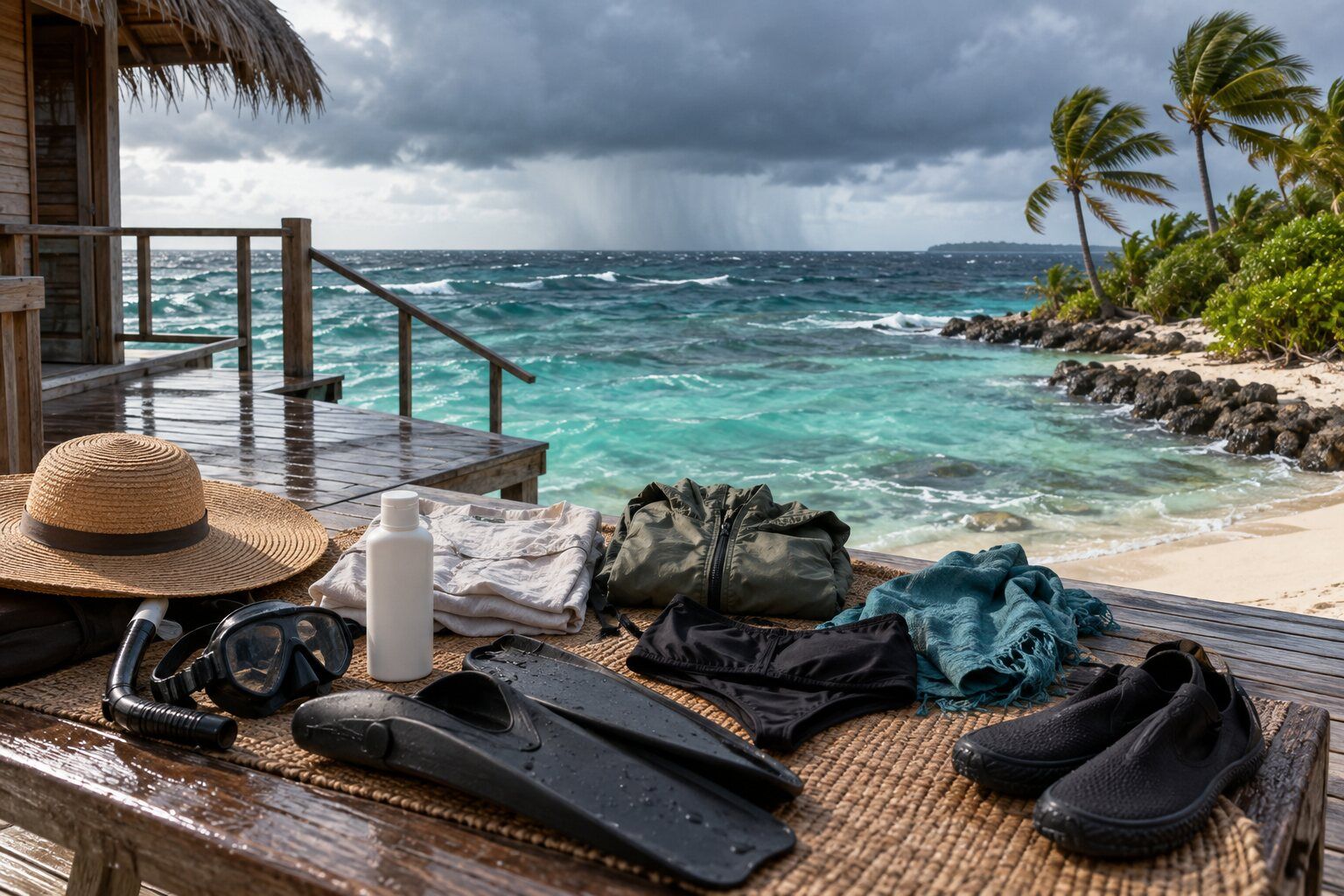
Pack high-protection sunscreen, a sun hat, breathable layers, swimwear, and a light cover-up. Reef shoes may be useful on local islands or rocky entries, though many resort beaches have soft sand. Bring a light rain shell too; dry season doesn't mean rain is impossible.
What changes from May to November?
May through November brings the southwest monsoon, with more cloud, stronger winds, heavier showers, and livelier seas. Temperatures still hover around 26°C to 31°C (79°F to 88°F), daylight remains near 12 hours, crowds ease, and accommodation prices are generally lower than during the dry-season peak.
This isn't a single wall of rain lasting seven months. You may get bright intervals, dramatic short showers, or several unsettled days. Forecasts become less useful for planning every hour because tropical weather can develop locally and change quickly.
The wetter season suits travelers who don't need perfect beach photographs every day. It can work well if your resort has a comfortable villa, spa, gym, covered dining, or indoor activities. You'll enjoy the good weather when it arrives without feeling that every shower has cancelled the entire trip.
Wind and sea state matter more than rain alone. Boat transfers may feel rougher, and operators can postpone snorkeling or diving excursions when conditions aren't suitable. That trade-off deserves extra weight if you get seasick, travel with small children, or have only a short stay.
Weather, demand, and activities can point to different travel windows. Use this Maldives seasonal guide alongside live forecasts and messages from your accommodation close to departure.
Best for
- Travelers who can move excursions between days
- Surfers seeking the season's stronger swells
- Longer stays where one rainy day won't dominate the trip
- Visitors prioritizing resort facilities and quieter surroundings
What to bring
Add a packable rain jacket, dry pouch, quick-drying clothes, and waterproof protection for electronics. A few offline films or books are sensible for stormy periods. Avoid overpacking formal outfits when lightweight clothing will dry faster and feel more comfortable.
April and December reward flexible travelers
Early to mid-April and early December can balance beach time with slightly softer demand, but both are transitional periods. Expect temperatures around 26°C to 31°C (79°F to 88°F), roughly 12 hours of daylight, moderate-to-high crowds, and prices that vary sharply around Easter and year-end holidays.
April often begins with dry-season character before humidity and showers become more noticeable. It's a useful compromise if January through March prices feel too high, yet you still want a reasonable chance of calm lagoon days. Easter dates can erase that value, so compare several weeks rather than treating the whole month equally.
December works in reverse. Early dates may retain some wetter-season uncertainty, while later December moves toward more settled weather and much stronger holiday demand. The second half of the month isn't a budget secret. Flights, premium rooms, and special dining arrangements may carry peak-season pricing.
These months suit travelers who can stay at least five nights and keep boat trips flexible. A tightly packed three-night schedule gives changing weather too much power. If diving, fishing, or a sandbank excursion matters most, ask the resort how it handles rescheduling before paying for non-refundable activities.
A practical booking strategy
- Compare early, middle, and late-month dates separately.
- Check whether airport transfers operate around your flight times.
- Read cancellation rules for weather-dependent excursions.
- Leave one unplanned day as a buffer for moved activities.
When should you avoid the Maldives?
Avoid the wetter monsoon months if your trip depends on flat seas, uninterrupted sunshine, or a fixed schedule of boat excursions. You should also reconsider major holiday weeks when crowds and peak pricing would undermine the quiet, private atmosphere you expect from the Maldives.
There isn't one universally terrible month. The wrong window is the one that clashes with the trip you've paid for. A surfer may welcome wind and swell that frustrate a family hoping for calm snorkeling. A couple content with a villa and spa may barely mind showers that disrupt a packed diving schedule.
Short stays are least forgiving during unsettled periods. On a three-night visit, one rough day can remove a large share of your usable outdoor time. Longer trips absorb that uncertainty better because you can rearrange activities as conditions change.
You may also want to avoid late December and early January if value matters more than atmosphere. Holiday programming can be enjoyable, but mandatory meals, limited room inventory, and busy flight dates can raise the total cost. Read the full booking terms before comparing headline room prices.
Travel insurance becomes especially useful when your itinerary includes separate international flights, domestic flights, speedboats, or seaplanes. Check what the policy actually covers for weather disruption and missed connections rather than assuming every delay qualifies.
Best windows for beaches, diving, surfing, and budgets
Choose January through March for a first beach holiday, the wetter monsoon for surfing and lower demand, and transitional months for a compromise. Divers should select dates around the species, atoll, and conditions they want rather than assuming the driest month automatically creates the best underwater experience.
First-time visitors
January through March is the simplest recommendation. You'll have better odds of settled conditions and fewer reasons to restructure each day. Book early if your room type matters, then leave enough space between scheduled excursions to keep the holiday relaxing.
Families
February and March suit families that value calmer conditions for swimming and boat outings. Travel outside school holidays where possible, and confirm whether the villa layout, meal plan, childcare, and transfer type fit your children. Weather alone can't rescue an inconvenient resort setup.
Budget-focused travelers
June and September are reasonable starting points for price comparisons, but lower cost comes with real weather uncertainty. A resort with strong indoor facilities may offer better value than a cheaper property where every appealing activity depends on sunshine.
Surfers
The southwest monsoon period is the natural window to investigate. Your exact choice should reflect skill level, surf access, and whether breaks are reached from shore or by boat. Ask a specialist operator about local conditions before locking in non-refundable dates.
Divers and snorkelers
Dry-season visibility can be attractive, but marine-life encounters and currents differ among atolls and seasons. Start with what you want to see, then ask a reputable dive center which side of the atoll and which months fit that goal. For casual snorkeling from a resort beach, calmer dry-season conditions are often easier.
Event-led travelers
If a particular celebration influences your plans, confirm its dates and practical impact with your accommodation before booking rather than forcing the trip into a generic “best month.”
Local celebrations can affect opening hours, alcohol availability outside resorts, transport demand, and the atmosphere on inhabited islands. Resort operations may feel largely separate. Confirm the practical impact with your accommodation rather than assuming the experience will be identical across Malé, local islands, and private resorts.
Booking, packing, and staying connected
Book the room and transfer as one connected decision, pack for intense sun and sudden rain in every season, and arrange mobile data before departure. The Maldives is straightforward once the details align, but mismatched flight times, transfer limits, or weather-dependent plans can consume expensive holiday hours.
Book transfers before committing to flights
An attractive international flight isn't always convenient for your final island. Resorts may use speedboats, domestic flights, or seaplanes, and transfer schedules can affect whether you reach the property on the same day. Ask for the latest compatible arrival time and earliest safe departure time before buying separate tickets.
Share your flight information with the resort once it is confirmed. Keep transfer instructions, emergency contacts, and booking references available offline. A screenshot is often faster than searching an inbox at the airport.
Reserve high-priority activities with room to move
Book limited-capacity experiences early, but don't schedule every hour. Place your most important weather-dependent outing near the start of the stay so it can be moved if conditions deteriorate. Save spa visits, long meals, and flexible resort activities for later gaps.
If you're traveling during January through March, reserve sought-after diving, private boats, and special dining several weeks ahead. During wetter months, flexible cancellation and rescheduling terms matter more than securing every activity before arrival.
Pack for sun, water, and local-island etiquette
The essentials are light clothing, swimwear, sun protection, sandals, a reusable water bottle where permitted, and a dry pouch. A rash guard adds sun protection while snorkeling. Pack essential medication in your carry-on because replacing a specific product may be difficult on a small island.
Private resorts and inhabited local islands don't follow identical dress expectations. Bring clothing that covers shoulders and knees for visits to local communities. Swimwear belongs on designated beaches and resort grounds, not in village streets. For a broader airport-ready list, use these smart packing and airport security tips.
Arrange mobile data before the boat transfer
You may need maps, resort messages, transfer updates, digital booking records, or a quick message home while moving between the airport and your island. For mobile data, an eSIM is a digital profile used on compatible phones, while a physical SIM requires inserting a card. Check the eSIM device compatibility list before purchase because some devices don't support the technology.
That need for trip-specific access is where Yoho Mobile fits naturally. You can choose destination countries, mobile data allowance, and usage days independently instead of accepting a fixed combination that doesn't match your stay. Browse Yoho Mobile eSIM plans once your route and duration are confirmed.
If you want to manage the eSIM profile before departure and check usage during the trip, use the Yoho Mobile app for iOS or the Yoho Mobile app for Android. Activate it according to the plan instructions, and keep your primary line from using unintended roaming.
You can start with the free eSIM trial from Yoho Mobile, while Yoho Care provides a fallback if your included mobile data runs out unexpectedly.
Download resort maps, transfer details, and essential documents before leaving the airport. If you plan to navigate Malé or another inhabited island, checking how much mobile data Google Maps uses makes it easier to choose a realistic allowance.
Frequently Asked Questions
What is the best month to visit the Maldives?
February is a strong choice if settled beach weather is your main concern, but January and March offer a similar balance. Those months also bring high demand. April or December may be better if you're flexible about weather and want to compare a wider range of prices.
What is the cheapest time to visit the Maldives?
The wetter period from May through November usually gives budget travelers more options than the dry-season peak. June and September are useful months to compare, provided you accept showers, cloudier spells, and possible changes to boat activities.
Is the Maldives rainy season worth visiting?
Yes, if lower demand, surfing, or a slower resort stay matters more than uninterrupted sunshine. Rain can arrive in short bursts or longer unsettled periods, so the season suits travelers who can move outdoor plans rather than depend on a rigid schedule.
How many days do you need in the Maldives?
Five to seven nights works well for one resort or local island. Stay longer if you want to change islands, complete several dives, or travel during a wetter period. Transfers can consume a meaningful part of a day, so frequent island changes aren't always efficient.
Should you avoid the Maldives during monsoon season?
Avoid it when your trip depends on consistently calm seas, clear skies, or tightly scheduled excursions. It remains suitable for flexible travelers who value quieter properties, stronger surf, and more time to rearrange activities after rain.
Do you need warm clothing in the Maldives?
You won't need a heavy coat, but one light layer is useful in air-conditioned spaces and on breezy boat transfers. A breathable rain shell is more practical than thick clothing. Choose fabrics that dry quickly in warm, humid conditions.