
Best Time to Visit Amman Jordan
Amman’s hilltop ruins, steep stairways, rooftop cafés, and desert-day-trip routes all depend heavily on daylight and temperature. Visit during a harsh weather window and you may rush through the Citadel at noon, skip downtown walks, or spend more on taxis because the city feels tiring on foot. This guide gives you the best months, seasons, packing choices, and booking windows so you can plan Amman around comfort, cost, and the kind of trip you want.

When Is the Best Time to Visit Amman Jordan?
The best time to visit Amman is March to May or September to November, with April and October as the strongest all-around months. These windows give you mild sightseeing weather, easier walking conditions, and better daylight for the Citadel, downtown Amman, and day trips.
Late March to mid-May and late September to mid-November are the sweet spots for most visitors. Daytime temperatures usually sit in the comfortable range for outdoor sightseeing, while evenings remain cool enough for rooftop dinners or walks through Jabal Amman. If you want one best month to visit Amman, choose April for spring greenery or October for warm, stable weather after the summer peak.
Amman sits at a higher elevation than many travelers expect, so its weather feels different from Aqaba, Wadi Rum, or the Dead Sea. A sunny spring afternoon can feel warm in the lower downtown streets but breezy on exposed hilltops. That matters because many of Amman’s best sights are outdoors: the Amman Citadel, Roman Theater, Rainbow Street, stairway viewpoints, souks, and café terraces.
| Season | Typical timing | Best for | Main drawback |
|---|---|---|---|
| Spring | March to May | First-timers, walking, photography, day trips | Higher demand around holidays |
| Summer | June to August | Travelers who like dry heat and late evenings | Hot afternoons and stronger sun |
| Autumn | September to November | Couples, food trips, mixed Jordan itineraries | Popular dates book up early |
| Winter | December to February | Budget travelers and crowd avoiders | Cold nights, rain, shorter days |
For destination context, the official Jordan tourism site introduces Amman as Jordan’s capital and a base for historic sites, markets, and city neighborhoods. Treat that mix as your timing clue: you need enough comfort for outdoor ruins and enough evening energy for restaurants, galleries, and older districts.
Why Is Spring the Most Comfortable Season in Amman?
Spring is the best season for most Amman trips because temperatures are mild, landscapes look greener, and long outdoor walks feel manageable. March can be changeable, April is usually the most balanced month, and May starts turning warmer while still staying practical for sightseeing.
March to May brings Amman’s most traveler-friendly weather. Temperatures often range from about 12°C–27°C (54°F–81°F) across the season, with cooler conditions in March and warmer afternoons in May. Daylight runs roughly 12 to 14 hours. Crowds are moderate to high in the most popular weeks, and prices usually rise compared with winter.See UK government foreign travel advice.
Spring works especially well if your Amman stay includes the Citadel in the morning, downtown food stops at midday, and a late-afternoon walk around Rainbow Street or Weibdeh. The city’s stairways and hills are much easier when the sun is not overwhelming. You also get better conditions for day trips to Jerash, Madaba, Mount Nebo, or the Dead Sea.
April is the practical winner. It is often the best month to visit Amman because the city feels lively without the full pressure of summer heat. If Ramadan, Eid, Easter, or regional school holidays fall during your dates, book central hotels and key restaurants earlier. Opening hours and meal rhythms may shift during Ramadan, which can be a cultural highlight if you plan respectfully and confirm schedules.
What should you pack for spring in Amman?
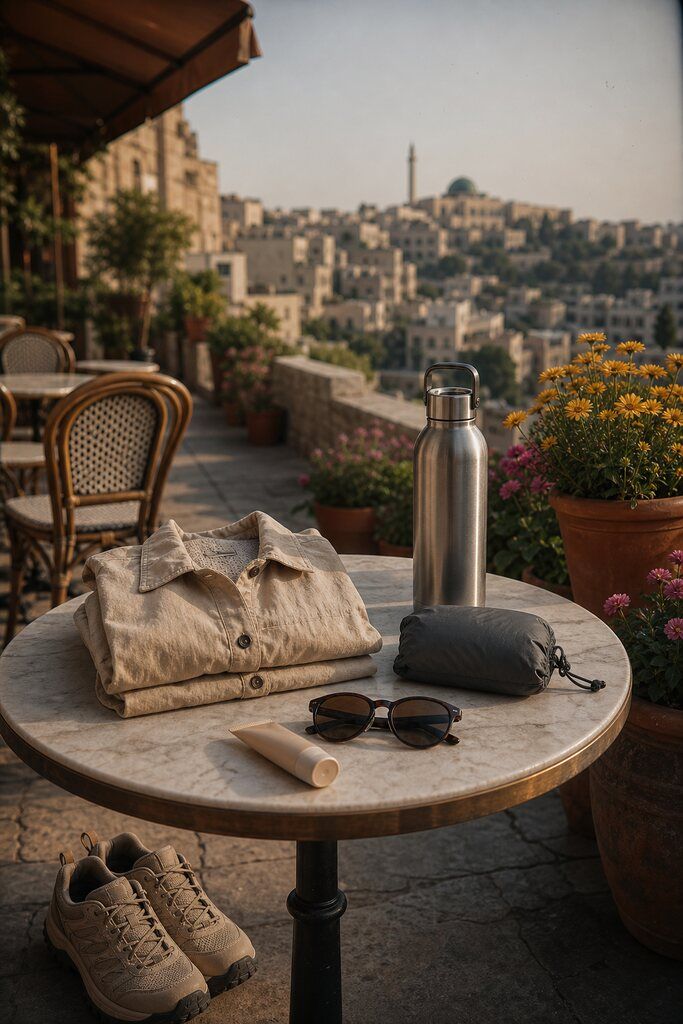
- Light layers for warm afternoons and cool hilltop evenings.
- A compact rain jacket in March or early April.
- Comfortable shoes with grip for stone steps and uneven sidewalks.
- Sunglasses, sunscreen, and a refillable water bottle.
- Modest clothing for mosques, family neighborhoods, and day trips.
Can You Visit Amman in Summer?
You can visit Amman in summer if you plan around heat, start early, and use afternoons for shaded cafés, museums, or hotel breaks. June is easier than July and August, while late evenings can still be pleasant for food, viewpoints, and neighborhood walks.
June to August is dry, sunny, and hot. Typical daytime temperatures often range from about 24°C–34°C (75°F–93°F), with the strongest heat in July and August. Daylight reaches about 14 hours in June and gradually shortens later in summer. Crowds are moderate to high, and prices can rise around regional holiday periods and international summer travel.
Summer is not the worst time to visit Amman, but it asks for discipline. Visit the Amman Citadel close to opening time, keep the Roman Theater for morning or late afternoon, and avoid long uphill walks in the middle of the day. The dry climate helps compared with humid cities, yet the sun on exposed stone can feel intense.
Evenings are the reason summer still works. After sunset, Amman’s cafés, terraces, and food streets become more appealing. Downtown falafel stops, kunafa shops, and hilltop viewpoints feel far better after the heat drops. If your itinerary includes Wadi Rum or Petra, summer can be tougher outside Amman, so add rest time and avoid planning every day as a full outdoor day.
What should you book for summer?
- A hotel with reliable air conditioning and easy taxi access.
- Morning time slots for outdoor ruins and walking tours.
- Flexible restaurant bookings for late dinners.
- Private transfers or ride-hailing time buffers for hot afternoons.
If your schedule is fixed for July or August, keep your first day light. Jet lag, dry heat, and airport transfer time can make an ambitious arrival-day plan feel harder than expected.
Why Is Autumn a Strong Second Choice for Amman?
Autumn is one of the best times of year to visit Amman because summer heat eases while outdoor dining and day trips remain enjoyable. October is the most reliable autumn month, with warm days, cooler evenings, and comfortable conditions for ruins, markets, and city walks.
September to November gives you a gradual return to comfortable travel weather. Temperatures often range from about 14°C–31°C (57°F–88°F), with September still warm and November noticeably cooler. Daylight shifts from around 12.5 hours to about 10.5 hours. Crowds are moderate, and prices usually sit below the highest peak weeks unless major holidays or conferences affect availability.
October is the autumn equivalent of April: dependable, comfortable, and well suited to a first visit. You can spend the morning at the Amman Citadel, walk through downtown before lunch, pause at a café, then head to a viewpoint before dinner without feeling that the weather controls your whole day.
Autumn is also excellent if Amman is part of a larger Jordan route. Petra, Jerash, Wadi Rum, and the Dead Sea are more comfortable than in midsummer. If you want a mixed itinerary with archaeology, desert landscapes, food, and city time, late September through early November is one of the easiest periods to plan.
What are the autumn packing essentials?
- Breathable daytime clothing for September and early October.
- A light jacket or sweater for late October and November evenings.
- Walking shoes for hills, ruins, and longer neighborhood routes.
- A scarf or extra layer for breezy viewpoints.
- A small daypack for water, sunscreen, and a portable charger.
Autumn is not as green as spring, so photographers may prefer April for landscapes. For comfort across the whole country, though, October is hard to beat.
Is Winter a Good Time to Visit Amman?
Winter is a good time to visit Amman if you want lower prices, quieter sights, and a more local city rhythm. The trade is colder weather, rain risk, and shorter daylight, so winter suits museums, food, culture, and flexible sightseeing better than packed outdoor itineraries.
December to February is Amman’s low season. Temperatures often range from about 4°C–14°C (39°F–57°F), and nights can feel colder because many areas are exposed and hilly. Daylight is around 10 hours in December and January. Crowds are low outside holiday periods, and accommodation prices are often more forgiving than in spring or autumn.
Winter gives Amman a different character. You may spend more time in cafés, galleries, restaurants, and museums, then choose outdoor sights during clearer parts of the day. Rain can interrupt plans, and occasional cold snaps can make hilltop ruins uncomfortable without proper layers.
This season is best for travelers who do not mind adjusting plans each morning. Keep the Citadel and Roman Theater for the driest, brightest window, then use wetter hours for the Jordan Museum, local restaurants, or shopping streets. If you plan to drive beyond Amman, check road conditions before leaving, especially when heading to higher areas.
Before departure, check current advisories through UK government travel advice for Jordan, especially if your route extends beyond Amman. Official advice can change, and it is more useful to verify conditions close to your travel date than to rely on older trip notes.
What should you pack for winter in Amman?
- A warm jacket for evenings and early mornings.
- Layers you can remove indoors.
- Closed shoes with grip for wet stone streets.
- A compact umbrella or waterproof shell.
- Warmer sleepwear if your accommodation has uneven heating.
When Should You Avoid Visiting Amman?
Avoid Amman in peak midsummer if you dislike heat, and be cautious with winter if rain and cold evenings would disrupt your plans. The least comfortable windows are usually late July to August for outdoor sightseeing and January for weather-dependent itineraries.
Late July to August is the hardest period for travelers who want to walk extensively. You can still enjoy Amman with early starts and late dinners, but exposed archaeological sites, uphill streets, and long outdoor day trips require more effort. If you are traveling with young children, older relatives, or anyone sensitive to heat, choose spring or autumn instead.
January is the other window to approach carefully. It is not a bad month for value, museums, and food, but it is less reliable for scenic plans. Rain, cold wind, and shorter daylight can reduce the time you want to spend at open-air sites.
Also check religious and public holiday timing before booking. Ramadan can be a rewarding cultural period, with lively evenings and special meals, but daytime restaurant availability and attraction hours may differ. Eid periods can raise demand for transport and hotels. If your dates fall around major holidays, reserve central accommodation earlier and keep daily plans less rigid.
The real “avoid” answer depends on your tolerance. Heat-sensitive travelers should avoid August. Budget travelers may welcome January. First-timers who want the classic Amman experience should avoid both extremes and target April, May, October, or early November.
Which Season Fits Your Travel Style Best?
The best season for Amman depends on who is traveling and how you plan to spend your days. Families usually do best in spring, budget travelers in winter, first-timers in April or October, and photography-focused travelers in spring mornings or autumn afternoons.
For first-time visitors, April and October are the safest choices. You get enough daylight for the Amman Citadel, Roman Theater, downtown, and a café neighborhood without building the day around avoiding harsh weather.
For families, spring is usually easiest. Children can handle outdoor sightseeing more comfortably, and you can plan a balanced rhythm of ruins, snacks, short walks, and rest breaks. Late May and September can still work, but midday heat matters more with younger travelers.
For budget travelers, December through February often gives the best value. You may find lower accommodation rates and fewer crowds, but pack seriously for cold evenings. Saving money is less satisfying if you end up buying extra clothing or skipping outdoor sights because you packed for a desert stereotype rather than Amman’s elevation.
For couples and food-focused travelers, autumn is especially appealing. Warm evenings suit rooftop dinners, neighborhood walks, and relaxed late starts. October gives you enough comfort for daytime sightseeing and enough warmth for lingering outdoors after sunset.
For photographers, spring has the edge for softer greenery and clearer morning walks, while autumn can offer warm late-day light. The best time to visit Amman Citadel for photos is early morning or late afternoon in either shoulder season. Midday light can be harsh because the site is open and pale stone reflects sunlight.
What Should You Book and Pack Before Amman?
Book central accommodation, airport transfers, and popular day trips before visiting Amman, especially in April, October, and holiday periods. Pack for hilltop weather rather than desert clichés: comfortable shoes, layers, sun protection, and modest clothing will matter in every season.
Amman rewards travelers who stay central. Look at areas such as Jabal Amman, Weibdeh, Abdoun, or downtown depending on your style. Downtown puts you close to markets and older sights, while Jabal Amman and Weibdeh offer cafés, galleries, and easier evening walks. If you plan to use Amman as a base, confirm pickup points for Jerash, Madaba, the Dead Sea, or Petra tours before you finalize your hotel.
For spring and autumn, book accommodation three to six weeks ahead for ordinary dates and earlier for holidays. For winter, you can often be more flexible, though New Year dates can still tighten availability. For summer, focus less on booking far ahead and more on quality: air conditioning, shaded common areas, and practical transport access matter.
Your packing list should match Amman’s hills. Sidewalks can be uneven, stairways are common, and major sights involve stone surfaces. For a broader approach to luggage, use this smart packing and airport security guide before you build your final list. For daily sightseeing, a small bag with water, sunscreen, layers, and a charger is more useful than a large backpack; this daypack packing guide can help you keep it light.
- For March to May: bring light layers, sunscreen, and a rain shell for early spring.
- For June to August: choose breathable fabrics, a hat, sunglasses, and electrolyte tablets if you are sensitive to heat.
- For September to November: pack warm-weather clothing plus a light jacket for evenings.
- For December to February: bring a warm jacket, closed shoes, and rain protection.
How Should You Stay Connected During an Amman Trip?
Use reliable mobile data in Amman for maps, ride-hailing, restaurant bookings, translation, and day-trip coordination. If your phone supports digital SIM technology, choose a flexible eSIM plan before departure so you can land with directions and booking details ready.
The first thing to confirm is whether your device supports an eSIM. If you are new to the format, read this guide to what an eSIM card is and check the eSIM-compatible device list before buying anything. Some older phones still need a physical SIM, so it is better to confirm compatibility at home than at the airport.
Connectivity matters in Amman because the city is spread across hills and neighborhoods. You may use maps for stair routes, ride-hailing after dinner, WhatsApp for tour pickup times, and translation in markets. If you are estimating usage, the guide on how much data Google Maps uses can help you choose a practical amount.
Yoho Mobile lets you choose destination coverage, mobile data amount, and usage duration independently, which suits Amman trips that do not fit fixed bundles. For example, a long weekend built around the Citadel, downtown, and one Dead Sea day trip may need less mobile data than a two-week Jordan route with daily navigation. You can browse Yoho Mobile eSIM plans, then manage your plan in the Yoho Mobile app on iOS or Yoho Mobile app on Android.
If you want to test the format before relying on it abroad, Yoho Mobile offers a free eSIM trial, and Yoho Care is available as an emergency data service for eligible situations.
Alternative services such as Airalo and Holafly can also be useful for some travelers; Holafly is known for unlimited data options in many destinations, while Airalo offers a broad app-based marketplace. Yoho Mobile is often a better fit when you want to fine-tune the country, data amount, and validity days to match a specific Amman itinerary rather than accept a fixed plan structure.
What If You Meant Amangiri, Amana Colonies, or an Amman Temple?
Amman Jordan is often confused in travel searches with Amangiri in Utah, the Amana Colonies in Iowa, and South Indian temples with “Amman” in the name. These are separate destinations with different climates, cultural calendars, and ideal visiting months.
If you were looking for the best time to visit Amangiri, that usually points to a luxury desert resort area near Canyon Point, Utah, not Jordan. Spring and autumn are generally preferred there because desert temperatures are more comfortable for outdoor activities than peak summer.
If you meant the best time to visit Amana Colonies, you are looking at a historic community destination in Iowa. Late spring, summer festivals, and autumn harvest periods are common planning windows, with fall often appealing for cooler weather and seasonal events.
If your search was for the best time to visit Meenakshi Amman Temple or the best time to visit Meenakshi Amman Temple Madurai, the answer belongs to Tamil Nadu, India. The cooler months from roughly November to February are generally more comfortable for temple visits, while major festival periods can be powerful but crowded. The same applies to Kamakshi Amman Temple best time to visit searches, which refer to Kanchipuram in India rather than Jordan.
For Amman Jordan, keep the simple rule: April and October are the best single-month choices, spring and autumn are the best seasons, summer requires heat planning, and winter is best for value-focused travelers who can accept weather flexibility.
Frequently Asked Questions
What is the best month to visit Amman?
April is the best month for most travelers. It offers mild temperatures, longer daylight, and comfortable conditions for the Citadel, Roman Theater, downtown walks, and day trips. October is the strongest alternative if you prefer autumn travel.
Is Amman too hot in July or August?
Amman can feel very hot in July and August, especially at exposed ruins and on uphill streets. It is still manageable if you start early, rest indoors during peak afternoon heat, and plan outdoor dining or viewpoints after sunset.
When is the best time to visit Amman Citadel?
The best time to visit Amman Citadel is early morning or late afternoon. March to May and September to November give the most comfortable seasonal conditions, while sunrise and golden-hour light are better for photography than midday sun.
How many days do you need in Amman?
Two full days are enough for the main Amman highlights: the Citadel, Roman Theater, downtown, Rainbow Street, a museum, and several food stops. Add a third day if you want a slower pace or a day trip to Jerash, Madaba, or the Dead Sea.
Is winter a good time to visit Amman?
Winter is good if you want fewer crowds and lower prices. It is less ideal if your itinerary depends on clear skies and long outdoor days. Pack warm layers and rain protection, especially from December to February.
What is the best time of year to visit Amman for families?
Spring is usually best for families because the weather is mild and outdoor sightseeing is less tiring. April and early May are especially practical for children, older relatives, and travelers who want shorter walking days with frequent breaks.