
Best Neighborhoods in Porto: Where to Stay
Before booking in Porto, check the exact street as well as the neighborhood, since slope, noise, and transport access can vary within a district. Relying on the district label alone can result in uphill returns, disturbed nights, or extra journeys. The neighborhood profiles below explain which areas suit different trips, how seasons affect crowds and value, and what transport and accommodation details to verify.

Which Porto neighborhood fits your trip?
For most first visits, Baixa is the practical base, while Ribeira favors riverfront atmosphere, Cedofeita suits creative city life, and Foz do Douro offers a slower coastal stay. Choose according to the activities, evening pace, and transport needs that matter most to your trip.
Your best base depends on what you want to do after breakfast and how you prefer to end the day. Porto rewards walking, but its slopes mean that a short route on a map may feel longer in practice. Staying close to your main interests can remove repeated uphill returns and make spontaneous stops easier.
Baixa is the broadest all-round choice. It places you near a large concentration of restaurants, shops, transport connections, and evening activity. It can feel busy, especially on streets used by nightlife crowds, so check recent accommodation reviews for comments about noise and windows.
Ribeira works best when the riverfront atmosphere is part of the trip itself. You can step outside into one of Porto’s most visited areas, enjoy the city after day visitors begin leaving, and spend less time reaching riverside activities. The compromise is a more tourist-oriented setting, uneven streets, and an uphill return toward other central districts.
Choose Cedofeita if you want independent shops, galleries, cafés, and an evening pace that’s active without matching the busiest parts of Baixa. Bonfim has a more residential character and works well for longer stays. Foz do Douro is the calm option for coastal walks, while Boavista favors space, larger hotels, and practical transport over old-city atmosphere.
Ribeira, Baixa, Cedofeita, and other Porto bases compared
Baixa offers the easiest first-time base, Ribeira delivers the strongest riverside setting, and Cedofeita combines central access with a more relaxed creative character. Bonfim suits repeat visitors and longer stays, Boavista favors practical comfort, Foz do Douro serves coastal travelers, and Vila Nova de Gaia offers river views from outside Porto proper.
The neighborhood table below compares the daily experience rather than claiming that one district works for everyone. The useful question is not simply whether an area is central. It is whether its atmosphere, terrain, evening noise, and transport needs fit your schedule.
| Area | Works well for | Main advantage | Consider before booking |
|---|---|---|---|
| Baixa | First visits, short stays, nightlife | Central access and broad dining choice | Busy streets and possible late noise |
| Ribeira | Couples, river atmosphere, scenic stays | Immediate access to the waterfront | Slopes, crowds, and tourist-oriented prices |
| Cedofeita | Food, design, cafés, relaxed evenings | Local character near central Porto | The experience changes from street to street |
| Bonfim | Longer visits, repeat travelers, quieter nights | Residential rhythm with central access | Some stays require more walking or transport |
| Boavista | Business trips, families, modern hotels | Space and straightforward transport | Less historic atmosphere outside the door |
| Foz do Douro | Coastal walks, slower trips, quiet evenings | Sea air and a residential mood | Regular journeys to central sights |
| Vila Nova de Gaia | River views and travelers comparing both banks | Different outlook across the river | It is a separate city and routes may be steep |
For another travel-focused perspective on the city’s districts, consult Lonely Planet’s overview of Porto neighborhoods. Use it alongside a street-level map and recent guest reviews, since neighborhood labels can cover several blocks with different noise and slope conditions.
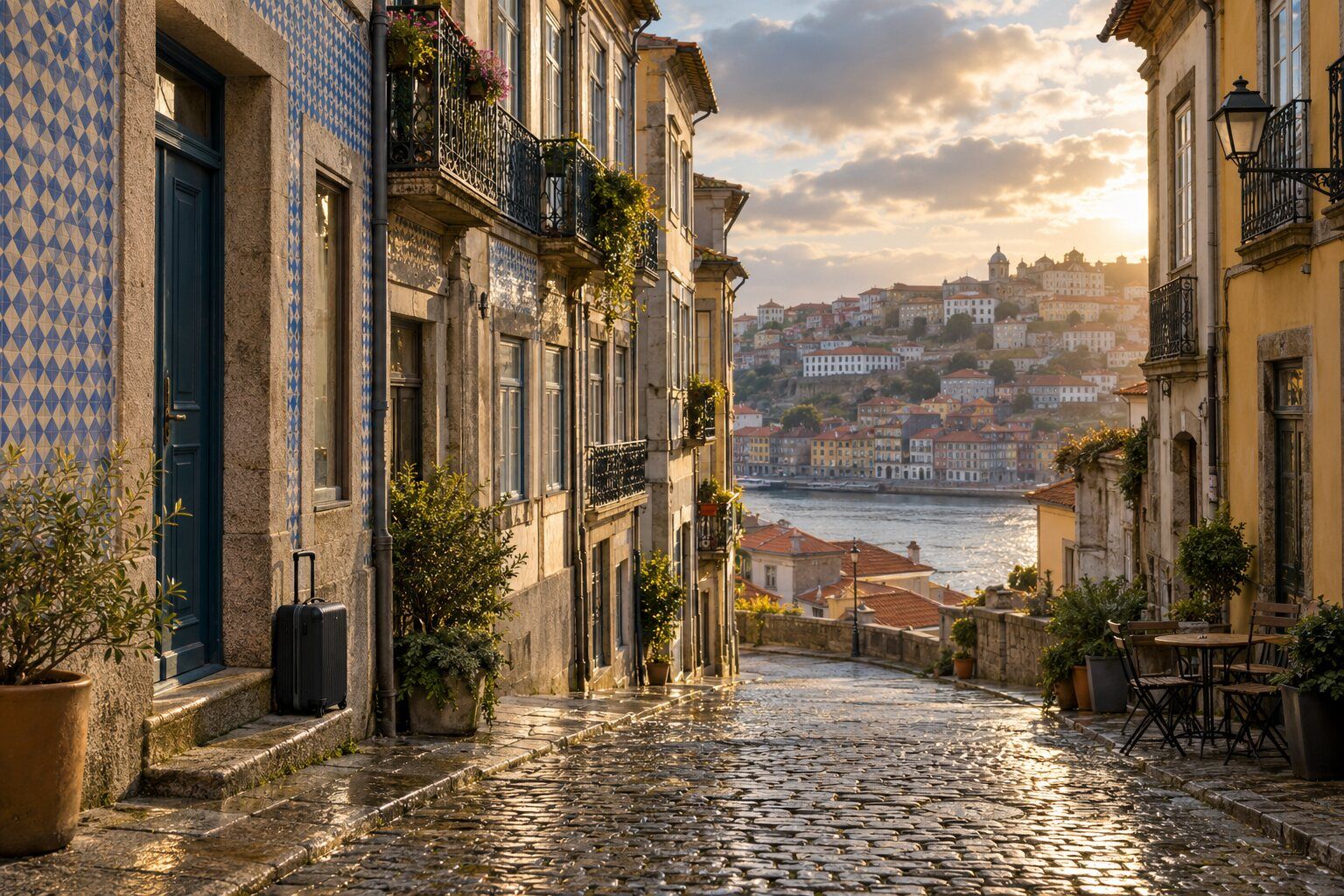
Should you stay central or choose a quieter side of Porto?
Stay in Baixa or Ribeira when sightseeing convenience and evening choice matter most. Choose Cedofeita or Bonfim for a calmer neighborhood rhythm without leaving the urban core. Foz do Douro is better when coastal time matters more than walking to central attractions, while Boavista suits space-conscious travelers and business visits.
A central address helps most during a short visit. You can return to your room between activities, change clothes before dinner, and adjust the day without planning every journey. That convenience is especially useful if your itinerary includes early starts and evenings in different parts of the center.
The tradeoff is intensity. Central streets receive more foot traffic, delivery activity, and late-night movement. A hotel described as lively may be enjoyable for a social weekend but tiring if you’re a light sleeper. Before paying, read reviews that mention the exact room position, street-facing windows, internal courtyards, and nearby bars.
For first-time sightseeing
Baixa is the safest general recommendation because it keeps several directions open. You aren’t committing the whole trip to the riverfront, coast, or a residential district. Ribeira is a strong alternative when scenery matters more than avoiding slopes and visitor crowds.
For food, cafés, and independent shops
Cedofeita gives you a neighborhood experience while keeping the center within reach. Bonfim feels more residential and can reward travelers who enjoy choosing restaurants as they walk rather than following a fixed list. Both areas need careful address checks because their outer edges may change your daily transport needs.
For calm evenings near the water
Foz do Douro is the deliberate slow choice. It doesn’t make sense if you expect to return to central Porto several times each day. It does make sense when mornings by the coast and quiet evenings are more important than having every major sight nearby.
Seasons, crowds, and accommodation value
Porto’s central districts are busiest during popular warm-weather travel periods and major event dates, while quieter months can offer more accommodation choice. Riverside rooms usually command a premium for setting, and coastal stays add transport needs. The best value often comes from Cedofeita, Bonfim, or the edges of Baixa rather than the most photographed streets.
Season changes how a neighborhood feels. Ribeira and central Baixa can be energetic when terraces are full and visitors stay outside later. The same areas feel more manageable during quieter periods, though rain makes steep stone streets and repeated uphill routes more noticeable.
Don’t judge accommodation value from the nightly rate alone. A cheaper room far from your planned activities may create extra transport spending and reduce the freedom to rest during the day. A more central room can justify its price when your visit is short and most plans are within walking reach.
Foz do Douro follows a different calculation. You’re paying for a slower coastal setting rather than maximum sightseeing efficiency. If that setting is central to your trip, the transport time is part of the choice rather than a flaw. If you mainly want historic streets and late dinners in the center, the coast may feel inconvenient after the first evening.
- For a short city break: prioritize Baixa, central Cedofeita, or Ribeira.
- For a longer stay: compare Bonfim, Cedofeita, and Boavista for daily comfort.
- For nightlife: choose Baixa, then verify street-level noise reports.
- For quiet nights: look toward Foz do Douro, Bonfim, or residential Boavista.
- For river views: compare Ribeira with Vila Nova de Gaia rather than assuming they offer the same experience.
Event calendars can tighten availability beyond Porto itself, especially when your itinerary includes nearby cities. Check your full route before committing to a nonrefundable stay. This matters most when a cultural event or weekend trip changes the dates you’ll actually sleep in Porto.
Transport and accommodation details that change the stay
The exact street matters almost as much as the neighborhood name in Porto. Check the slope between your room and the nearest useful transport stop, not only the straight-line map position. Also verify nighttime noise, elevator access, luggage storage, air conditioning, and whether your accommodation sits at the district’s central or outer edge.
Porto is compact enough to encourage walking, yet the terrain can turn small planning errors into repeated effort. Before booking, map a typical day from the property: breakfast, your first activity, an afternoon break, dinner, and the return at night. This reveals whether the address supports your plans or merely looks close on a zoomed-out map.
Read the street, not only the district label
A listing may use a familiar neighborhood name even when it sits near that area’s edge. Check the pin carefully. Look at the approach from the transport stop, the surrounding businesses, and comments from guests carrying luggage. A charming uphill lane may be pleasant during the day and inconvenient during a departure with bags.
Match the room to your sleep habits
Travelers who sleep lightly should be cautious with ground-floor rooms, street-facing balconies, and properties near late-night venues. Ask whether the room faces the street or an internal space. In older buildings, attractive architecture doesn’t always come with strong sound insulation or elevator access.
Plan for arrival and departure
Your ideal sightseeing location may not be the easiest place to reach with luggage. If you arrive late, confirm the check-in method and the final route from your transport stop. If you leave early, check whether you can reach your departure point without relying on a limited overnight service.
Decide how often you will cross the river
Vila Nova de Gaia can provide appealing outlooks and access to its own riverside activity. It is not simply another Porto neighborhood. If most of your plans are across the river, review the return route and elevation before booking. The visual closeness of the two banks can hide a less convenient door-to-door journey.
Pack for the terrain as well as the season. Shoes with reliable grip are more useful than footwear chosen only for photographs, especially when streets are damp. A compact day bag also makes steep walks and public transport easier; the broader daypack packing guide can help you keep daily essentials manageable.
Staying connected around Porto
Mobile data is most useful in Porto when you’re checking uphill walking routes, public transport, accommodation messages, restaurant bookings, and changes during day trips. Arrange access before departure if you want service soon after landing, but confirm that your phone supports the technology and is unlocked before buying a travel option.
An eSIM lets a compatible phone use a digital mobile profile without replacing your physical SIM. If the format is new to you, this guide explains what an eSIM card is, how it differs from a removable card, and what to check before travel.
Maps help you compare steep walking routes with public transport, while translation tools are useful when reading menus or accommodation instructions. Mobile data also supports digital tickets, ride-hailing, booking changes, and messages to your host. If maps are central to your day, check how much mobile data Google Maps uses before choosing an allowance.
If your trip includes Porto, Braga, and other stops in Portugal, a flexible option can avoid paying for more days or mobile data than your itinerary needs. Yoho Mobile lets you choose the destination country, data allowance, and usage duration independently. You can review a Portugal eSIM plan and match those choices to your actual travel dates.
Travelers who want to manage the plan before departure can use the Yoho Mobile app for iOS or the Yoho Mobile app for Android. Keep the purchase details and activation instructions available offline in case airport Wi-Fi is unreliable.
If you’re new to this format, the free eSIM trial offers a low-commitment way to try it, while Yoho Care provides an emergency data service if an eligible plan runs out unexpectedly.
Some phones don’t support eSIMs, and a carrier-locked device may not accept a travel profile. Confirm compatibility and unlock status before paying. You should also review whether your chosen plan includes data only or supports ordinary calls and texts, since messaging apps may be the simpler option for many short trips.
A good Porto stay starts with the address, not the neighborhood reputation. Choose Baixa for broad convenience, Ribeira for riverside atmosphere, Cedofeita for creative city life, Bonfim for a residential pace, or Foz do Douro for the coast. Then check the exact hill, room position, and transport route before confirming.
Frequently Asked Questions
Most questions about where to stay in Porto come down to central convenience, evening noise, hills, and the difference between the riverfront and quieter residential areas. These answers cover common decisions that remain after comparing the main neighborhoods, including first visits, nightlife, coastal stays, and accommodation across the river.
Is Ribeira or Baixa better for a first visit to Porto?
Baixa is usually the more practical base because it offers easier access to several parts of central Porto and more choices for dining after dark. Ribeira suits travelers who place river atmosphere above quiet nights and easy uphill returns. Check the exact street in either area, since noise and slope can vary within a short walk.
Where should couples stay in Porto?
Couples often prefer Ribeira for river atmosphere, Cedofeita for relaxed evenings, or Foz do Douro for a quieter coastal stay. The best choice depends on whether your trip centers on central sightseeing, restaurants, or slow walks near the water. A room facing an internal courtyard may provide more privacy and less nighttime noise.
Which Porto area is suitable for nightlife?
Baixa is the clearest choice when late dinners, bars, and busy streets are priorities. Cedofeita offers a more relaxed evening scene, while Bonfim may suit travelers who want local restaurants without staying at the center of the busiest nightlife. Read recent noise comments before booking a street-facing room.
Is Foz do Douro too far from central Porto?
Foz do Douro is less convenient for repeated central sightseeing, but it works well if you prefer the coast and accept regular public transport or taxi journeys. It is better for a slower stay than a packed first-time itinerary. Travelers planning several central activities each day will usually find Baixa or Cedofeita easier.
Can you stay in Vila Nova de Gaia when visiting Porto?
Yes. Vila Nova de Gaia is a separate city across the river, yet it can be a practical base for Porto. Check the exact slope, crossing route, and evening transport near your accommodation before booking. It suits travelers who value river outlooks and don’t mind planning journeys between both banks.